






18th Edition Wiring Regulations: What They Are and Why They Matter



Section 1
If you've had an electrician mention the 18th Edition Wiring Regulations and you're not quite sure what that means for your property, you're not alone. Most landlords and homeowners only come across the term when a report flags something as non-compliant, and by then it's already causing stress. Understanding the basics before that happens saves time, money, and a lot of confusion.
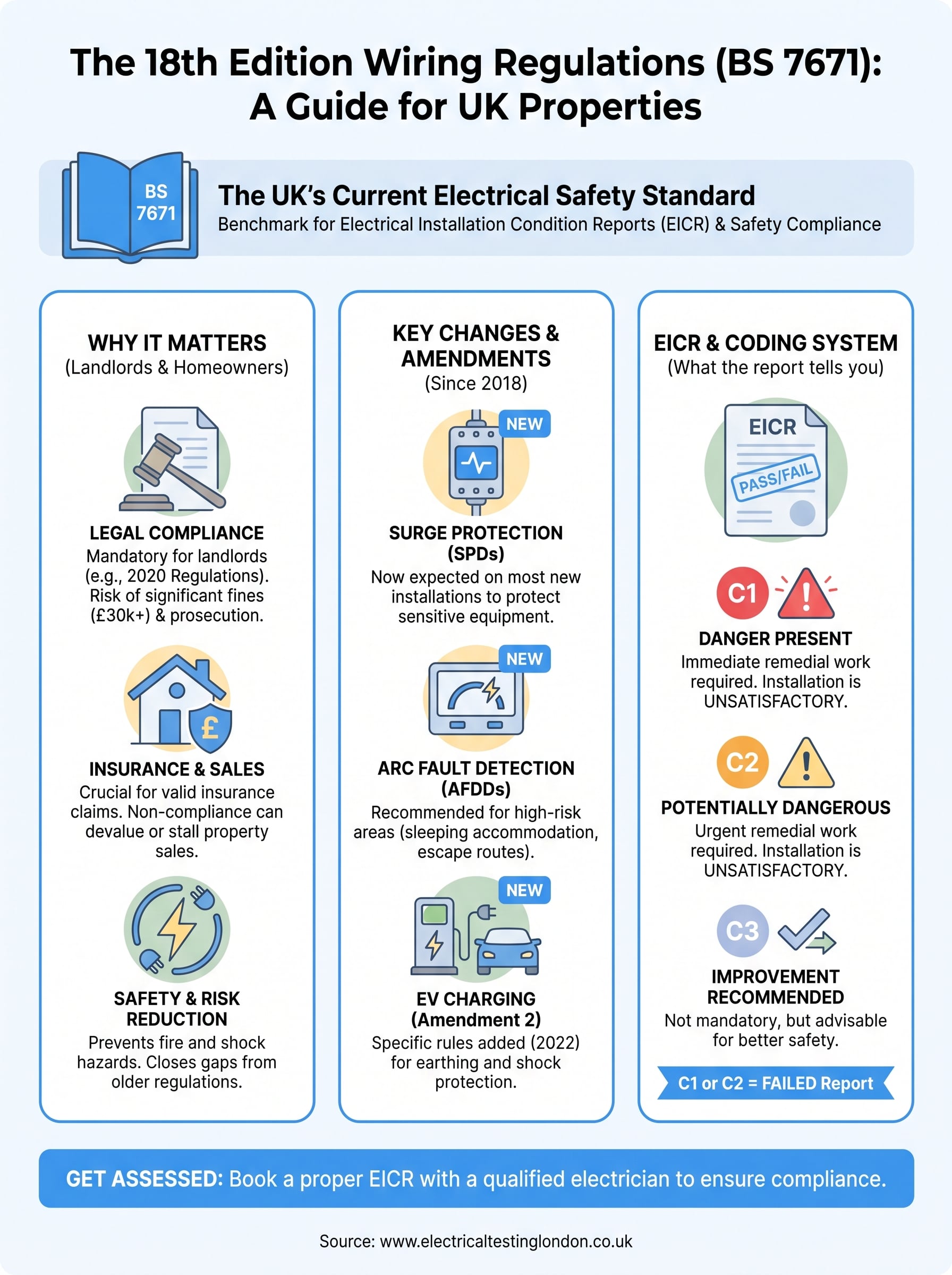
In short, the 18th Edition is the current version of BS 7671, the UK wiring standard, the national standard that governs how electrical installations must be designed, installed, and tested across the UK. It sets out the rules electricians follow to keep wiring, consumer units, and circuits safe, and it's the benchmark used during an EICR to judge whether your installation passes or fails. Every qualified electrician working in England and Wales should be applying these standards on site.
Below, we'll walk through what the 18th Edition actually covers, the key amendments that have shaped it since 2018, and why it matters whether you're a landlord meeting legal obligations, a homeowner planning an upgrade, or a business managing compliance across several sites.
Why the 18th Edition matters for landlords and homeowners
The 18th Edition isn't just a technical document electricians reference for fun. It's the legal and practical benchmark that determines whether your property is safe to occupy, insurable, and compliant with UK law. For landlords especially, ignoring it isn't an option anymore.
Legal obligations for landlords
Under the Electrical Safety Standards in the Private Rented Sector Regulations 2020, every landlord in England must have their property's electrical installation inspected and tested at least every 5 years, and the standard used for that inspection is BS 7671, the 18th Edition. Under landlord electrical safety regulations, a failed EICR means you're legally required to carry out remedial work within 28 days, or sooner if the report flags anything dangerous. Skip this and you're not just risking a fine, you're risking prosecution, with penalties up to £30,000 per breach. Local councils have been increasingly active in enforcing this since the regulations came into force, and tenants now know to ask for a copy of the report before signing a tenancy agreement.
A property that hasn't been checked against the 18th Edition isn't just unsafe, it's a legal liability waiting to surface at the worst possible moment.
Why homeowners should care too
Government enforcement aside, homeowners have their own reasons to pay attention. Buildings insurance policies increasingly ask whether your wiring has been tested to current standards, and a claim following an electrical fire can be reduced or refused if the installation is found to be non-compliant or poorly maintained. Homeowners planning to sell often commission a Homebuyers Electrical Report to catch problems before a buyer's survey does, since an outdated consumer unit or missing RCD protection can stall a sale or knock thousands off an asking price. Older properties, particularly those last rewired before 2008, are the ones most likely to fall short, simply because wiring practices considered normal decades ago no longer meet current safety expectations.
The real cost of getting it wrong
Beyond the legal and financial angle, there's a straightforward safety argument. Electrical faults remain one of the leading causes of house fires in the UK, and outdated wiring without modern protective devices is a significant contributing factor. The 18th Edition exists specifically to close the gaps that older editions left open, things like inadequate surge protection or insufficient fire-resistant cabling in escape routes. Consequences of non-compliance typically include:
-
Invalidated insurance if a fire or fault investigation reveals known, unaddressed issues.
-
Failed property sales when a buyer's survey flags electrical work as a red flag.
-
Legal penalties for landlords, including fines and rent repayment orders.
-
Increased fire and shock risk to anyone living in or visiting the property.
Whether you're renting out a flat in Croydon or selling a family home in Richmond, the 18th Edition is the standard everyone, from your electrician to your insurer to your local council, expects your property to meet.
How to make sure your property meets the 18th Edition
Getting confirmation that your property meets current standards doesn't need to be complicated, but it does need to be done properly. Skipping steps or hiring the cheapest quote you find rarely ends well, especially when the report gets challenged by an insurer or local authority later on.
Book a proper inspection
Start with an EICR, carried out by a qualified electrician who tests against BS 7671. This isn't a visual once-over. A proper inspection involves testing circuits, checking earthing and bonding, verifying RCD protection, and examining the consumer unit for compliance with current standards. Our domestic EICR service in London also covers commercial properties, and every report comes with clear coding so you know exactly what needs attention and how urgently.
Compliance isn't a one-off certificate, it's an ongoing commitment to keeping your electrics safe as standards evolve.
Understand the coding system
Reports use three main codes, and knowing what each EICR code means helps you prioritise:
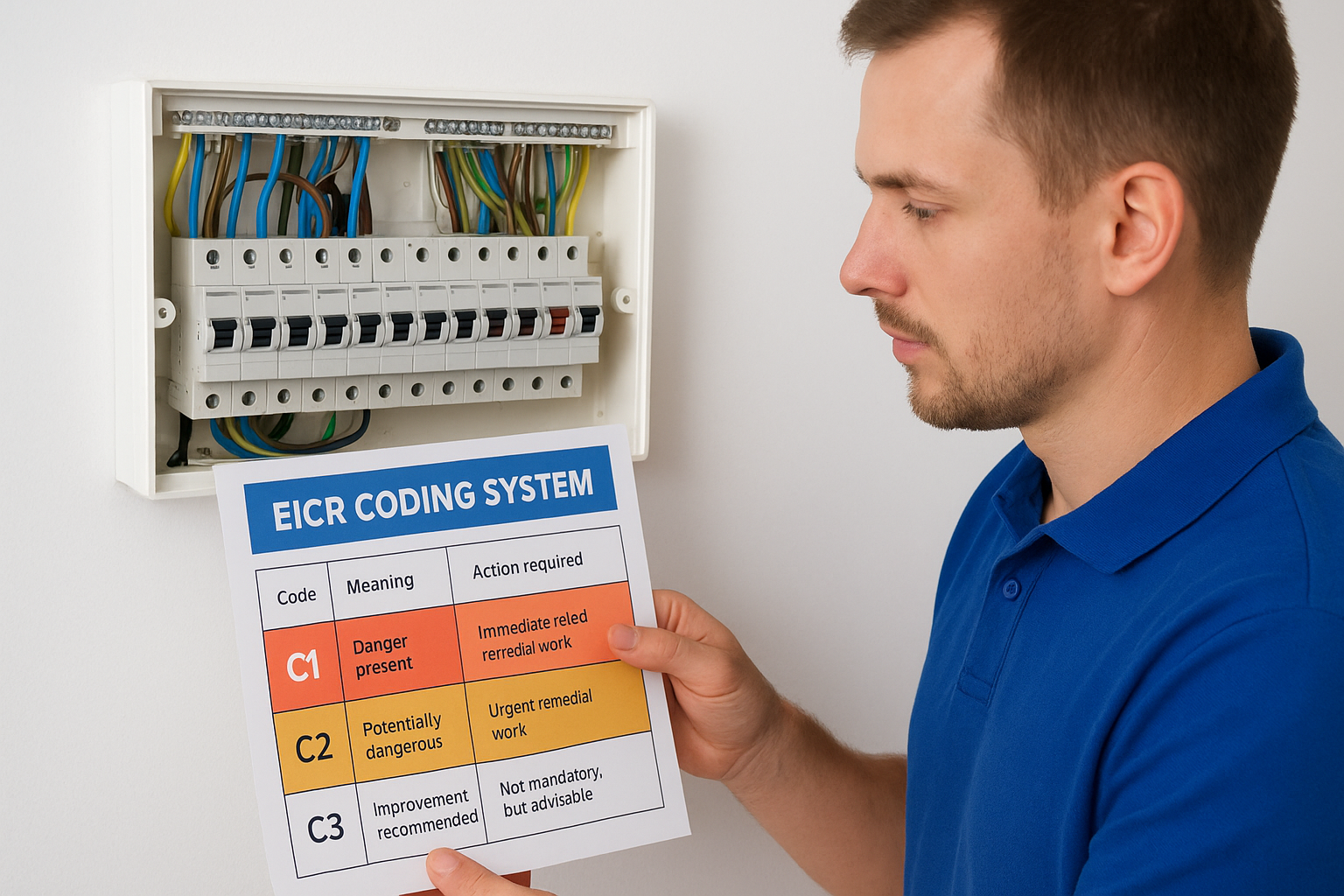
|
Code |
Meaning |
Action required |
|---|---|---|
|
C1 |
Danger present |
Immediate remedial work |
|
C2 |
Potentially dangerous |
Urgent remedial work |
|
C3 |
Improvement recommended |
Not mandatory, but advisable |
Anything flagged C1 or C2 means the installation has failed and needs fixing before it can be signed off as safe.
Address the findings
Remedial work should always follow the report, not guesswork. Common fixes include replacing an old consumer unit, adding RCD protection to circuits that lack it, or replacing damaged cabling. Our team typically handles remedial electrical work directly after inspection, since coordinating the same electrician for both jobs avoids delays and miscommunication between contractors.
Keep records and retest on schedule
Once you've addressed any issues, keep the paperwork somewhere accessible. Landlords need to show it to tenants and councils on request, and homeowners benefit from having it ready for insurers or future buyers. Set a reminder for your next test, five years for landlords, and roughly every ten years for homeowners, since how often you need an EICR depends on your property type and usage. Businesses and rented properties with higher electrical demand often need more frequent checks, so ask your electrician what schedule suits your specific setup.
Key changes introduced in the 18th Edition
The 18th Edition, first published in 2018 and updated twice since through Amendment 1 and Amendment 2, introduced several changes that genuinely reshaped how electricians design and install circuits. These aren't minor tweaks, as the latest edition of the IET Wiring Regulations makes clear. They reflect a shift towards protecting properties against risks that older regulations simply didn't anticipate, from lightning strikes to arc faults hidden inside cable insulation.
Surge protection devices
Regulation 443 now requires surge protection devices (SPDs) on most new installations, particularly where a loss of power could affect safety, such as in properties with medical equipment, fire alarms, or extensive smart home systems. Before the 18th Edition, surge protection was often treated as optional extra rather than a baseline requirement.
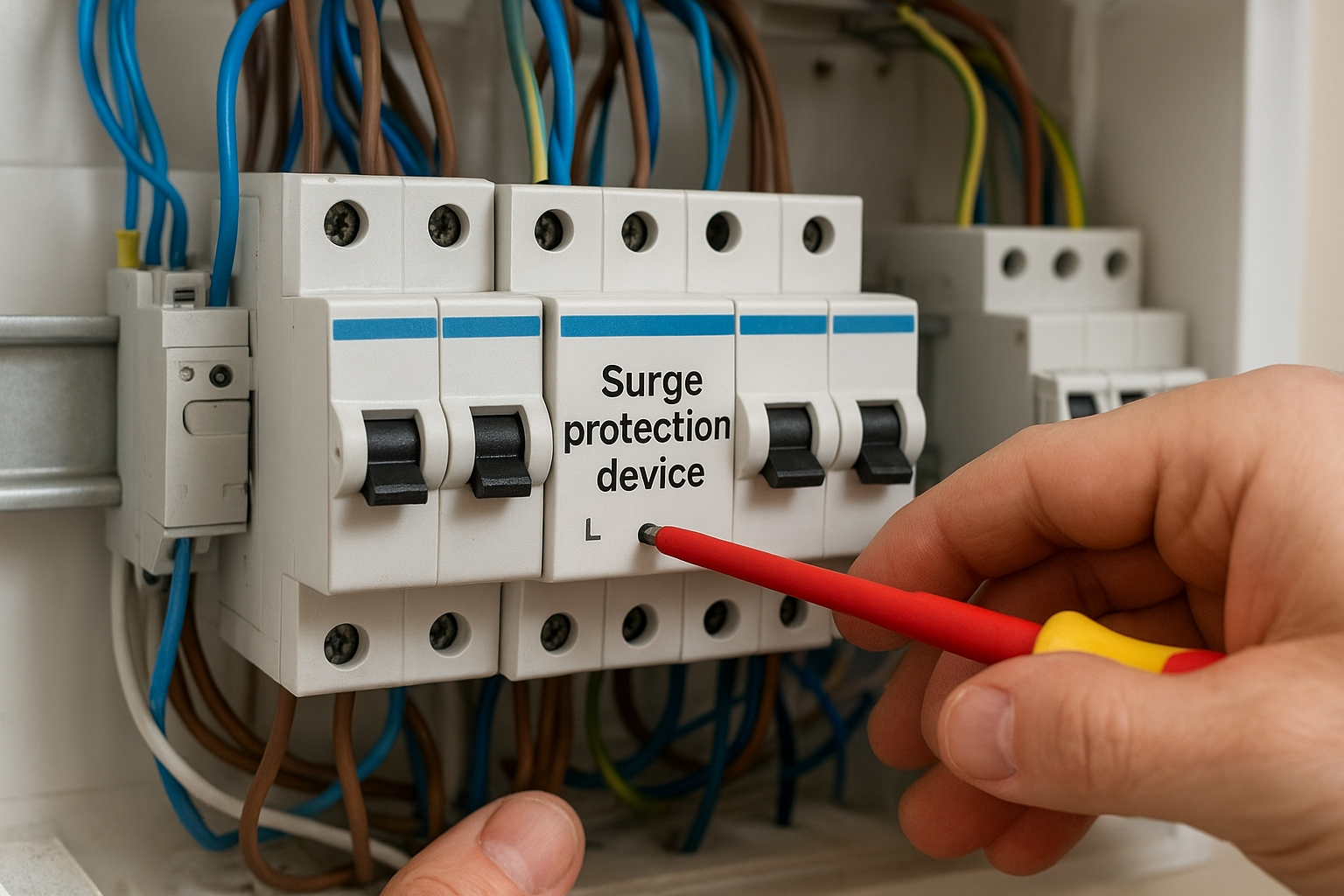
Surge protection went from a nice-to-have to a default expectation, and that single change has protected countless homes from damage caused by lightning strikes and grid fluctuations.
Arc fault detection devices
Arc fault detection devices (AFDDs) were introduced as a recommendation for higher-risk locations, including houses in multiple occupation and properties with sleeping accommodation above escape routes. These devices detect the kind of arcing faults that standard RCDs and breakers often miss, faults that are a known cause of electrical fires starting inside walls or behind sockets.
Amendment 2 and EV charging
Amendment 2, which came into effect in 2022, added specific requirements for EV charging installations, addressing earthing arrangements and protection against electric shock when charging at home. This matters directly if you're considering an EV charger installation, since older wiring setups may not meet the earthing standards this amendment demands.
Together, these updates mean:
-
Surge protection is now expected on most new consumer unit installations.
-
Arc fault detection is recommended in higher-risk residential settings.
-
EV charge points must meet updated earthing and shock protection rules.
-
Fire-resistant cabling is required in escape routes within certain building types.
If your property was last inspected before 2018, there's a strong chance it hasn't been assessed against any of these requirements yet.
What an EICR reveals about 18th Edition compliance
An EICR is essentially a health check against the 18th Edition, and reading one properly tells you far more than a simple pass or fail. Every observation on the report ties back to a specific regulation within BS 7671, so the document itself becomes a map of exactly where your installation falls short of current expectations. Landlords and homeowners who only glance at the summary page miss the detail that actually matters, the part that explains why something's been flagged and how urgent the fix really is.
What the electrician actually tests
During the inspection, what an EICR covers includes earthing and bonding arrangements, tests of RCD protection on relevant circuits, inspection of the consumer unit for compliance with current wiring standards, and a check for damaged or outdated cabling that no longer meets fire safety requirements. They'll also check whether surge protection and arc fault detection are present where the 18th Edition now expects them. None of this is guesswork; it's measured against defined thresholds set out in the regulations themselves.
Reading the outcome correctly
Every report ends with an overall result of either satisfactory or unsatisfactory, and that single word carries real weight for insurance, tenancy agreements, and property sales alike.
An unsatisfactory EICR isn't a suggestion, it's a formal record that your installation doesn't meet the 18th Edition, and that record follows the property.
Getting a clean result doesn't mean nothing was ever noted, but it does mean nothing found poses immediate risk.
Why the detail matters beyond the headline
Finally, the individual codes within the report tell you where to focus first. C1 and C2 observations mean the installation has failed and needs remedial work before anyone can call it compliant, while C3 items are worth planning for even though they're not mandatory. Treating the EICR as a working document, rather than paperwork to file away, is what actually keeps a property compliant year after year.
Staying on top of your electrical compliance
Understanding what the 18th Edition Wiring Regulations actually require takes the mystery out of your next EICR, and hopefully takes some of the stress out of it too. This isn't a box-ticking exercise dreamt up to catch you out. It's the standard that keeps wiring, consumer units, and circuits safe against risks that older editions simply didn't account for, from surge damage to arc faults hiding behind a wall.
Getting your property assessed against BS 7671 doesn't need to wait until a tenant complains or a sale falls through. Book the inspection now, deal with whatever comes up, and set a reminder for the next one. That's the whole job, really.
If you're ready to find out where your property stands, get a quote for an EICR from our team and we'll take it from there.