






5 Types of Commercial Electrician in West London to Hire



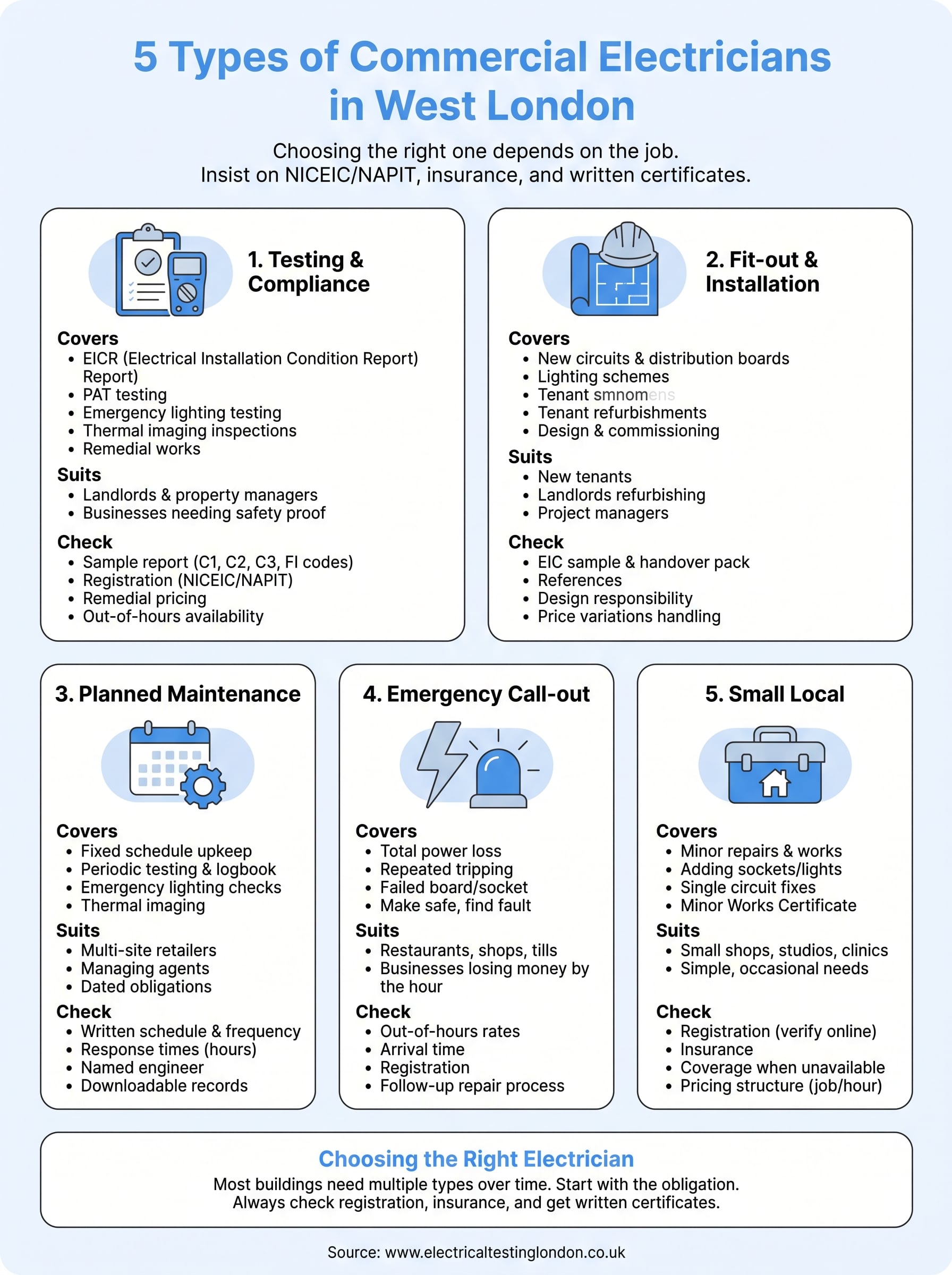
The right commercial electrician West London businesses should hire depends on the job. Use a testing and compliance electrician for EICRs, PAT and emergency lighting. Use a fit-out contractor for new installations, a maintenance contractor for ongoing upkeep, an emergency call-out electrician for faults, and a small local firm for minor repairs. Landlords, managing agents and anyone who needs proof of safety will get the most from the first type. Whichever you choose, insist on NICEIC or NAPIT registration, proof of insurance and written certificates.
Search results lump all of these firms under "commercial electricians", but they are not interchangeable. A contractor who fits out gyms is not necessarily the right person to inspect your 20-year-old distribution board. A one-man band cannot cover a 12-site retail estate. Hiring the wrong type costs you downtime, failed insurance checks and sometimes real safety risk.
This article sets out the five types of electrician you can hire for offices, shops and industrial units in West London. For each one, you will see what they cover, who they suit and what to check before you sign. We put ourselves first because testing is what we do, and we say plainly where another type is the better fit.
1. Testing and compliance electrician
What they cover
A testing and compliance electrician inspects, tests and certifies the electrics you already have, then fixes what the report flags. This is our work at Electrical Testing London. Our engineers each have at least 10 years of experience, and we cover commercial premises across West London. A typical job includes:
-
EICR (Electrical Installation Condition Report) for offices, shops and units
-
PAT testing of portable equipment
-
Emergency lighting testing
-
Thermal imaging inspections
-
Remedial works, consumer unit replacement and EV charger installation
Who it suits
This type suits landlords, property managers and business owners who need documented proof of safety. The Electricity at Work Regulations 1989 require you to keep electrical systems safe, and an EICR is the usual evidence. Common guidance is an inspection every five years for offices and shops and every three for industrial sites, although your insurer or lease may ask for more. If you are planning a full refit, you want item 2 instead.
A good inspection report is evidence you can show an insurer, a tenant or an enforcing officer.
What to check before you hire
Ask for a sample report before you book. It should use the observation codes C1, C2, C3 and FI, and state what was and was not tested. Also check:
-
NICEIC or NAPIT registration
-
Whether the same firm does remedial work, and at a fixed price
-
Whether they can test out of hours so trading continues
-
A current public liability insurance certificate
2. Fit-out and installation contractor
What they cover
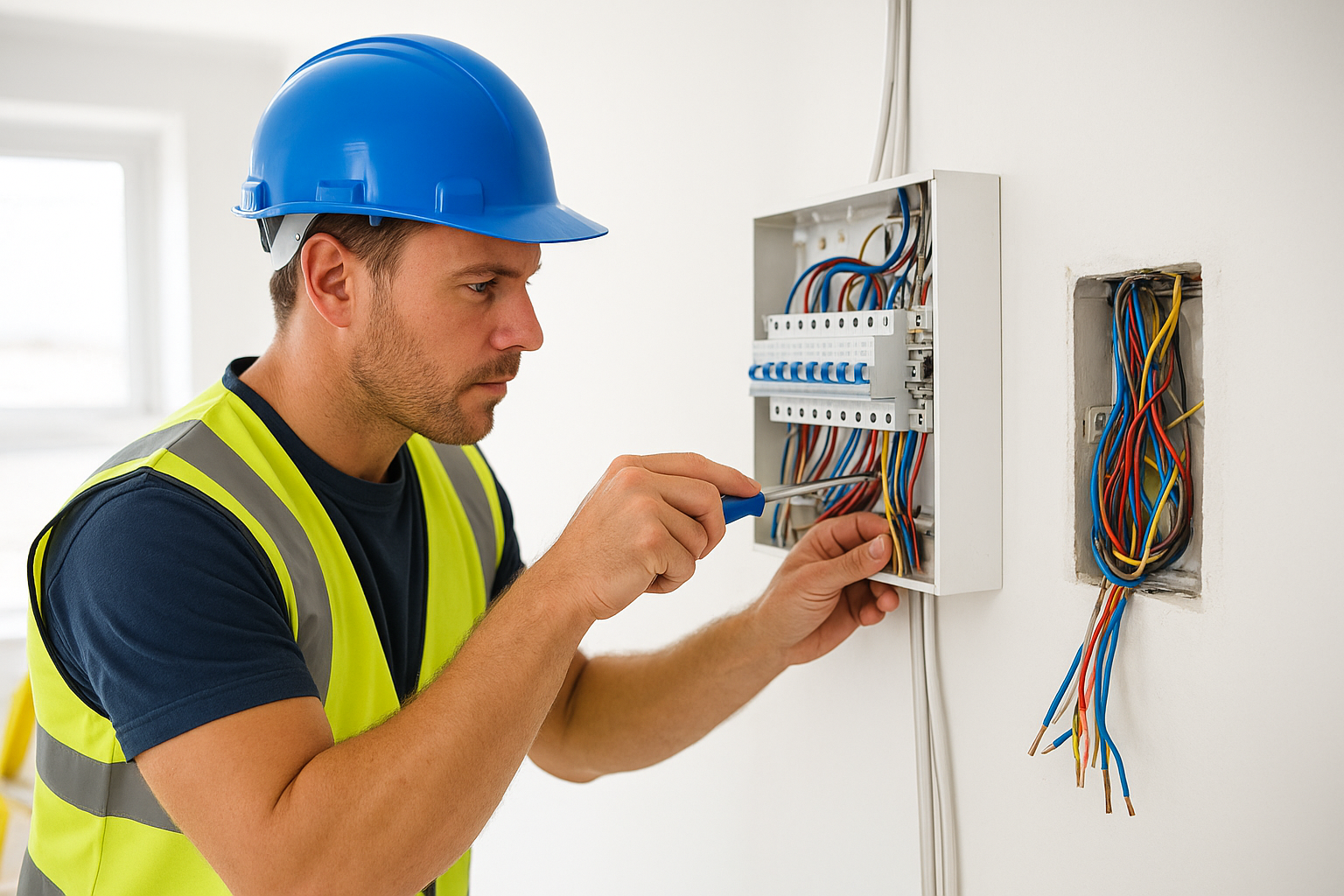
A fit-out contractor designs and installs new electrical systems, usually to a programme set by a main contractor or project manager. Typical work includes new circuits and distribution boards, lighting schemes, power for workstations and tenant refurbishments. All of it must comply with BS 7671, the wiring regulations. When you hire a commercial electrician in West London for a fit-out, you are buying design, installation and commissioning together.
Who it suits
This type suits tenants taking a new unit, landlords refurbishing between lettings and project managers running a build. The job is large enough that the electrician's planning matters as much as their wiring. A tester will not usually take this work on, and nor should you ask one to.
For new installations, hire on design ability and programme control, not on the lowest quote.
What to check before you hire
Ask for an Electrical Installation Certificate sample and the handover pack they normally supply. Then check:
-
References from projects of similar size
-
Whether they use their own staff or subcontract
-
Who carries design responsibility
-
How they handle variations to the price
3. Planned maintenance contractor
What they cover
A maintenance contractor looks after your electrics on a fixed schedule rather than when something breaks. A planned preventative maintenance programme normally combines periodic testing, emergency lighting checks and thermal imaging, with a logbook of results. Emergency lighting under BS 5266-1 needs a short monthly function test and a full-duration test once a year. Fire alarm servicing is usually every six months under BS 5839-1.
Who it suits
Multi-site retailers, serviced offices and managing agents benefit most. Their problem is not one fault but dozens of dated obligations across several buildings. One contractor with one record system stops tasks falling through the gaps. A single-unit business with simple electrics may find a periodic inspection plus ad hoc repairs cheaper.
Maintenance contracts pay off when you have more deadlines than you can track yourself.
What to check before you hire
Read the schedule line by line. A vague promise of "regular checks" is not a contract. Look for:
-
A written list of tests and their frequency
-
Response times for faults, stated in hours
-
A named engineer who knows your site
-
Records you can download for audits
4. Emergency call-out electrician
What they cover
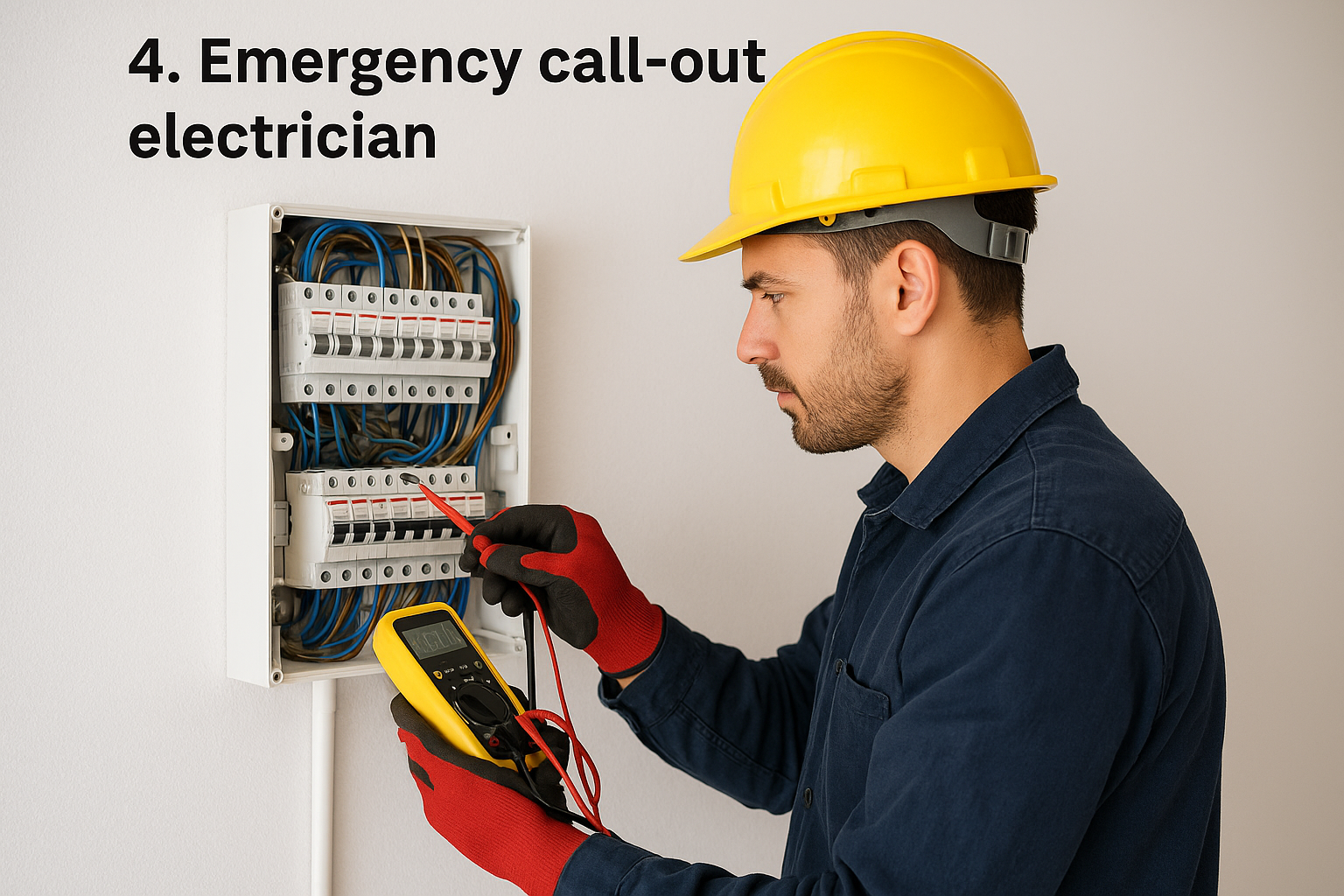
An emergency electrician restores safe power fast. Typical call-outs include total power loss, repeated tripping, a failed distribution board or a socket that has overheated. Their first job is to make the situation safe, then find the fault. If you smell burning or see smoke, switch off at the mains if it is safe to do so, leave the building and call 999 before you call an electrician.
Who it suits
Restaurants, shops and anywhere with refrigeration or tills lose money by the hour without power, so they need this type on speed dial. Offices and industrial units need it less often but still benefit. The best time to find an emergency electrician in West London is before you need one, not during an outage.
Agree call-out terms while the lights are on, because you will not negotiate well in the dark.
What to check before you hire
Ask what happens after the emergency. A temporary fix is fine, but you should get a certificate or report for any permanent repair. Confirm:
-
Out-of-hours rates and call-out fees in writing
-
Typical arrival time for your postcode
-
Registration with a competent person scheme
-
Whether they can return to complete a proper repair
5. Small local electrician
What they cover
A small local electrician handles minor works and repairs for small premises. That means adding sockets, swapping light fittings, replacing a faulty circuit breaker or fixing a single failed circuit. Even small jobs should end with a Minor Works Certificate under BS 7671. If a firm is happy to skip the paperwork, treat that as a warning sign.
Who it suits
Small shops, studios, clinics and offices with simple electrics and occasional needs get good value here. You deal directly with the person doing the work, and you often get a quick start. The limits are capacity and cover. A one- or two-person firm may not manage a holiday, a multi-site job or a full periodic inspection programme.
A small electrician is the right choice for small jobs, as long as the certificates are still issued.
What to check before you hire
Check registration on the NICEIC or NAPIT website rather than trusting a logo. Then ask:
-
Whether they hold public liability insurance
-
Who covers your site when they are unavailable
-
Whether they price per job or per hour
-
How soon they can issue the certificate after the work
Choosing the right electrician for your premises
Most commercial buildings in West London need more than one of these types over time. Start with the obligation in front of you. If it is a safety certificate, hire a tester. If it is a refit, hire a contractor. If you manage many buildings, move to a maintenance contract. Keep an emergency electrician's number handy, and use a small local firm for minor repairs.
Whatever you hire, ask for registration proof, insurance proof and a written report or certificate. Those three checks filter out most poor providers before you have spent a pound.
If you need an EICR, PAT testing, emergency lighting testing or remedial works for your premises, request a quote from Electrical Testing London and we will price the job clearly.