


Certificate of Electrical Safety Cost: UK Prices by Property Size


You need a number before you commit, not a vague estimate that turns into a shock invoice. Whether you're a landlord renewing compliance paperwork, a homeowner reassuring a mortgage lender, or a buyer checking a property before exchange, the certificate of electrical safety cost depends heavily on how many rooms, circuits, and sockets an engineer has to test.
As a rough guide, expect to pay somewhere between £120 for a one-bedroom flat and £300 or more for a large five-bedroom house, with commercial units priced separately based on floor area and circuit count. This electrical safety check cost uk average shifts depending on your property's age, wiring condition, and location within London and the South East, but property size remains the biggest factor engineers use when quoting.
In this guide, we break down realistic electrical safety check price brackets by property type, from studio flats to commercial premises, and explain what pushes a quote higher, such as remedial work or older fuse boards. You'll leave knowing what to budget and what questions to ask before booking an inspection.
Why the cost of an electrical safety certificate matters
Getting the price right before you book isn't just about avoiding a surprise bill. An electrical safety certificate, more formally an Electrical Installation Condition Report (EICR), carries legal weight for landlords, financial implications for homeowners, and genuine safety consequences if it's skipped or done on the cheap. Understanding what drives the cost helps you budget properly and spot a quote that's either suspiciously low or padded with unnecessary extras.
Legal obligations for landlords and businesses
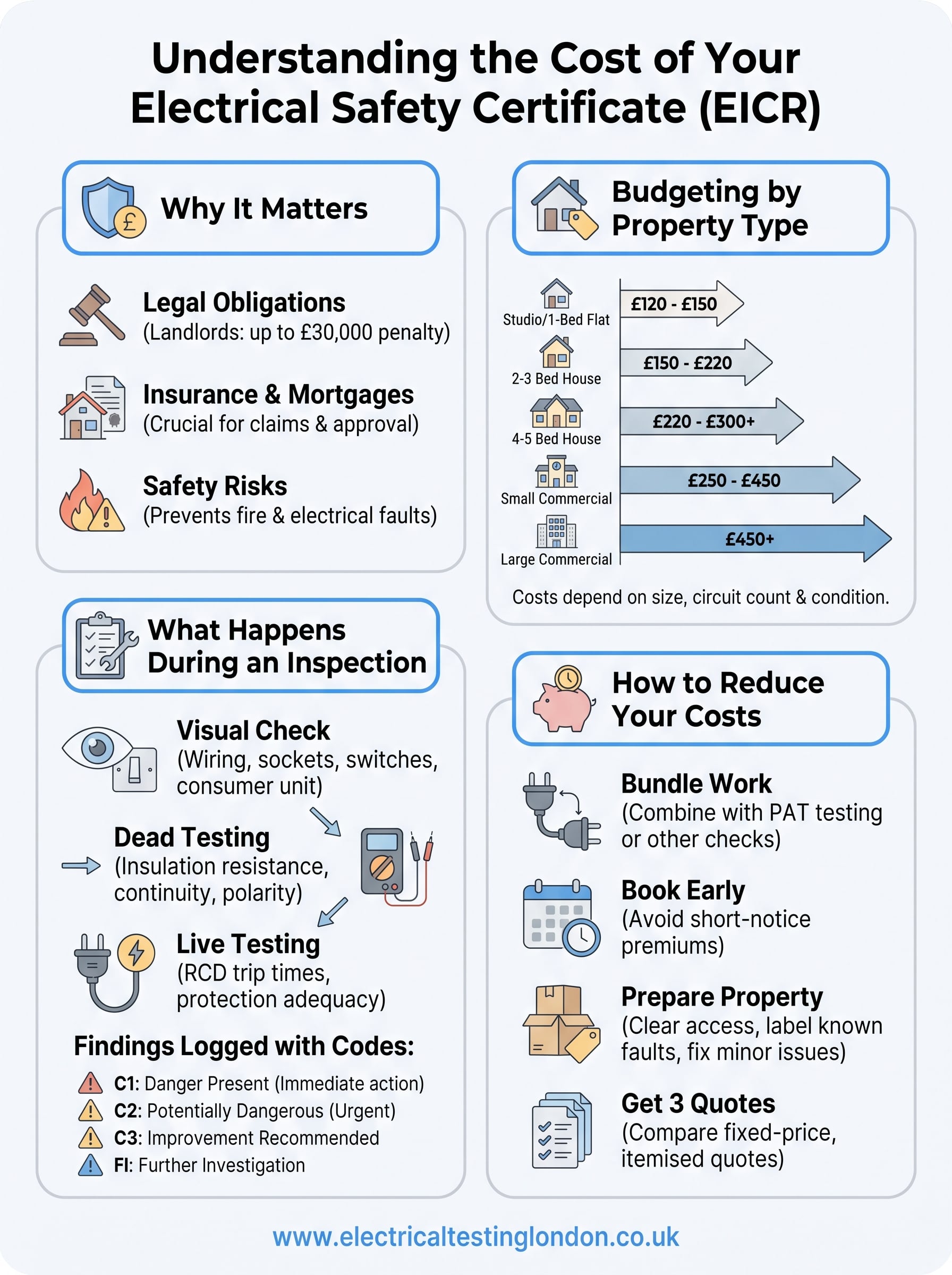
Since 2020, landlords in England must have a valid EICR for every rented property, renewed at least every five years, under the Electrical Safety Standards in the Private Rented Sector Regulations, and it is worth reading the key rules and costs for a landlord electrical safety certificate before your next renewal. Fail to comply and your local council can issue penalty notices of up to £30,000 per breach, per property. Commercial landlords and employers have similar duties under the Electricity at Work Regulations 1989, backed by health and safety inspections. Budgeting properly for testing across a portfolio, rather than treating it as an afterthought, keeps you on the right side of enforcement and avoids far larger costs than the certificate itself.
The cheapest EICR you'll ever pay for is the one you book on time, before a landlord penalty or a failed remedial job makes it far more expensive.
Insurance and mortgage requirements
Many buildings insurers now ask for evidence of a recent, satisfactory EICR before paying out on claims linked to fire or electrical faults, particularly in older properties. Mortgage lenders on unusual or older builds sometimes request the same document during conveyancing, which is why buyers often weigh up what a homebuyers electrical survey costs as well. If your policy or lender flags an issue after the fact because you skipped this step, you could face a rejected claim or a delayed completion, both of which cost far more than the £120 to £300 you'd have spent on the inspection itself.
Safety risks of cutting corners
Electrical faults are a leading cause of house fires in the UK, and outdated wiring, overloaded circuits, and faulty consumer units rarely announce themselves before something goes wrong. A thorough inspection catches these issues while they're still cheap to fix, rather than after a fault has damaged a property or put a tenant or family at risk. Choosing a certificate purely on price, without checking the engineer's qualifications or the scope of testing included, risks missing exactly the faults you paid to have identified.
Knowing these stakes changes how you shop for a quote. You're not just comparing numbers on a page, you're weighing legal exposure, insurance validity, and physical safety against a modest upfront cost. That context makes the next section, on setting a realistic budget by property type, far more useful than a bare price list on its own.
How to budget for your electrical safety certificate
Budgeting starts with matching your property type to a realistic bracket rather than guessing from a single average figure. Property size and circuit count drive most of the variation you'll see between quotes, so use the table below, along with our breakdown of EICR prices by property size and circuits in London, as your starting point before you request anything formal.
|
Property type |
Typical certificate cost |
What affects the price |
|---|---|---|
|
Studio or 1-bed flat |
£120 to £150 |
Fewer circuits, single consumer unit |
|
2 to 3-bed house |
£150 to £220 |
More sockets, possible outbuildings |
|
4 to 5-bed house |
£220 to £300+ |
Multiple consumer units, larger wiring runs |
|
Small commercial unit |
£250 to £450 |
Floor area, three-phase supply |
|
Larger commercial premises |
£450+ |
Circuit count, access constraints, out-of-hours work |
Getting three quotes from qualified engineers before booking gives you a realistic electrical safety check price for your specific property, rather than relying on averages that don't reflect your circuit layout or fuse board age.
A quote that's £50 cheaper than the rest usually means fewer circuits tested, not a better deal.
Homeowners preparing for a sale or remortgage should book earlier than they think necessary. Surveys and conveyancing timelines often reveal the need for an EICR with only a few weeks to spare, and rushed bookings sometimes carry a premium for short notice.
Landlords managing several properties can often negotiate a portfolio rate by bundling inspections into a single visit or scheduling them across a set week each year. This spreads the cost and keeps renewal dates aligned, which makes tracking five-year compliance far simpler than chasing individual certificates on staggered dates.
Requesting a written quote that itemises the number of circuits tested, whether a visual inspection or full dead testing is included, and what happens if remedial work is found, protects you from add-on charges appearing after the engineer has already started work.
What happens during an electrical safety inspection
An inspection starts with a visual check of your consumer unit, sockets, switches, and any visible wiring, followed by dead testing once the power is isolated, as our step-by-step guide to how an EICR is carried out explains. The engineer records readings for insulation resistance, earth continuity, and polarity at every circuit, comparing them against the current wiring regulations (BS 7671). This isn't a quick glance around the property; it's a systematic walk through every accessible circuit, which is exactly why circuit count, not just floor area, drives the price you're quoted.
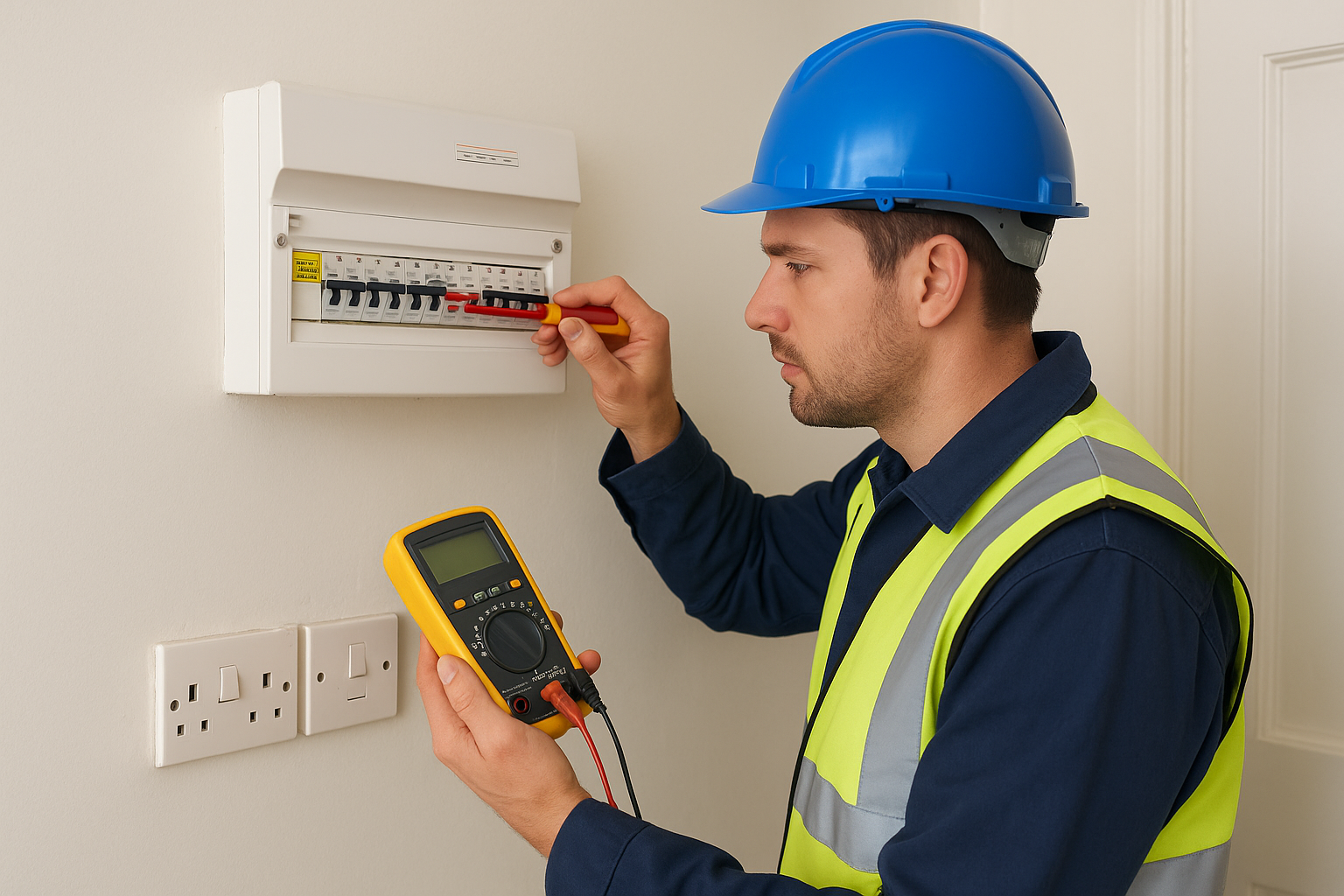
During the live testing phase, the engineer checks that RCDs trip within the correct timeframe and that your consumer unit has adequate protection against overload and fault current. Older properties with rewireable fuses or no RCD protection almost always generate observations here, which is normal and doesn't mean the property is unsafe, just that it no longer meets modern standards, though it is worth knowing the cost of replacing a consumer unit in advance.
A good EICR isn't a pass or fail sheet, it's a map of exactly where your wiring stands against today's safety standards.
Findings get logged using a coding system:
-
C1: Danger present, requiring immediate action
-
C2: Potentially dangerous, needing urgent attention
-
C3: Improvement recommended, not mandatory
-
FI: Further investigation required
Any C1 or C2 code means the certificate is marked unsatisfactory until the issue is fixed, which matters if you're relying on it for a tenancy, sale, or insurance claim.
How long an EICR takes varies, but most domestic inspections run between one and three hours depending on property size and how accessible the wiring is. You'll receive a written report listing every circuit tested, any codes assigned, and photographic evidence where relevant. Booking through a service like our domestic EICR team in London means you get a fully qualified engineer who explains each finding plainly, rather than a jargon-heavy document you're left to decode alone.
How to reduce your electrical safety certificate costs
Cutting your electrical safety check price doesn't mean cutting corners on the inspection itself. It means being smart about timing, bundling, and preparation so the engineer isn't paying for wasted time or unnecessary complications. Landlords and homeowners who plan ahead routinely pay less than those booking in a panic the week before a tenancy starts or a sale completes.
Bundle work and book early
Scheduling your EICR alongside other electrical work, such as PAT testing or emergency lighting checks, often reduces the total callout cost because the engineer is already on site. Landlords with several properties can request a single visit covering multiple units, which spreads the portfolio rate across the day rather than paying separate callout fees each time. Booking weeks rather than days ahead also avoids the short-notice premium many engineers charge for squeezed-in appointments.
The real saving isn't a cheaper quote, it's avoiding the rush fee that comes from booking too late.
Prepare the property before the engineer arrives
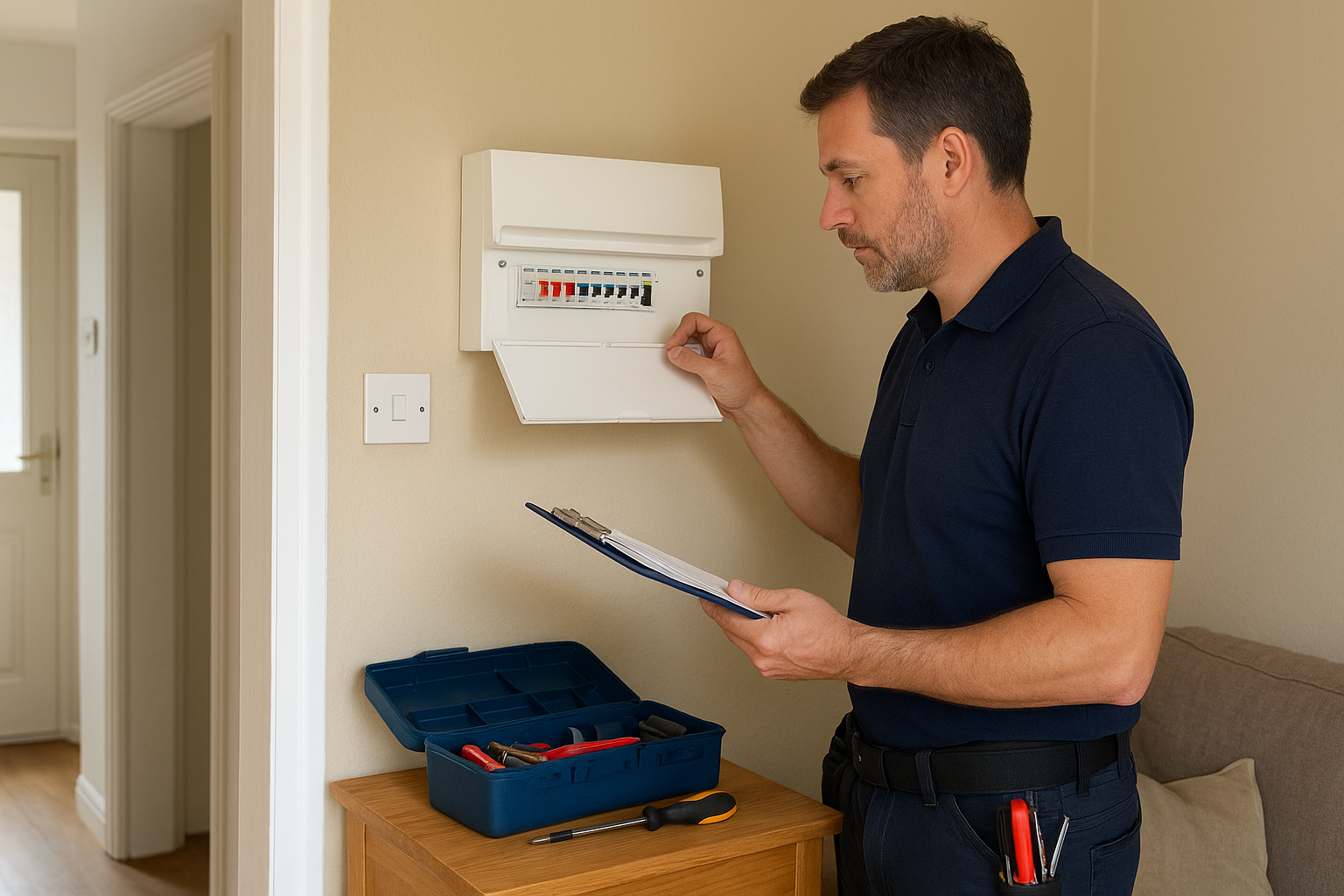
Clearing access to your consumer unit, loft, and any outbuildings before the appointment shortens the visit and reduces the chance of a return trip charge. A few simple checks help:
-
Make sure sockets and switches aren't blocked by furniture
-
Label any circuits you already know are faulty
-
Have previous certificates or wiring diagrams ready to hand over
-
Fix obvious issues, like a cracked socket faceplate, beforehand if you're comfortable doing so
Requesting a fixed-price quote rather than an hourly rate also protects you from unexpected charges if the inspection runs longer than planned. Comparing at least three quotes, and asking exactly what's included in each, remains the single most reliable way to keep your certificate of electrical safety cost within the bracket you budgeted for, so it helps to know how to find an EICR electrician near you.
Staying safe and compliant without overspending
Getting the certificate of electrical safety cost right comes down to matching your property's size and circuit count to a realistic bracket, then comparing quotes that clearly state what's included. A one-bed flat shouldn't cost the same as a five-bedroom house with two consumer units, and any quote that ignores this distinction deserves a second look. The cheapest option rarely saves money once you factor in missed faults, rushed bookings, or a certificate that doesn't hold up when a lender or insurer asks questions.
Book early, prepare your property beforehand, and ask for a fixed-price quote that itemises the testing involved. That's how you stay compliant without paying more than you need to. If you're ready to see what your property will actually cost, get a quote from our team and book an inspection that fits your budget and your deadline.

