






Does Rewiring a House Add Value? What to Know



Section 1
You're weighing up whether to rewire before you sell, and the honest answer isn't a simple yes or no. Does rewiring a house add value on paper? Rarely in a direct pound-for-pound sense. What it does is remove a problem that stops buyers making an offer at all, or gives them ammunition to knock thousands off your asking price during negotiations.
What actually shifts value is buyer confidence, not the copper in your walls. A property with old rubber-sheathed cabling or a fusebox instead of a modern consumer unit sets off alarm bells during a survey, and mortgage lenders can get twitchy too. Rewiring won't make your home worth more than the identical house next door with fresh wiring, but it stops yours being worth less, and it clears the path to a smoother sale.
In this article, we'll look at when rewiring genuinely pays off, what it costs against what buyers will actually deduct for outdated systems, and how an EICR certificate fits into the decision before you renovate or list your property.
Why rewiring can influence a property's value
Age decides most of the argument here. Wiring installed before the 1980s often used rubber or fabric insulation that perishes over decades, and a home report survey will flag it the moment the surveyor spots round-pin sockets, black rubber cable, or a fusebox with rewireable fuses instead of an RCD-protected consumer unit. Once that's on paper, the property carries a label that follows it through every viewing. Buyers read "requires rewiring" and picture disruption, dust, and a bill they didn't budget for, so they either walk away or come back with a lower offer.
A flagged electrical system doesn't just cost you money at survey stage, it costs you buyers before you even get to negotiate.
Lenders add another layer of pressure. Some mortgage valuers will down-value a property or attach conditions to the loan if the electrics look unsafe, particularly on older housing stock or properties that haven't been touched since the original build. That puts your buyer's mortgage offer at risk, and a stalled mortgage application is one of the fastest ways a sale falls through. Nobody wants to lose a buyer three weeks before completion because a valuer wasn't happy with the wiring photographed during the visit.
What surveyors and lenders actually flag
Certain signs trigger concern regardless of how the rest of the house looks. Knowing them helps you predict what a buyer's surveyor will pick up on:
-
Fusebox with wooden back and rewireable fuses instead of a modern consumer unit with circuit breakers
-
Round-pin sockets or a mix of socket styles suggesting patchwork additions over the years
-
Black rubber or fabric-covered cabling, which becomes brittle and can crack with age
-
No earthing or bonding on kitchens, bathrooms, or outbuildings
-
Visible scorch marks, exposed wiring, or DIY joins in the loft or under floors
-
An outdated or missing EICR, which many mortgage lenders now expect to see before completion
Any one of these can prompt a retention on the mortgage, where the lender holds back part of the loan until remedial work is done. That's a headache for both sides and often delays exchange by weeks.
Insurance and safety perceptions
Insurance quietly shapes buyer decisions too. Some home insurers ask directly whether the property has been rewired within a set number of years, and a straight "no" can push premiums up or trigger extra questions during underwriting. Buyers who've done their homework know this, and it feeds into how confident they feel about the purchase. A property that comes with a recent EICR and clean electrical history reassures them that the risk they're inheriting is low, which matters just as much as the physical condition of the wiring itself.
How buyers use wiring as a bargaining chip
Bargaining rarely happens in your favour once outdated electrics are on the table. Buyers, or their surveyors, will estimate a rewiring cost and use it as a starting point for a reduction, and that estimate is often higher than what the work would actually cost you, since they're pricing in contingency and their own peace of mind. Getting ahead of that conversation with a domestic EICR inspection before you list gives you facts rather than guesswork, and it lets you address issues on your own terms and timeline instead of during a tense negotiation with an exchange date looming.
How to work out if rewiring is worth it for you
Start with the warning signs a house needs rewiring and the age and condition of your current system, rather than guessing. If you're asking do I need a new consumer unit because yours is a wooden-backed fusebox, or you've never had an EICR done, that's your first clue that a survey will flag issues regardless of how tidy the rest of the house looks. Selling within the next year makes the calculation different from selling in five years' time, because a rewire done now protects a sale that's close, while one done too early just sits there depreciating before anyone benefits from it.
Rewire when the timing matches your sale, not just when the wiring looks old.
Think through these questions before committing to the cost and disruption:
-
How old is the wiring? Anything installed before 1990, or with no paperwork at all, is worth investigating.
-
Are you selling within 12 months? A rewire close to sale protects your asking price directly.
-
Has a previous EICR flagged C1 or C2 codes? These are safety issues that buyers' solicitors will ask about.
-
Is your local market competitive? In a slow market, buyers have more leverage to demand price cuts for old electrics.
-
Would a partial rewire fix the specific problem? Not every issue needs a full house rewire.
Compare that against the alternative, which is doing nothing and letting the buyer's surveyor make the discovery for you. Once it's written into a survey, you've lost control of the narrative and the negotiation happens on their terms, not yours.
Weigh the cost against the likely deduction
Getting a professional inspection first turns guesswork into numbers you can actually use. An EICR tells you exactly which circuits need attention, whether you're looking at a full rewire or a handful of remedial fixes, and gives you a document to hand a buyer that proves the issue has been dealt with properly. Homeowners often assume the whole house needs stripping back to bare walls when in reality only the kitchen ring or a couple of old sockets are the actual problem.
Valuation surveyors and estate agents both tend to base their price reductions on the worst-case rewire estimate, not the real cost of fixing what's actually wrong. That gap is exactly why an inspection pays for itself before you list. Once you know the real scope, you can decide whether spending a few thousand pounds now protects tens of thousands in negotiated value later, or whether a smaller repair closes the gap just as well.
How much rewiring a house typically costs
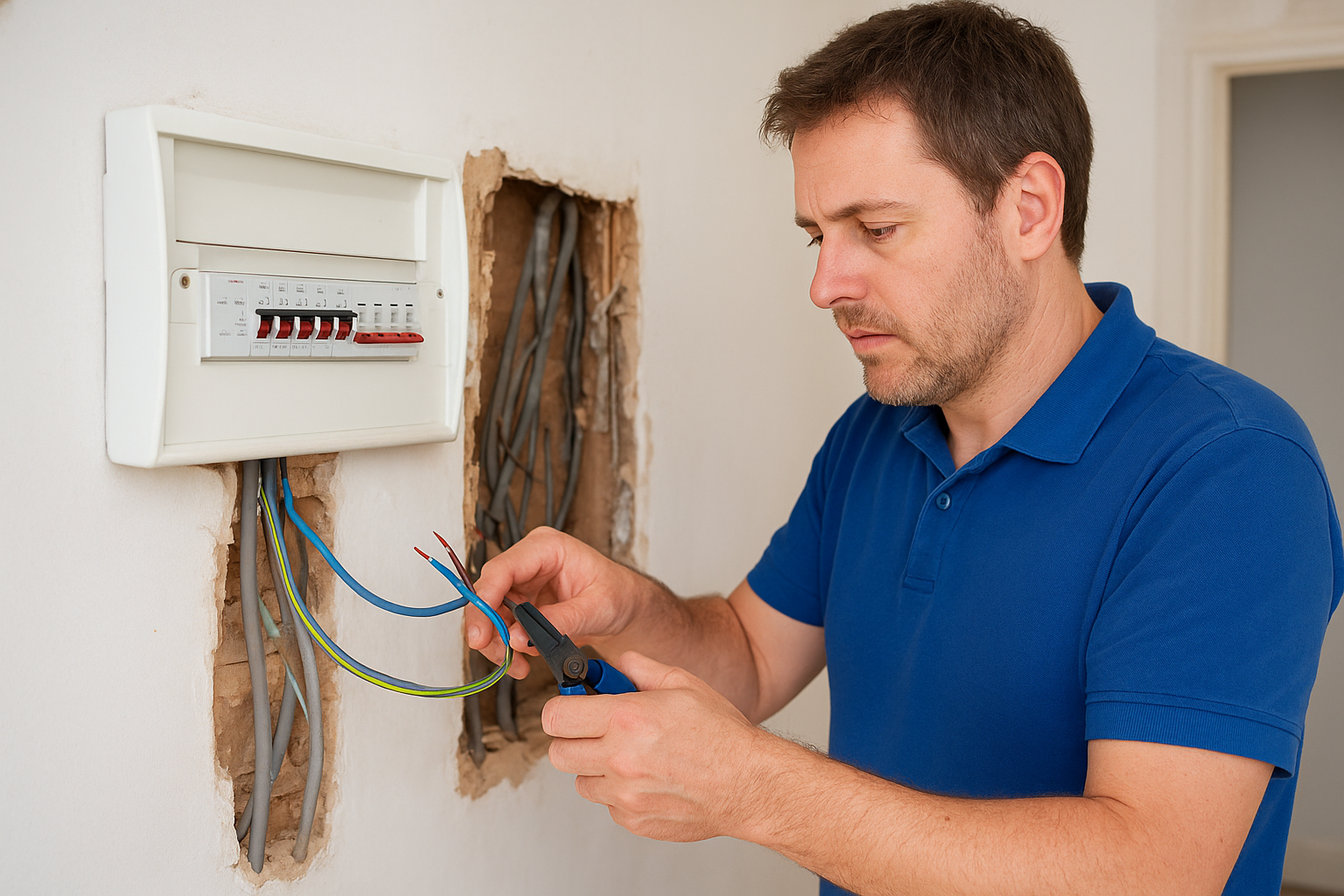
Cost depends on how rewiring prices vary by property size, how easy the wiring is to access, and where in the UK you're based, but London rates sit above the national average because of labour costs and the number of period properties with restricted access under floors and behind plaster. A full rewire disturbs walls, floors, and ceilings to run new cable, fit a modern consumer unit, and replace every socket and switch, so the price reflects the number of days a house rewire takes in skilled labour rather than just materials.
|
Property type |
Typical full rewire cost |
Typical timeframe |
|---|---|---|
|
1-bed flat |
£2,500 to £4,000 |
3 to 5 days |
|
2-bed terrace |
£3,500 to £5,500 |
5 to 7 days |
|
3-bed semi-detached |
£4,500 to £7,000 |
6 to 9 days |
|
4+ bed detached |
£6,500 to £10,000+ |
8 to 12 days |
Access pushes these figures up quickly. Solid floors, listed status, or a house with multiple previous extensions all mean more time spent lifting boards, chasing plaster, and making good afterwards, and that making good, plastering, decorating, and re-fitting carpets, is often left out of quotes you'll see quoted online.
The quote for the wiring is rarely the full bill; making good the walls and floors afterwards often costs nearly as much again.
Rewiring a house isn't always a single fixed job, though. A partial rewire, targeting just the kitchen ring, a run of old sockets, or a single fuse-fed circuit, can cost a fraction of the full price, sometimes as little as £500 to £1,500 depending on scope, and it's often enough to clear a specific issue flagged on a survey without touching rooms that are already fine. Swapping an old fusebox for a modern consumer unit typically runs from £250 to £450 to replace a consumer unit on its own and immediately resolves one of the most common red flags a surveyor will note.
Getting a fixed quote before you commit matters more than any average figure here, because your actual cost depends entirely on what's already in the walls. A proper inspection tells you whether you're looking at the top end of that table or a much smaller job, and it stops you either overspending on a full rewire you don't need or underselling your negotiating position because you're guessing at the numbers.
What buyers, surveyors and lenders look for in your electrics
Documentation matters as much as the wiring itself once a sale is underway. Solicitors acting for a buyer will ask for proof of any electrical work, and a missing or expired electrical safety certificate for a house sale is one of the first gaps they flag in the conveyancing pack. Lenders increasingly want to see a satisfactory report before releasing funds, particularly on older properties or ones bought as buy-to-lets, so a current certificate isn't just reassurance for the buyer, it's often a condition of the mortgage going through at all.
EICR codes and what they mean
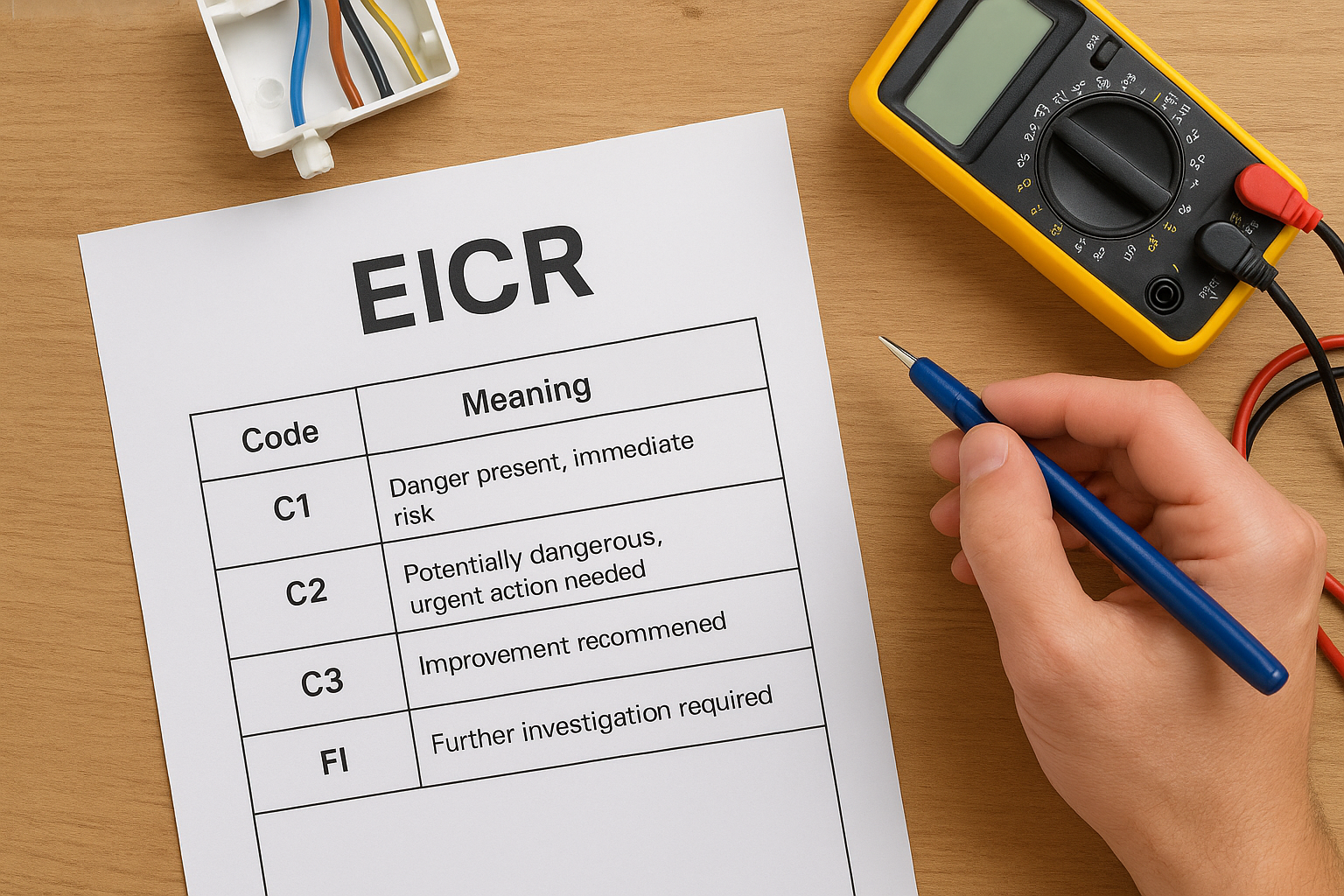
Every inspection report grades issues by severity, and it's these EICR codes and what they mean, not vague impressions, that buyers and lenders react to. Knowing what each one means helps you judge how urgent your situation really is:
|
Code |
Meaning |
Typical buyer/lender reaction |
|---|---|---|
|
C1 |
Danger present, immediate risk |
Sale or completion often paused until fixed |
|
C2 |
Potentially dangerous, urgent action needed |
Retention or price reduction commonly requested |
|
C3 |
Improvement recommended |
Noted, rarely a dealbreaker |
|
FI |
Further investigation required |
Can stall the process until resolved |
A single C1 or C2 on your EICR can do more damage to a sale than years of otherwise tidy wiring.
Buyers rarely read the whole report line by line, but their solicitor and surveyor absolutely do, and they'll build their negotiating position around whichever codes appear.
What a surveyor physically checks on the day
Beyond the paperwork, a homebuyer's survey involves someone opening the consumer unit, checking sockets for warmth or scorching, and testing whether bathrooms and kitchens have proper bonding. They're not rewiring anything themselves, but they're trained to spot the visual cues that suggest deeper problems, and those observations go straight into the report a buyer reads before making an offer.
Why lenders care beyond the buyer's own concerns
Mortgage valuers work for the lender, not the buyer, and their priority is protecting the loan against a property that might be unmortgageable later. That's why some will insist on a retention, holding back several thousand pounds until an electrician confirms the work is done, rather than simply noting the issue and moving on. If you're weighing up whether rewiring a house adds enough value to justify the spend, remember that clearing these specific red flags before a lender ever gets involved often saves far more than the cost of the work itself.
Alternatives to a full rewire worth considering
Ripping out every cable in a house isn't always necessary, and jumping straight to a full rewire can waste money you didn't need to spend. Targeted remedial electrical work fixes the specific fault a surveyor flagged, whether that's a single ring circuit, a run of old sockets, or bonding that's missing in a bathroom, without disturbing rooms that are already sound. A thermal imaging inspection is often the quickest way to confirm exactly where the problem sits before you commit to any works, since it spots overheating connections and overloaded circuits hidden behind plaster without lifting a single floorboard.
Fixing the fault a surveyor actually found beats stripping out a house on the assumption that everything must be wrong.
Swapping the fusebox alone resolves one of the most common objections buyers raise. A consumer unit replacement brings the property up to modern RCD-protected standards in a day, and it's frequently the single biggest factor behind a surveyor's original warning. Combined with a fresh EICR showing the rest of the circuits tested satisfactorily, this often closes the gap between what a buyer expects and what the house actually needs.
Quick comparison of the main alternatives
-
Consumer unit replacement: Fixes the most commonly flagged issue, done in a day, from around £250 to £450.
-
Partial rewire of one circuit or room: Clears a specific C1 or C2 code without touching sound wiring elsewhere.
-
Thermal imaging inspection: Pinpoints the fault before you spend on repairs, avoiding guesswork.
-
Fresh EICR with remedial certificate: Gives buyers and lenders documented proof the issues are resolved.
-
Homebuyers electrical report: Useful if you're the one purchasing and want clarity before you commit to a price.
Getting a proper homebuyers electrical report done before you buy works the same way in reverse, giving you the evidence to negotiate down rather than discovering problems after completion. Whichever side of the transaction you're on, the principle holds: pay for an inspection that tells you the true scope of the work, then spend only on what the property genuinely needs. Overpaying for a full rewire you didn't need is just as costly as underestimating a genuine safety issue, and both mistakes are avoidable once you've got a proper diagnosis in hand rather than a rough guess based on the age of the house alone.
Deciding what's right for your home
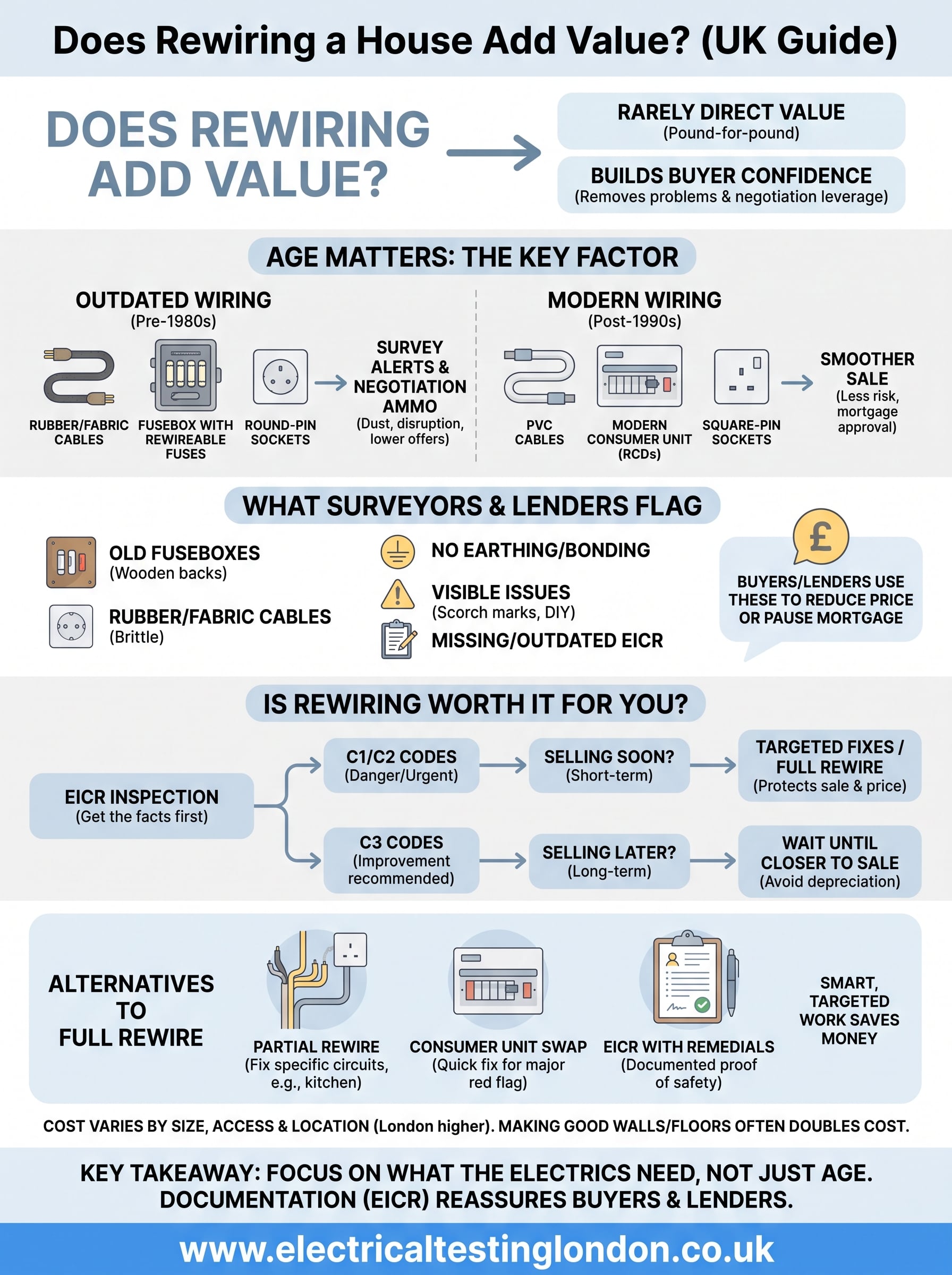
So, does rewiring a house add value? Not directly, but it removes the doubt that costs you money at negotiation stage. The real decision comes down to what your electrics actually need, not what their age suggests they need, and that's only knowable through a proper inspection rather than a guess based on how old the fusebox looks.
Get an EICR done first, whatever your timeline for selling. It tells you whether you're facing a full rewire, a partial fix, or just a consumer unit swap, and that document alone often does more to reassure buyers than the work itself. Skip the inspection and you're negotiating blind, handing control to whoever surveys the property after you.
If you want a clear picture of your property's electrics before you list, or before you buy, get a quote from our team and find out exactly where you stand.