






EICR Report West London: What It Is and What It Costs



If you're searching for an EICR report West London landlords, homeowners, and businesses can rely on, you've probably already found a confusing mix of quotes, jargon, and vague promises. Some agents quote £80, others £250, and nobody explains why the price swings so much or what you're actually paying for.
An EICR, or Electrical Installation Condition Report, is a formal inspection that checks whether your property's wiring, consumer unit, and fixed electrical installations are safe and compliant with UK regulations. For landlords it's a legal requirement renewed every five years; for homeowners and buyers it's a practical way to catch faults before they become expensive or dangerous. This article explains exactly what the inspection involves and what it should cost.
We'll cover how EICR pricing works across West London postcodes, what affects the final quote, and how to spot a properly qualified engineer rather than a cut-price cowboy. By the end, you'll know what to expect from the report itself and how to book one with confidence.
Why you need an EICR report in West London
West London's housing stock is part of the problem. Streets in Ealing, Chiswick, and Hammersmith are lined with Victorian and Edwardian conversions where the original wiring has been patched, extended, and rewired by different hands over a hundred years. An electrical installation condition report flags exactly where that patchwork has gone wrong, whether it's a consumer unit that predates modern breaker technology or wiring buried in a wall that's never been touched since the 1970s.
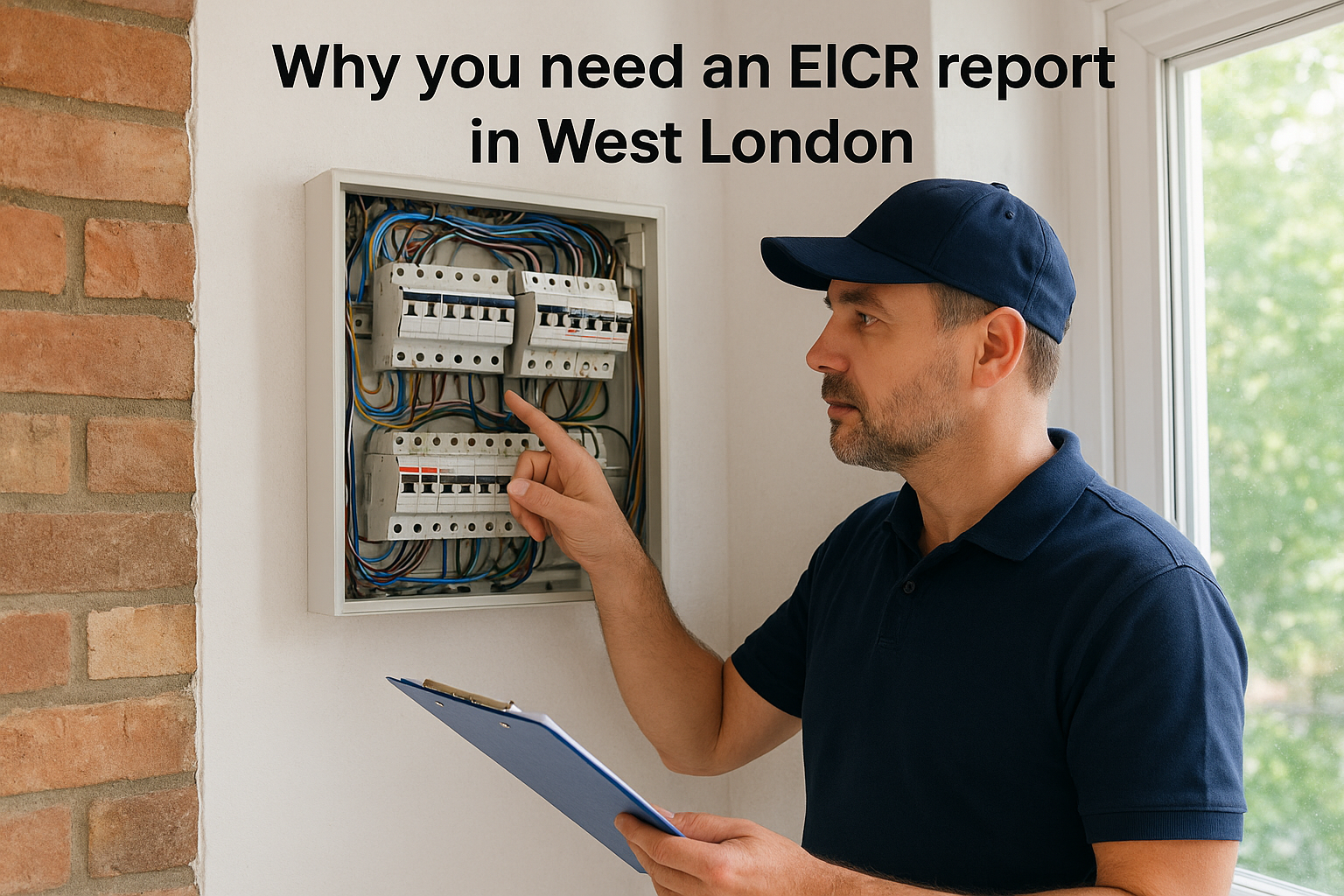
Landlords don't get a choice about this. Since 2020, England's Electrical Safety Standards regulations require every rented property to have a valid EICR, renewed at least every five years or sooner if the report demands it, which is the core of the EICR requirements for landlords. Councils in Hammersmith & Fulham and Ealing actively enforce this, and fines for non-compliance start at £30,000. If a tenant reports a fault and you can't produce a current report, you're exposed twice over: legally and financially.
A missing or expired EICR isn't a paperwork gap, it's a five-figure fine waiting to happen.
Homeowners and buyers have different but equally pressing reasons. If you're purchasing a period property in Kensington or Richmond, a homebuyers electrical report often reveals issues a standard building survey misses entirely, since general surveyors aren't qualified to open a consumer unit or test circuit continuity. Catching a C2 fault before completion gives you real negotiating leverage on price. Skip it, and you could inherit a rewire bill running into thousands within your first year of ownership.
Insurers are tightening their stance too. Several major providers now ask directly whether a property has a valid EICR, particularly for older buildings or homes with recent electrical work. Without one, a claim following an electrical fire can be delayed or reduced, even if the fault itself wasn't your doing.
Commercial clients face their own version of this pressure. Under the Health and Safety at Work Act, employers have a duty to maintain electrical systems in a safe condition, and a commercial EICR in London is the standard way to demonstrate that duty has been met. Insurers, landlords of leased premises, and health and safety inspectors will all ask for the certificate at some point, usually at the worst possible moment.
Whatever category you fall into, the report does the same job: it turns a guess about your wiring's safety into a documented, dated fact. You can review the full scope of our domestic EICR testing in London to see exactly what's inspected before you book.
How to book and prepare for an EICR inspection
Booking an EICR inspection West London properties need shouldn't take more than a five-minute phone call or online form. Reputable firms ask for your property type, number of circuits, and postcode upfront, since these details set the time slot and price. Avoid anyone who quotes a figure without asking these questions first: it usually means they're guessing, and guesses turn into surprise add-ons on the day.
Commercial clients should book around business hours rather than during them. Testing usually means isolating circuits one at a time, so a shop or office running live equipment will need either an out-of-hours slot or a phased inspection plan agreed in advance.
A quote given without knowing your circuit count isn't a quote, it's a guess with a price tag.
Preparation matters more than most homeowners expect, and it helps to know how an EICR is carried out before the engineer arrives. Before the engineer arrives:
-
Clear access to the consumer unit, usually under stairs or in a hallway cupboard
-
Unlock any outbuildings, garages, or lofts with wiring or sockets
-
List any known issues: flickering lights, tripping breakers, warm sockets
-
Make sure pets are secured, since testing involves opening cupboards and floor hatches
-
Set aside two to four hours for a typical three-bedroom house, longer for larger or older properties
Expect some disruption. Testing means turning off the power in stages, so freezers, routers, and any medical equipment on a timer should be noted beforehand. A good engineer will warn you before each isolation rather than plunging you into darkness mid-inspection.
Once the visit is booked, ask whether the report arrives the same day or within 24 to 48 hours, and check how long an EICR takes on site as well. Landlords renewing a certificate against a tenancy deadline need that turnaround confirmed before booking, not after.
What an EICR costs in West London
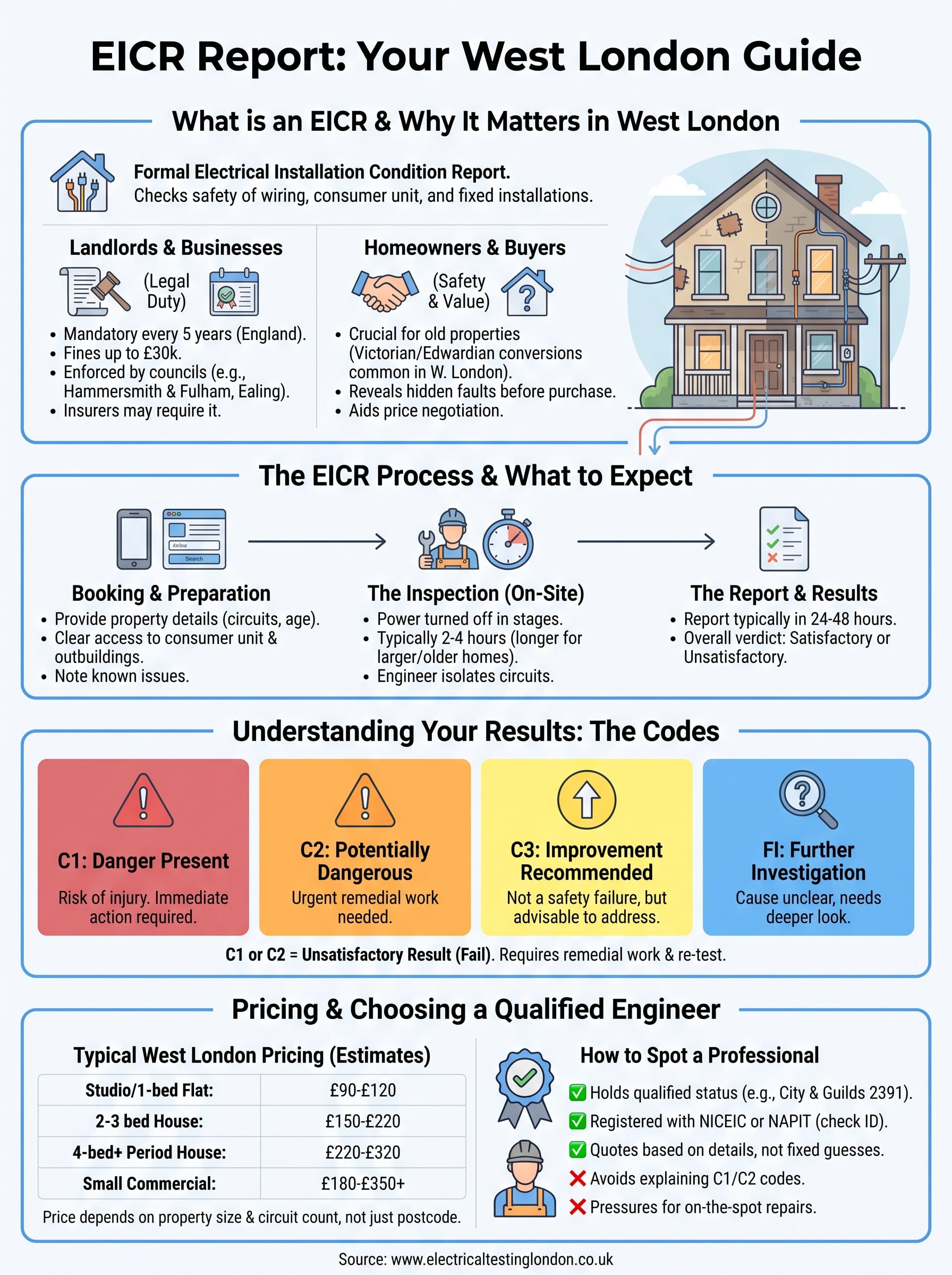
Pricing for an EICR cost West London landlords and homeowners pay depends mostly on property size and circuit count, not postcode. A one-bedroom flat with a modern consumer unit takes less time to test than a five-bedroom Victorian conversion with three separate boards, so the labour hours, and therefore the invoice, differ accordingly. Expect quotes to sit within a defined band once these details are known, rather than a single flat fee for every property type, as our breakdown of EICR prices by property size and circuits shows.
|
Property type |
Typical price range |
|---|---|
|
Studio or one-bed flat |
£90 to £120 |
|
Two to three-bed house |
£150 to £220 |
|
Four-bed or larger period house |
£220 to £320 |
|
Small commercial unit |
£180 to £350 |
|
Larger commercial premises |
£350+ (site survey required) |
Numbers like these hold across most of West London, though older buildings in conservation areas such as Chiswick or Kensington sometimes run higher if the wiring needs extra time to trace. Older properties with multiple rewires layered over decades genuinely take longer to test safely, and that time gets reflected in the quote rather than invented at random.
If a quote doesn't move when you mention your property's age or circuit count, it wasn't calculated properly in the first place.
Quotes that ignore these variables and just give you a headline figure are usually cutting corners somewhere, either on time spent per circuit or on the qualifications of whoever turns up. Remedial work identified during the inspection, such as replacing a damaged socket or upgrading an old fuse board, is priced separately and should always be quoted before any work starts. You can check current rates on our EICR pricing page before booking, so there are no surprises once the engineer is on site.
Understanding your results: C1, C2, C3 and FI codes
Every EICR ends with an overall verdict: satisfactory or unsatisfactory. That single word decides whether a landlord can hand the certificate to a tenant or letting agent without further action, or whether remedial work has to happen first. Underneath that verdict sit the observation codes, and these are what actually tell you what's wrong and how urgently it needs fixing.
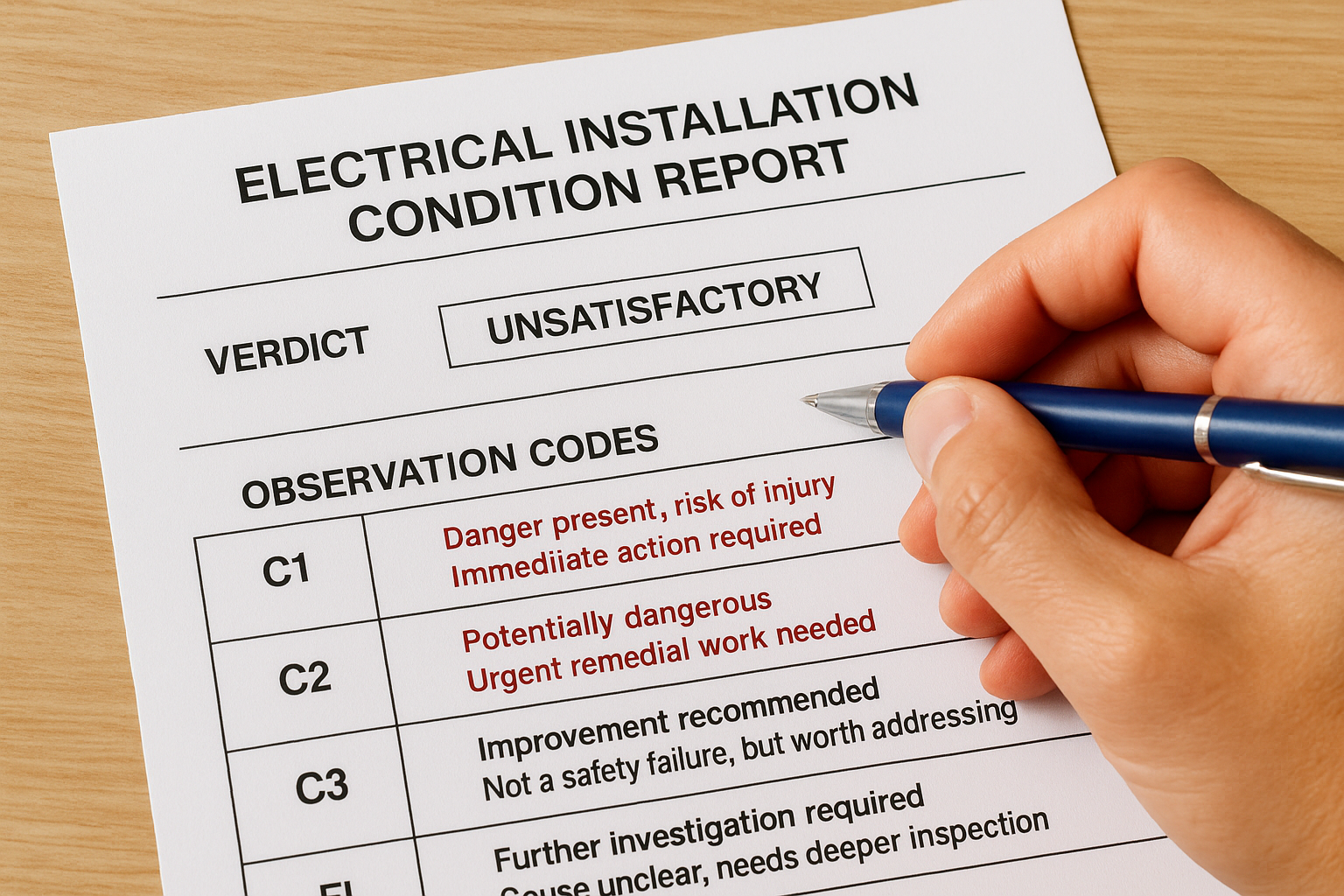
Four codes appear on a standard EICR report West London engineers issue, and what each EICR code means sets a different level of urgency:
|
Code |
Meaning |
Urgency |
|---|---|---|
|
C1 |
Danger present, risk of injury |
Immediate action required |
|
C2 |
Potentially dangerous |
Urgent remedial work needed |
|
C3 |
Improvement recommended |
Not a safety failure, but worth addressing |
|
FI |
Further investigation required |
Cause unclear, needs deeper inspection |
Generally speaking, any C1 or C2 finding pushes the whole report to unsatisfactory, since both point to a real safety risk rather than a cosmetic issue. A C3 alone won't fail the report, but ignoring several of them over successive inspections tends to store up bigger problems for later.
A single C2 code is the difference between a passing certificate and a legal compliance failure.
Following an unsatisfactory result, you'll need the flagged items resolved and the property re-tested before the certificate becomes valid. Most engineers quote EICR remedial works separately from the inspection fee, so ask for that breakdown before agreeing to anything. Good firms will also explain each code in plain English on the day, rather than leaving you to decode a page of C1s and C2s alone once they've left.
Choosing a qualified EICR engineer in West London
Qualifications matter more than a friendly quote when you're choosing a certified EICR electrician. Anyone testing your property should hold a recognised electrical qualification such as City & Guilds 2391 or 2394/2395, and belong to a competent person scheme like NICEIC or NAPIT. These schemes audit their members' work regularly, which gives you a route to complain if something's wrong later. Ten years of hands-on experience should be the minimum you accept for anything beyond a simple flat, since spotting a dodgy 1970s rewire takes pattern recognition that a newly qualified tester simply hasn't built yet.
Checking credentials properly
Before booking, ask for the engineer's registration number and check it directly on the NICEIC or NAPIT public register rather than trusting a logo on a website. A legitimate engineer won't hesitate to provide this. Also ask who's actually attending the appointment, since some firms subcontract to whoever's available that day, and the person turning up may not match the credentials advertised.
Anyone who won't share a registration number isn't confident it will check out.
Spotting the warning signs
A few red flags tend to repeat across West London's cheaper operators:
-
Quotes given without asking about circuit count or property age
-
No fixed address or landline, only a mobile number
-
Reports emailed with no letterhead, signature, or registration details
-
Reluctance to explain C1, C2, or C3 codes when asked directly
-
Pressure to sign off remedial work on the spot, before you've seen a written quote
Our engineers at Electrical Testing London meet every one of these checks as standard, and you can review their credentials on our about page before you book. Paying slightly more for a properly qualified inspection is cheaper than paying twice, once for a rushed test and again for the retest a council or insurer demands, so look for a cheap EICR certificate without cutting corners.
Staying safe and compliant in West London
Getting an EICR sorted isn't about ticking a box, it's about knowing your wiring won't fail you at the worst possible moment. Whether you're a landlord facing a five-year deadline, a buyer weighing up a period conversion in Chiswick, or a business owner covering your legal duty of care, the report gives you a dated, documented answer instead of a guess.
Pricing should track your property's size and circuit count, not the postcode you live in, and any engineer worth hiring will explain their C1, C2, and C3 findings without being asked twice. Qualifications matter as much as the quote itself, so check the registration number before you book anything.
Compliance in West London comes down to timing and honesty from whoever's testing your property. If you're ready to get a certificate booked in, request a quote for your EICR and we'll confirm pricing before an engineer ever sets foot on site.