






Electrical Certificate: What It Covers and Why It Matters



If you have ever asked what does an electrical certificate cover, you are probably staring at a tenancy agreement, an insurance form, or a solicitor's request that mentions one without explaining much else. That gap in understanding causes real problems: landlords miss deadlines, homebuyers get caught out during a sale, and homeowners assume a certificate means more (or less) than it actually does.
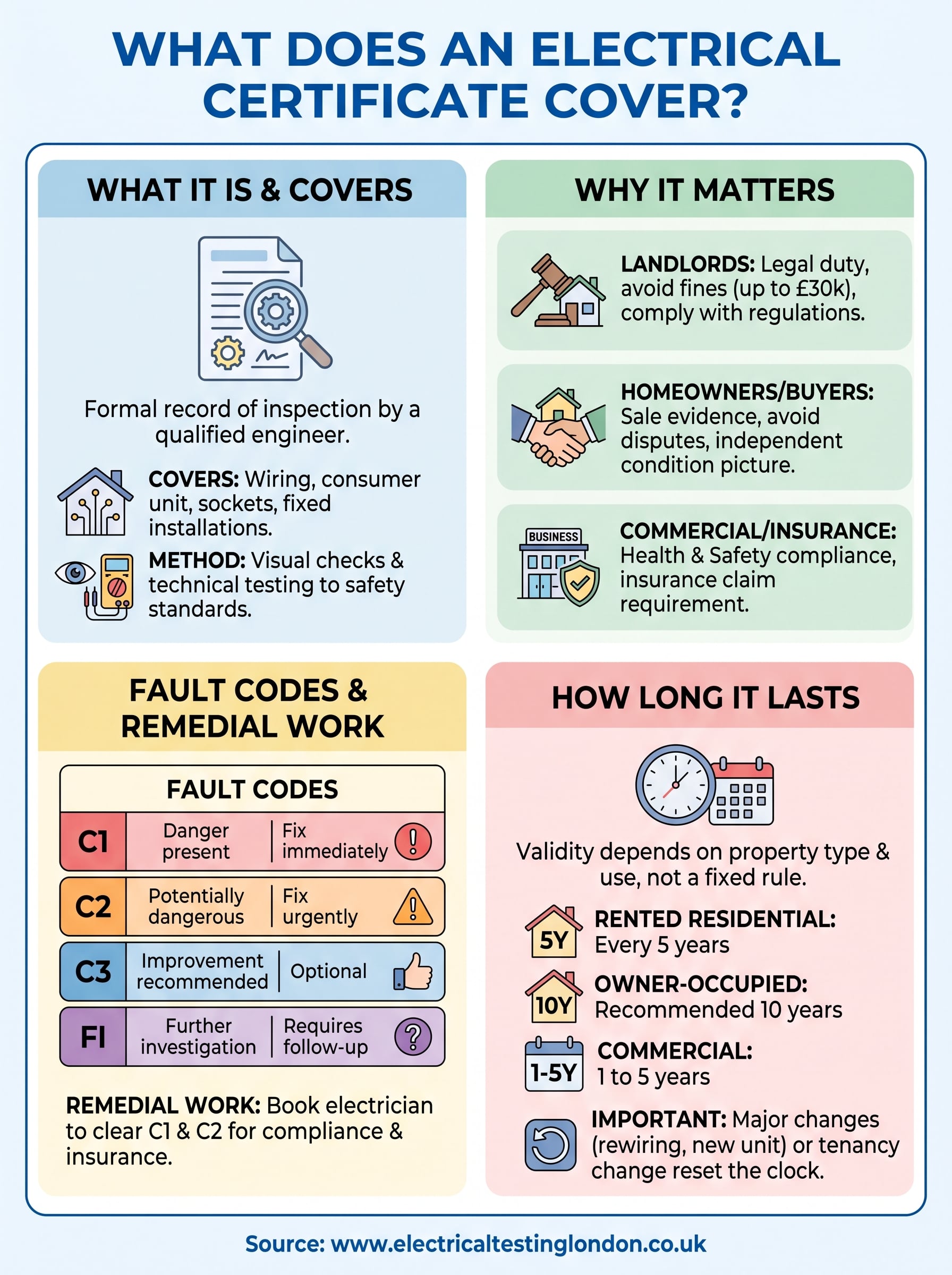
An electrical certificate is a formal record of an inspection carried out by a qualified engineer, confirming whether the wiring, consumer unit, sockets, and fixed installations in a property meet current safety standards. It covers visual checks and technical testing, notes any faults found, and classifies them by severity so you know exactly what needs fixing and how urgently.
This article breaks down exactly what's included on the paperwork, from inspection codes to test results, and explains why landlords, homeowners, and commercial property owners across London need one on file. We will also cover how it differs from related documents like an EICR, so you know which certificate applies to your situation.
Why an electrical certificate matters
Legal obligations for landlords and property managers
Landlords across London face a legal duty under the Electrical Safety Standards in the Private Rented Sector (England) Regulations 2020 to have an electrical installation condition report carried out every five years. Skipping this isn't a paperwork technicality; local councils can issue fines of up to £30,000 for non-compliance, and tenants can report unsafe conditions directly to their local authority. You can read the full regulations on the UK government website. Property managers juggling multiple addresses need this certificate on file for every single one, not just the properties currently occupied, so it pays to know the full landlord electrical safety certificate requirements before a council comes knocking.
An electrical certificate isn't proof you're careful, it's proof you're compliant.
Protecting homeowners and buyers
Homeowners rarely think about their wiring until something trips, smells odd, or a solicitor asks for evidence during a sale. A homebuyers electrical report gives buyers and sellers a clear, independent picture of the property's condition before contracts exchange, which avoids disputes over hidden faults later. Selling a house with outdated wiring and no supporting documentation often slows negotiations or knocks money off the asking price, so knowing the rules on an electrical safety certificate for a house sale works in the seller's favour too.
Commercial and insurance implications
Businesses carry a different weight of responsibility because they're accountable for staff, customers, and visitors under the Health and Safety at Work Act. An electrical safety certificate demonstrates that fixed wiring, distribution boards, and emergency systems have been checked by a competent person, which insurers increasingly ask to see before paying out on any claim involving fire or electrical fault. Without one, a straightforward insurance claim can turn into a lengthy dispute over liability, which is why our guide to certification for commercial premises is worth reading before your next inspection.
Here's a quick snapshot of who typically needs one and why:
|
Property type |
Who needs it |
Typical trigger |
|---|---|---|
|
Rented residential |
Landlords |
Legal requirement every 5 years |
|
Owner-occupied home |
Homeowners |
Sale, insurance, peace of mind |
|
Commercial premises |
Business owners |
Health and safety compliance, insurance |
|
New tenancy |
Landlords |
Before letting a new tenant move in |
How to get an electrical certificate for your property
Booking an inspection starts with finding a qualified electrician who holds current NICEIC or NAPIT registration, since only a competent person can legally issue the paperwork. Ask for proof of registration before you commit, check reviews from other landlords or homeowners in your area, and follow the steps for getting an EICR arranged in the UK. A reputable engineer will ask about the property's age, size, and number of circuits before quoting, because these factors affect how long the inspection and testing will take.
Expect the visit itself to follow a fairly standard pattern:
-
The engineer isolates circuits and visually inspects the consumer unit, sockets, switches, and visible wiring.
-
They run dead and live tests on circuits to check insulation resistance, earth continuity, and polarity.
-
Any damage, overheating, or non-compliant work gets photographed and logged.
-
You receive a written report within a few days, listing observations and a pass or fail outcome.
A properly issued certificate is only as reliable as the engineer who signs it.
Costs vary depending on property size and location, but London prices for a typical three-bedroom house sit somewhere between £150 and £300 for a full electrical installation condition report. Commercial premises cost more due to the number of circuits and distribution boards involved, and our breakdown of 2026 certificate prices by property size shows how the figures compare. If you want a fixed quote before booking, request one directly from our team and we'll confirm pricing and availability based on your property type and postcode.
Understanding fault codes and remedial work
What the codes mean
Every certificate uses a standard classification system to flag problems, and understanding it saves you from panicking over minor issues or ignoring serious ones. Codes range from immediate danger to simple recommendations, and each one carries different urgency for repair.
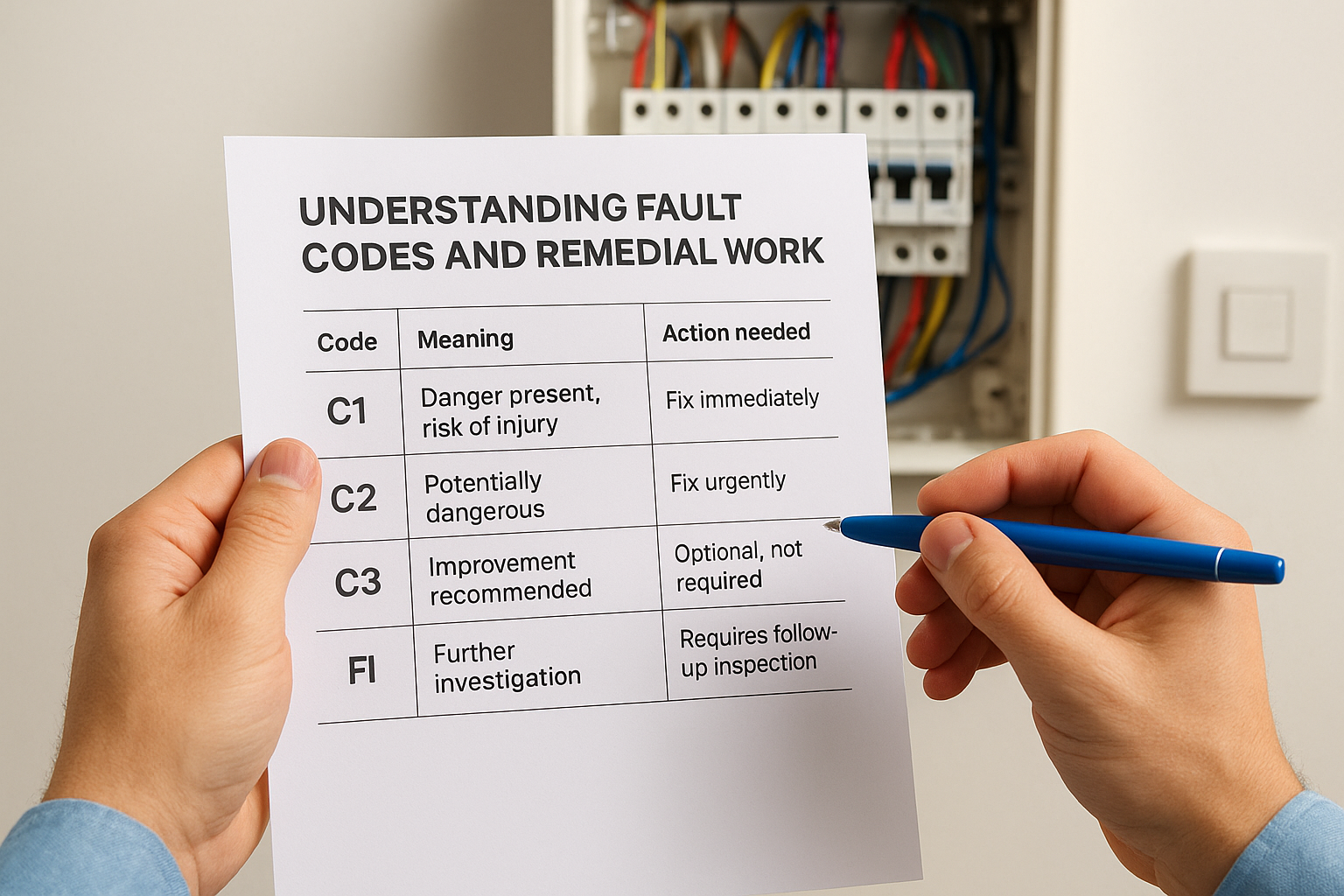
|
Code |
Meaning |
Action needed |
|---|---|---|
|
C1 |
Danger present, risk of injury |
Fix immediately |
|
C2 |
Potentially dangerous |
Fix urgently |
|
C3 |
Improvement recommended |
Optional, not required |
|
FI |
Further investigation needed |
Requires follow-up inspection |
A single C1 code can turn a routine inspection into an emergency callout.
Sorting remedial work
Once you've seen the codes, the next step is booking remedial electrical work to clear anything marked C1 or C2, since a certificate showing unresolved dangerous faults won't satisfy landlords' legal duties or a buyer's solicitor. Reputable engineers usually quote for fixes on the spot, and many will complete C1 repairs the same day given how the classification implies immediate risk, as explained in our complete guide to repair safety and costs.
Getting these faults resolved quickly also protects your insurance certificate status, because insurers can refuse claims if a known hazard was left unaddressed after inspection. Once the remedial work is done, the electrician issues an updated report or a minor works certificate confirming the specific fix, which then sits alongside your original EICR as proof the property is safe and compliant.
How long an electrical certificate lasts
Validity depends entirely on property type and use, not on a fixed calendar rule stamped on every certificate. A domestic electrical installation condition report for a rented property must be renewed every 5 years under the 2020 regulations, while owner-occupied homes have no legal deadline but benefit from a check every 10 years. Commercial premises face shorter intervals, often 5 years or less depending on the type of business and how heavily the wiring gets used, and how long a certificate lasts by property type sets out each case.

The date on your certificate matters less than what changed in the property since it was issued.
Different circumstances also reset the clock early. Rewiring work, a new consumer unit, or even a major renovation can invalidate an existing certificate before its expiry date, because the tested installation no longer matches what's on record. Landlords should also treat a change of tenancy as a natural checkpoint, even if the 5 year mark hasn't arrived yet.
Typical validity periods
|
Property type |
Recommended interval |
|---|---|
|
Rented residential |
5 years |
|
Owner-occupied home |
10 years |
|
Commercial premises |
1 to 5 years |
|
Caravan or park home |
3 years |
Keeping track of these dates across multiple properties gets complicated fast, particularly for landlords managing a portfolio spread across London. Storing your certificates digitally, alongside reminders set well before expiry, avoids the scramble that comes from discovering a lapsed electrical safety certificate during a tenancy dispute or insurance claim.
Staying on top of your electrical safety
Knowing what does an electrical certificate cover puts you back in control, whether you're a landlord facing a five-year deadline, a homeowner selling up, or a business owner answering to an insurer. The certificate itself is straightforward once you understand the codes, the testing process, and how long it stays valid for your property type. What trips people up is timing: leaving the booking until a tenancy starts, a sale falls through, or a claim gets refused.
Don't wait for a deadline to catch you out. Check your last certificate's date now, note any C1 or C2 codes still outstanding, and book your next inspection before it becomes urgent. A qualified engineer can usually turn an inspection around within days, so there's little reason to leave your property's safety, or your legal compliance, to chance. When you're ready to sort it, request a quote from our team and we'll get you booked in.