


Electrical Certificate Validity: How Long It Lasts by Property


You've had an electrical inspection done, and now you're staring at a certificate wondering when it actually expires. It's a fair question, because unlike an MOT, there's no single fixed date printed on the document telling you exactly when to renew. How long does an electrical certificate last depends almost entirely on what kind of property you own or manage.
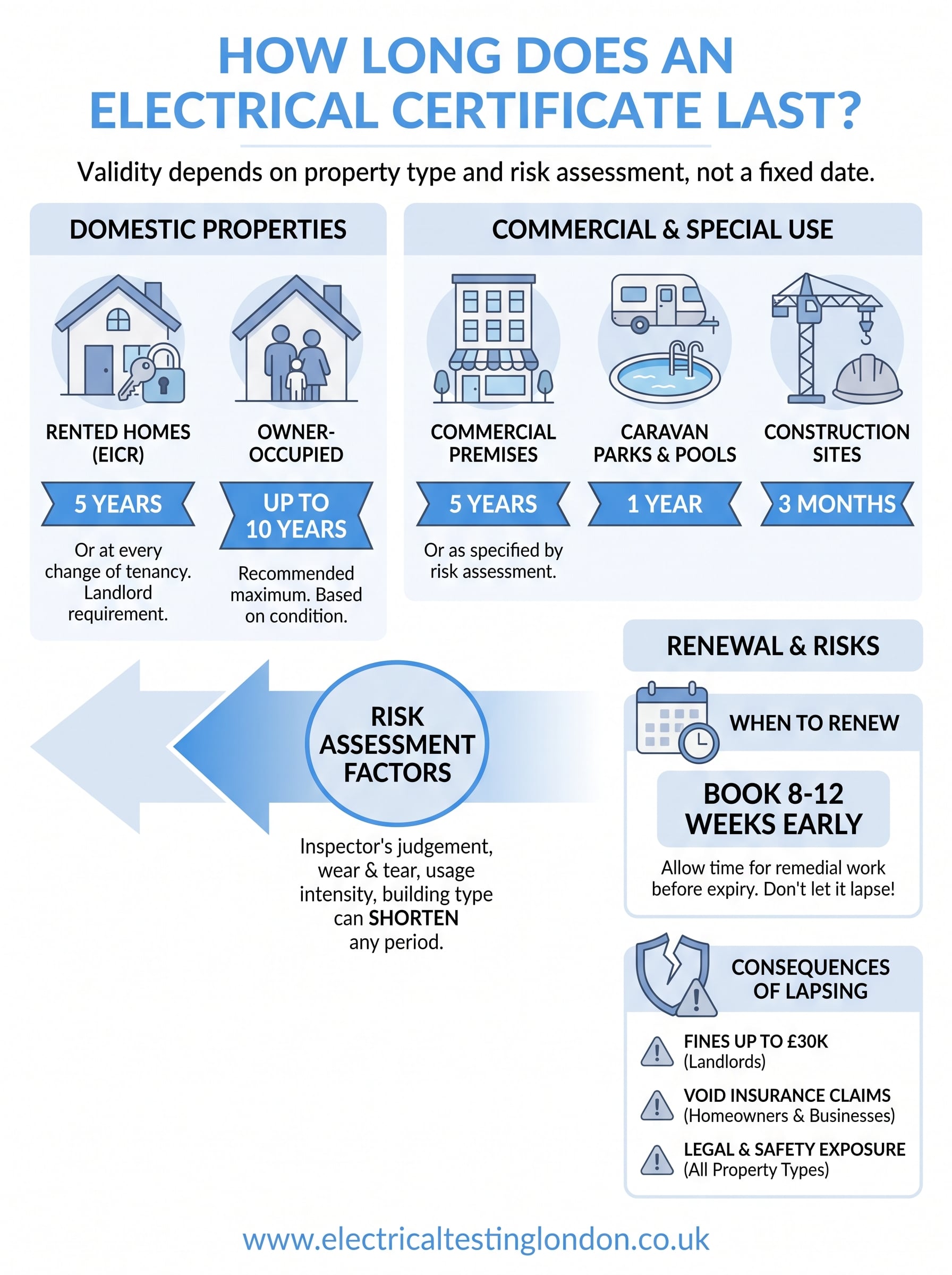
In short, most EICR certificates last five years for rented homes, but that number shifts for landlords, commercial units, and owner-occupied houses, and it can be shorter if an inspector flags concerns about the installation's condition. Knowing your specific renewal window matters because letting a certificate lapse can mean falling foul of landlord regulations, invalidating insurance, or missing warning signs of a fault developing quietly behind your walls.
Below, we've broken down validity periods by property type, explained why some certificates expire sooner than others, and covered what happens if you let one run out. Whether you're a landlord juggling multiple properties, a business owner keeping staff safe, or a homeowner planning ahead, you'll know exactly when your next inspection is due.
Why validity periods differ by property type
Think of an electrical certificate's lifespan as a risk assessment, not a fixed calendar date. The people who set these intervals, including the Institution of Engineering and Technology (IET), based them on how hard a property's electrics get worked and who's using them. A rented flat with a rotating cast of tenants faces more wear than a house where one careful owner has lived for a decade, so the inspection frequency reflects that difference in exposure.
Assessors also weigh up the type of building and its use when setting the next inspection date, and how often electrical installations should be inspected varies accordingly. A shop with customers coming and going all day puts more strain on sockets, switches, and consumer units than a quiet home office. That's why commercial units often get a shorter window than domestic properties under the UK rules for commercial property electrical safety certificates, even though the underlying wiring might be similarly modern.
The type of property, not the certificate itself, decides how long your electrical safety check remains valid.
Swimming pools, construction sites, and properties with a lot of shared or public access sit at the sharper end of this scale, sometimes needing checks every one to three years. Meanwhile, a single-family home with no major electrical changes can often stretch to a full ten years between full inspections, provided nothing during a visual check raises concern.
|
Property type |
Typical EICR validity |
|---|---|
|
Rented (domestic) |
5 years, or at every change of tenancy |
|
Owner-occupied home |
Up to 10 years |
|
Commercial premises |
5 years, or as specified by risk assessment |
|
Caravan parks |
1 year |
|
Swimming pools |
1 year |
|
Construction site installations |
3 months |
Ultimately, an inspector can shorten any of these periods if they spot early signs of deterioration, outdated fuse boards, or overloaded circuits during the visit. That's a key reason how long does electrical safety certificate last isn't a question with one universal answer, and why an EICR can be valid for 3 or 5 years depending on the property. It's a judgement call made property by property, based on genuine risk rather than a one-size-fits-all schedule.
How to renew your certificate before it expires
Renewing an electrical certificate isn't something to leave until the week it runs out. Booking early gives you room to fix any issues an engineer flags without scrambling for a last-minute appointment, and it keeps landlords and businesses on the right side of the compliance deadline rather than chasing it.
When to book your next inspection
Good practice is to arrange your EICR renewal eight to twelve weeks before the expiry date on your current certificate. This buffer matters because if the inspection uncovers a C1 or C2 fault, you'll need time to get remedial work done and re-tested before the old certificate lapses. Landlords in particular should mark the date in a diary or property management system the moment they receive a new certificate, rather than relying on memory.
What to have ready for the engineer
Having the right paperwork on hand speeds up the whole process considerably. Before your engineer arrives, pull together:
-
Your previous EICR or electrical certificate
-
Records of any remedial work carried out since the last inspection
-
A list of known issues, such as tripping breakers or flickering lights
-
Access details for any locked meter cupboards or consumer unit locations
Once you know how to get an electrical safety certificate, a qualified electrician can carry out the full check and issue a new certificate on the spot if the installation passes, or outline a clear action plan if it doesn't. If you're due a renewal, our EICR testing service covers domestic and commercial properties across London and the South East, with engineers who've each got at least a decade of hands-on experience behind them.
What happens if your certificate lapses
An expired electrical certificate doesn't cause an immediate fault, but it does strip away your legal and financial protection the moment something goes wrong. Letting a certificate lapse leaves you unable to prove the installation was safe on any given date, which matters far more than most people realise until they're stood in front of an insurer or a local council officer.
A lapsed certificate isn't just paperwork gone missing, it's proof of safety gone missing too.
Landlords face the sharpest consequences
For landlords, an out-of-date landlord EICR certificate is a breach of the Electrical Safety Standards in the Private Rented Sector Regulations 2020. Local authorities can issue fines of up to £30,000 per breach, and tenants can report the issue directly if they're never given a valid copy. Beyond the legal exposure, letting agents typically won't market a property without current paperwork on file, which can stall re-lets and cost you rent.
Homeowners and businesses lose cover, not compliance
Homeowners don't face the same legal duty, but a lapsed certificate can void home insurance claims tied to electrical fires or faults, since insurers often ask for evidence of a recent inspection. Commercial premises carry similar exposure under the Health and Safety at Work etc. Act 1974, where an expired certificate weakens your defence if the Health and Safety Executive investigates an incident.
Getting a fresh inspection booked as soon as you notice a lapse limits the gap, and any faults picked up can usually be resolved through prompt remedial electrical works before they escalate further.
How to track certificates across multiple properties
Managing renewal dates for one property is straightforward, but landlords and businesses with a portfolio of properties often lose track of which certificate expires when. Missing a single expiry date across ten rental units can mean a tenant living without valid cover for months before anyone notices, and that gap is exactly where fines and insurance disputes start, so it pays to know the EICR requirements for landlords inside out.
Building a simple tracking system
Even a basic spreadsheet beats relying on memory, provided you update it every time a certificate is issued. Record the property address, inspection date, expiry date, and any outstanding remedial work in one place, then set calendar reminders eight to twelve weeks before each expiry so nobody gets caught out.
One missed renewal date can undo years of otherwise spotless compliance across an entire portfolio.
Using property management software
Larger portfolios benefit from property management software that flags upcoming inspections automatically, rather than depending on someone remembering to check a spreadsheet. Look for tools that let you:
-
Upload certificates directly against each property record
-
Set automated alerts ahead of expiry dates
-
Share documents instantly with tenants or letting agents on request
-
Log remedial work completed against each EICR
Whichever method you pick, consistency matters more than sophistication. Verifying dates against the government's own Electrical Safety Standards guidance is worth doing once a year, and a landlord managing three properties on a well-maintained spreadsheet sits in a far stronger position than one juggling twenty with no system at all.
Staying on top of your next renewal
So, how long does an electrical certificate last? The honest answer is it depends on what you own: five years for most rented and commercial properties, up to ten for owner-occupied homes, and far shorter windows for pools, caravan parks, and construction sites. Property type sets the baseline, but an inspector's findings on the day can always shorten it.
Getting this right isn't about memorising rules, it's about building a habit. Book your renewal eight to twelve weeks early, keep your paperwork organised, and track expiry dates properly if you manage more than one property. That routine is what keeps you compliant, insured, and safe, rather than scrambling after a lapse.
Don't wait until a tenant, buyer, or insurer asks for proof you can't produce. Get a quote from our team and get your next inspection booked before the clock runs out.

