


Electrical Compliance Certificate: What It Is and Why It Matters


Someone has asked you for an electrical compliance certificate, or maybe your letting agent has flagged that yours is out of date, and you're not entirely sure what document they actually mean. You're not alone. Landlords, homebuyers, and business owners across London hear the term thrown around constantly, often without a clear explanation of what it covers or why it matters. A what is an electrical compliance certificate query usually means you're trying to figure out if you need one, and fast.
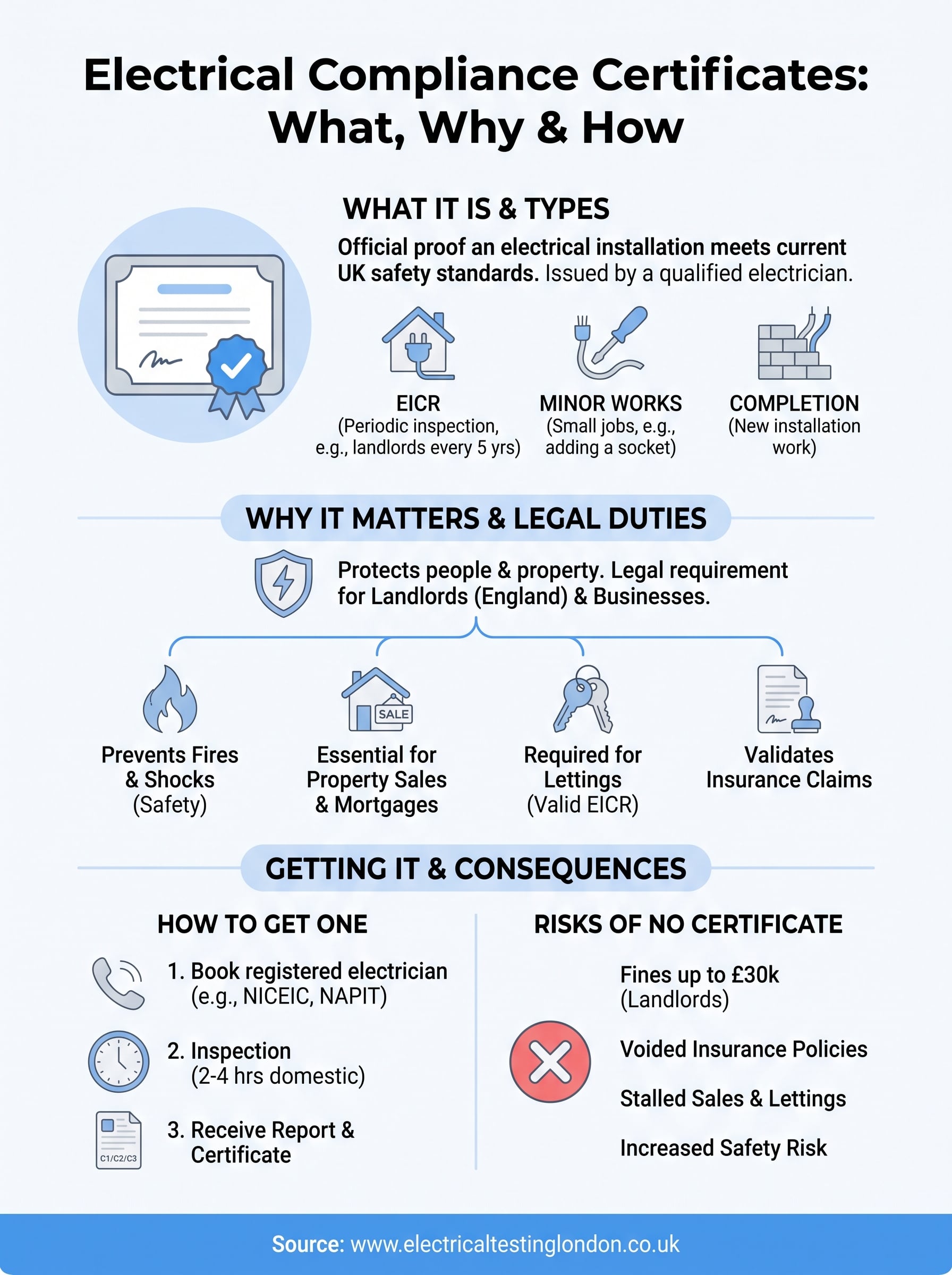
Put simply, it's official written confirmation that an electrical installation or piece of work meets current UK safety standards. It's issued after an inspection or job by a qualified electrician, and it's what proves, to a tenant, a mortgage lender, or an insurer, that the wiring in a property won't burn the place down. Depending on the situation, this could mean an EICR, a minor works certificate, or a completion certificate for new installation work, and it helps to know the different types of electrical certificates in the UK before you book anything.
In this article, we'll break down exactly what these certificates include, the different types you might encounter, and when the law actually requires one, whether you're selling a house, renting out a flat, or having new work carried out.
Why an electrical compliance certificate matters
Getting an electrical compliance certificate isn't just paperwork for the sake of it. It's the difference between knowing your wiring is safe and hoping it is. Faulty electrics cause thousands of house fires across the UK every year, and a proper inspection catches the warning signs (overloaded circuits, deteriorating insulation, dodgy DIY wiring) before they turn into an emergency. When someone asks what is an electrical compliance certificate, they're really asking whether their property has been checked by someone qualified to spot these problems.
A compliance certificate is proof that a professional has checked your electrical system and confirmed it won't put anyone at risk.
Legal duties for landlords and businesses
Landlords in England have a legal duty under the Electrical Safety Standards in the Private Rented Sector Regulations 2020 to have a valid EICR carried out at least every five years. Businesses face similar obligations under the Electricity at Work Regulations 1989, and insurers increasingly expect commercial premises to hold up-to-date certification, so it's worth reading how the landlord electrical safety regulations compare with workplace rules. Skipping this isn't a grey area, it's a compliance failure with real legal consequences.
Financial and practical stakes
Homeowners selling a property, mortgage lenders assessing risk, and insurance companies settling claims all rely on this documentation too. Without it, a sale can stall, a claim can be rejected, or a mortgage application can hit an unexpected snag. Consider what's typically at stake:
-
Tenant safety: protects renters from shock and fire risk
-
Legal compliance: satisfies landlord and workplace safety law
-
Insurance validity: many policies require current certification to pay out
-
Property value: reassures buyers and lenders during a sale
-
Peace of mind: confirms the work behind the walls is sound
Ultimately, the certificate exists to protect people, not just to satisfy a checkbox. If you're weighing up whether you actually need one, our guide to what an Electrical Installation Condition Report is breaks down exactly what's involved and who's legally required to have one.
How to get an electrical compliance certificate
Getting an electrical safety certificate is straightforward once you know who to call. Booking a qualified electrician is the first step, and it's worth checking their credentials before you commit, since not every electrician is registered to issue formal compliance documents. Look for membership with a recognised body like NICEIC or NAPIT, both of which audit their members' work and back it with insurance-backed guarantees.
The right certificate only means anything if it's issued by someone properly qualified to give it.
Booking an inspection
Here's what the process usually looks like from start to finish:
-
Request a quote based on your property type and size
-
Arrange access so the electrician can reach consumer units, sockets, and fixed wiring
-
Sit through the inspection, which typically takes two to four hours for a domestic property
-
Review the findings, including any faults classified by urgency
-
Receive your certificate, either an EICR, minor works certificate, or completion certificate depending on the job
What happens during the visit
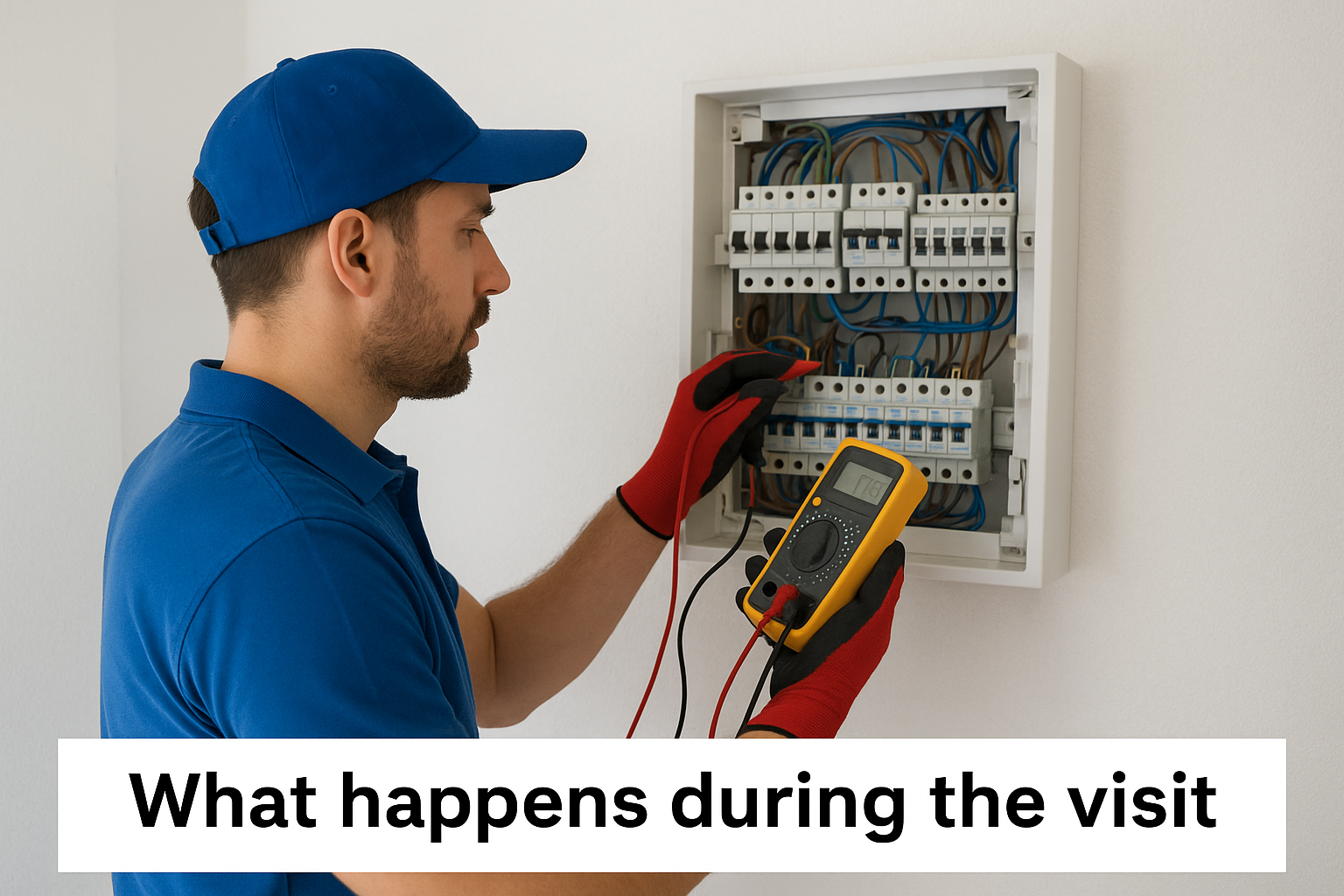
During the visit, the electrician tests circuits, checks earthing and bonding, and inspects the consumer unit for outdated or damaged components, and our breakdown of what an EICR actually checks covers each test in turn. Anything found gets coded by severity, from immediate danger down to items worth monitoring. You can book this directly through our request a quote page, and most jobs get scheduled within a few days.
When you'll be asked to show your certificate
Certain moments in property life force the question, and you'll usually find out you need proof at the worst possible time. Selling a house means your solicitor will ask for electrical safety documentation for a house sale as part of the conveyancing pack, and buyers' surveyors often flag its absence as a reason to negotiate the price down. Renting out a property means your letting agent won't hand over keys to a new tenant without a valid EICR on file, since it's a legal requirement before any tenancy starts.
Property transactions and lettings
Beyond sales and lettings, several other situations trigger the same request:
-
Mortgage applications: lenders often want confirmation the wiring is safe before releasing funds
-
Insurance claims: a fire or flood claim can be delayed or refused without current certification
-
New tenancies: agents typically won't proceed without sighting a valid report
-
Business audits: health and safety inspectors may ask for proof during workplace checks
-
Renovation work: builders and architects sometimes need it before starting structural changes
If someone official is asking for paperwork, they're really asking whether your property is safe.
Renewals and ongoing checks
Even when nobody's actively asking, it's worth keeping your certificate current rather than waiting for a request. How often you need an EICR depends on the property: landlords need renewal every five years, commercial premises often annually depending on use, and homeowners benefit from a fresh check every ten years or after major electrical work. Waiting until someone demands proof usually means scrambling to book an inspection under pressure, which rarely gets you the best price or a convenient appointment slot.
What happens if you don't have one
Missing paperwork rarely stays hidden for long, and the consequences land at the worst possible moment. Landlords caught without a valid EICR face fines of up to £30,000 per breach from local authorities, and that's before you factor in the reputational damage of a tenant reporting you to the council. Businesses fare no better: a workplace injury linked to faulty wiring without proper certification can void your public liability insurance entirely, leaving you personally exposed to compensation claims.
No certificate means no proof your electrics are safe, and that gap gets expensive fast.
Financial and legal fallout
Beyond fines, the practical fallout tends to hit hardest during transactions. Selling a house without an electrical safety certificate often means buyers renegotiate the price downward or walk away entirely, since their solicitor won't sign off without it. Sorting an insurance claim becomes a nightmare too, with insurers routinely rejecting fire or electrical fault claims when there's no evidence the installation was ever checked.
Why prevention beats the scramble
Often, the real cost isn't the fine itself but the disruption. Property sales stall for weeks while a rushed inspection gets booked, tenancies can't legally start, and mortgage lenders simply refuse to release funds. Getting ahead of it with a scheduled inspection through our request a quote page costs far less than dealing with a failed sale or a rejected claim after the fact.
Choosing a qualified electrician for certification
Not every electrician can legally issue a compliance certificate, and knowing who can sign one off stops you being left with paperwork that doesn't hold up when it matters. Registration with a recognised competent person scheme, such as NICEIC or NAPIT, means the electrician's work gets audited regularly and backed by insurance if something goes wrong. Without that registration, you're relying on someone's word rather than an independently checked standard.
A certificate is only as trustworthy as the electrician who signed it.
What to check before booking
Questions worth asking before you commit include:

-
Registration status: are they listed with NICEIC, NAPIT, or a similar body?
-
Experience level: how many years have they worked on properties like yours?
-
Insurance cover: do they carry public liability and professional indemnity insurance?
-
Sample reports: can they show a previous EICR or certificate for reference?
-
Turnaround time: how quickly can they issue the finished certificate?
Why experience matters
Experience shapes how thoroughly an inspection gets carried out. Newer electricians sometimes miss subtler faults, like deteriorating insulation behind a wall or an outdated consumer unit that technically works but no longer meets current standards. Verifying credentials upfront saves you from a repeat inspection later, which costs more than getting it right the first time.
Engineers at Electrical Testing London all bring at least ten years of hands-on experience, so the certificate you receive reflects a properly qualified assessment rather than a rushed sign-off.
Keeping your property safe and compliant
An electrical compliance certificate isn't just a document to file away and forget. It's proof your property has been checked by someone qualified, and it protects tenants, buyers, and your own peace of mind. Whether you're a landlord facing a five-year renewal, a homeowner selling up, or a business owner meeting workplace safety law, the certificate answers one question: is this wiring safe right now?
Waiting until someone demands proof rarely works out well. Sales stall, tenancies get delayed, and insurance claims get rejected, all because a five-minute booking got left too late. Sorting it now, while there's no pressure and no deadline looming, means you get the appointment slot you want and the price you want.
If you're due a check or simply want proper documentation in hand, request a quote from Electrical Testing London and get it sorted before anyone has to ask.

