


Electrical Home Safety Inspection Checklist: 6 Key Areas


The best electrical home safety inspection checklist works room by room, relies only on what you can see, smell, hear and feel, and tells you when to stop and call a registered electrician. This one has six parts. Start with a professional EICR if you rent out a property or have never had your wiring tested. Start with the consumer unit if your home is older. Work through the kitchen and bathroom checks if you have children, and finish with the garden checks if you run tools, lights or pumps outdoors.
Most electrical faults give warnings long before they cause a shock or a fire. A warm socket, a flickering light or a breaker that keeps tripping is usually the first sign. The problem is that generic advice such as "check your wiring" does not tell you what to look at or how often.
At Electrical Testing London we test homes, rentals and businesses across London and the South East, so the red flags below are the ones we look for on site. Print this page and tick items off as you go. Never remove a cover, open the consumer unit or touch bare wire. This checklist is for looking only.
1. Professional EICR for the wiring you cannot see
A professional Electrical Installation Condition Report (EICR) is the one part of an electrical home safety inspection you cannot do yourself. It tests the fixed wiring behind walls and under floors, which no visual checklist can reach.
What to check and how often
An engineer inspects and tests the consumer unit, every circuit, the earthing and bonding, and the condition of sockets and switches. You receive a Satisfactory or Unsatisfactory certificate. The usual guidance is an EICR at least every 10 years for a home you live in, and every 5 years or at a change of tenancy for a rented home. Our domestic EICR typically takes 2 to 4 hours, and any defects come with a quotation for putting them right. Prices cover up to eight circuits:
|
Property |
Domestic EICR |
|---|---|
|
Studio |
£115 |
|
1 bedroom |
£130 |
|
2 bedrooms |
£145 |
|
3 bedrooms |
£155 |
|
4 bedrooms |
£170 |
|
5 bedrooms |
£190 |
|
6 bedrooms |
£210 |
A three-bedroom house with ten circuits costs £155 for the first eight, plus two extra circuits at £15 each plus VAT.
A visual checklist spots symptoms, but only testing proves what the hidden wiring is doing.
Red flags and when to call an electrician
Book a test sooner than the schedule says if any of the following applies. Each one means the condition of the wiring is unknown or may have changed.
-
You are buying a home. A Homebuyer Electrical Report starts at £149 for a studio.
-
You have no certificate, or earlier DIY work was done by a previous owner.
-
Breakers trip repeatedly, or you smell burning near an outlet.
-
The property has been flooded, extended or renovated.
2. Consumer unit and breaker panel
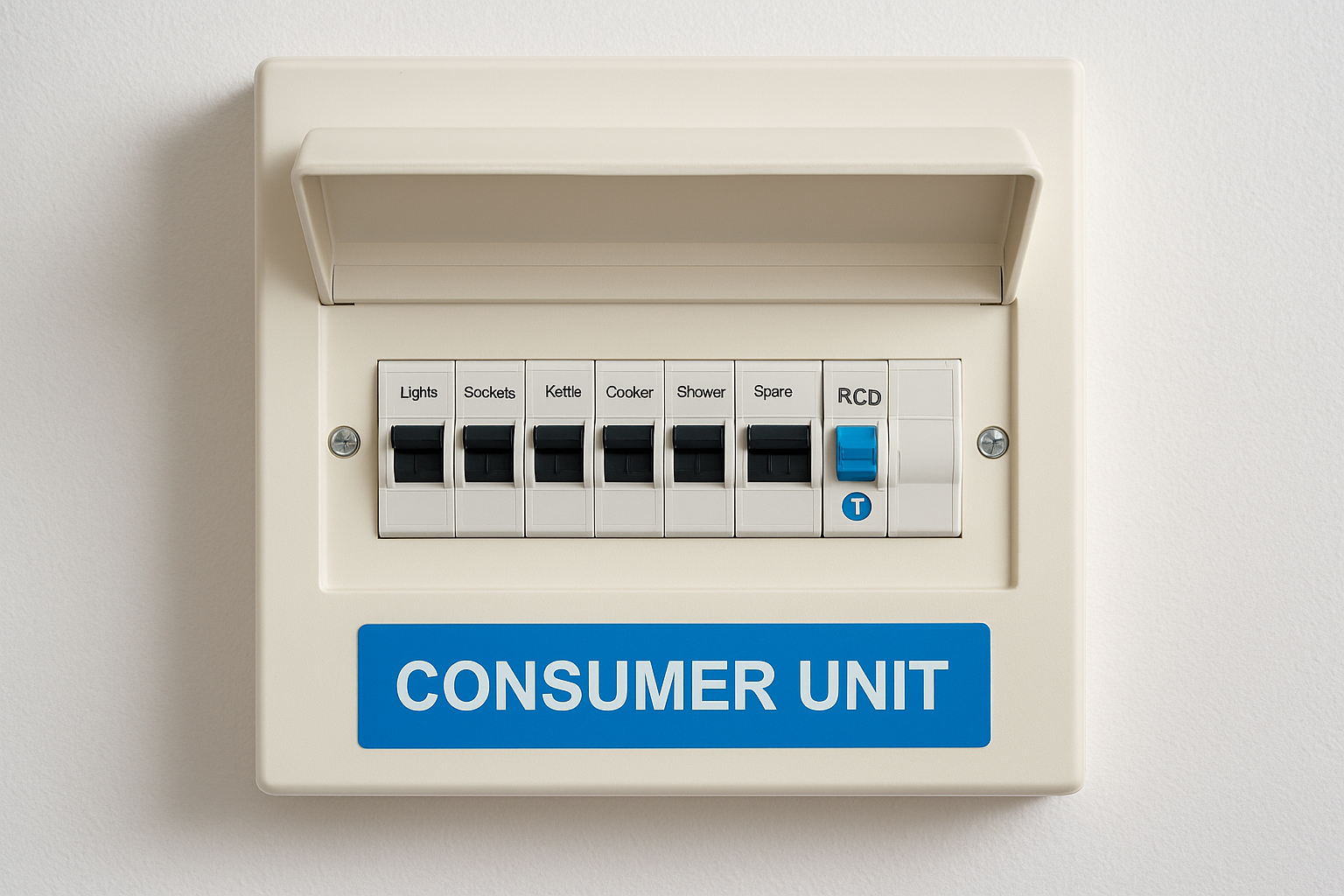
Your consumer unit, also called the fuse box or breaker panel, is the control centre of the installation, so a quick look at it tells you a lot. You can check its condition and test its RCD button without opening anything.
What to check and how often
Once a month, look at the unit from the outside. Keep access clear, check that every circuit label is readable, and look for scorch marks or a burning smell. Listen for buzzing or crackling. Every three months, press the RCD test button (usually marked "T"). The RCD should switch off at once. Reset it afterwards and restart any clocks or computers.
Also note what type of unit you have. Rewirable ceramic fuses, a cracked or brittle casing, or no RCD protection are all reasons to ask an electrician for an assessment.
Press the RCD test button every three months, because a device that never trips when tested will not protect you in a fault.
Red flags and when to call an electrician
Stop and call a registered electrician if the unit feels warm, smells of burning, buzzes, or shows damage. The same applies if a breaker trips again straight after resetting, or the RCD will not reset. If water has reached the unit, leave it alone.
When a unit needs replacing, we fit a modern 18th edition amendment 2 consumer unit for £390 plus VAT. The work takes 3 to 5 hours and includes an Electrical Installation Certificate and a one-year parts and labour warranty.
3. Sockets, switches, plugs and leads
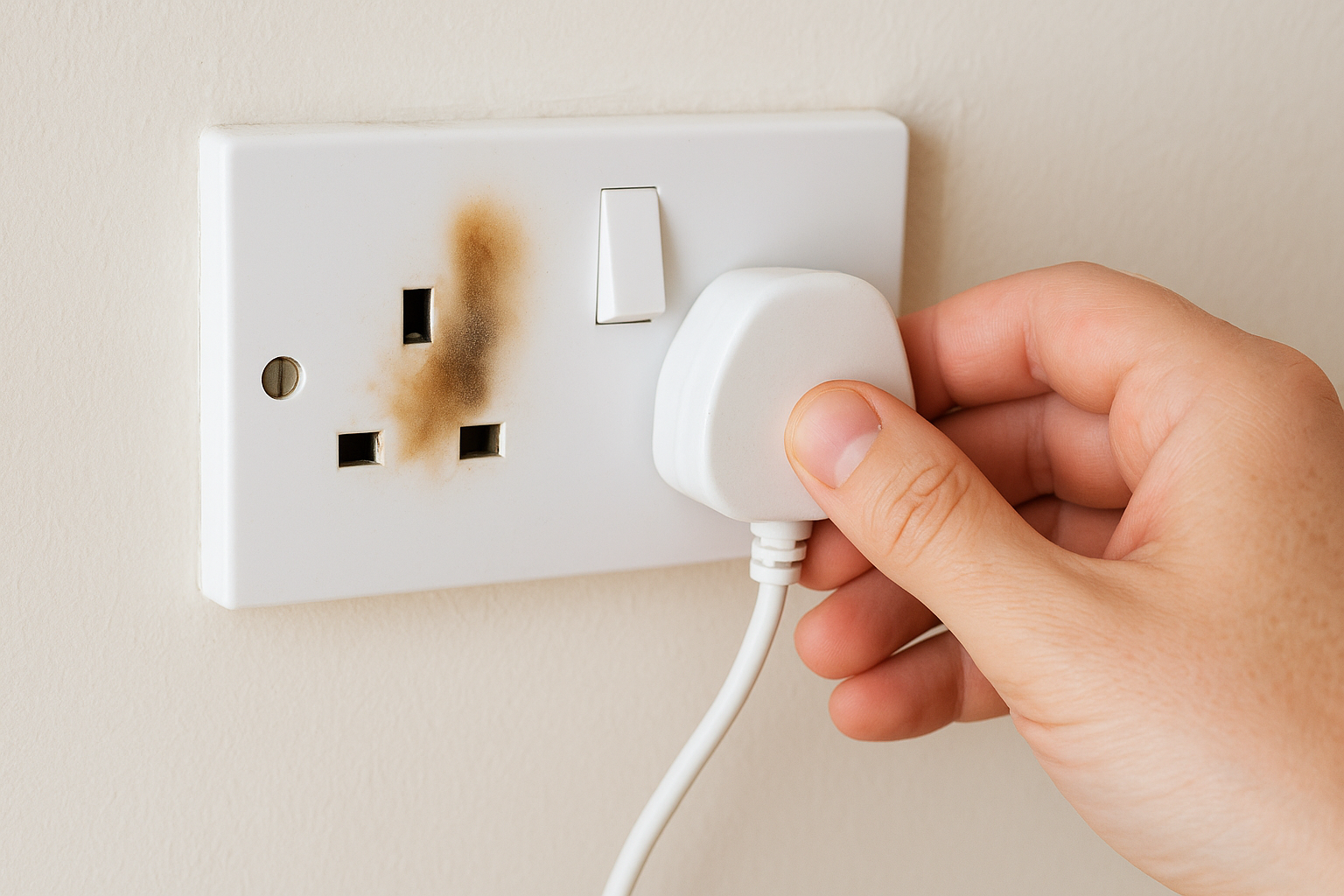
Sockets, switches and flexible leads cause most of the faults you can spot yourself, which makes this the core of any home electrical safety checklist. Walk through the living rooms and bedrooms with a torch.
What to check and how often
Check once a month, and again whenever you plug in a new heater or large appliance. Look at each socket faceplate for scorch marks, discolouration or cracks, and check that it sits firmly on the wall. Touch it after the room's appliances have run for a while. It should not feel warm. Then check the rest:
-
Plugs: straight pins, no cracks, and a fuse that matches the appliance.
-
Leads: no fraying, kinks or crushing, and none under rugs or furniture.
-
Adaptors and extension leads: only one heat-producing appliance per multi-way adaptor, and reels fully unwound when in use.
-
Chargers: branded and undamaged, and unplugged when not needed.
A socket that feels warm is never normal, and it is the cheapest early warning you will get.
Red flags and when to call an electrician
Unplug and replace any damaged lead or plug straight away. Call an electrician for sockets that crackle, buzz or discolour, for switches that feel hot, or for lights that flicker across a whole room. Adding sockets is also a job for a registered electrician, and it is often the real fix for an overloaded adaptor. If you let a furnished property, a PAT test of supplied appliances is worth having. Ours starts at £49.95 for up to five items, with the register included.
4. Kitchen
The kitchen combines water, heat and high-load appliances, so it deserves its own check. Apply it weekly while you clean and monthly behind the larger appliances.
What to check and how often
Always dry your hands before touching a switch or plug. Keep kettle and toaster leads off the hob and away from the sink, and unplug a toaster before clearing a jam. Keep vents on the oven, fridge and extractor clear so heat can escape. Once a month, pull out or look behind the washing machine, dishwasher and fridge:
-
Plugs and sockets: no heat marks, melted plastic or damp.
-
Leads: not trapped, stretched or squashed against the wall.
-
Washing machine and dishwasher hoses: no leaks near sockets.
-
Large appliances: plugged directly into a wall socket, not an extension lead.
In a kitchen, the safest habit is to treat any splash or leak near a socket as an electrical fault until proven otherwise.
Red flags and when to call an electrician
A tingle from a metal appliance or tap, a kettle that trips the breaker, or moisture around a socket all mean you should stop using the item. Call a registered electrician for any of these, and for hard-wiring a new oven or hob or moving sockets. Never keep resetting a breaker that trips with the same appliance.
5. Bathroom
A bathroom is the highest-risk room in the house because wet skin and steam make a shock far more dangerous. Check it monthly with dry hands and dry feet.
What to check and how often
Standard sockets are not allowed in a bathroom. The only outlet you should see is a shaver socket, and it should sit well away from the bath and shower. Keep hairdryers, radios and chargers out of the room, or use them away from water. Check that ceiling lights are sealed with no condensation inside, and that a pull-cord is dry, intact and not frayed. Any electric towel rail or heater should be fixed and permanently wired, never a plug-in model.
The rule for bathrooms is simple: if it plugs in, it should not be in there.
Red flags and when to call an electrician
Water inside a light fitting, a light that flickers when steam builds up, a buzzing fan, or a tingle from taps or pipework all need a registered electrician. If there has been a leak, do not use the bathroom electrics until they have been checked. Fitting or replacing lights, fans, heaters and shaver sockets should also be left to a registered electrician.
6. Garden, garage and outbuildings
Outdoor electrics face rain, damp and rough handling, so faults develop faster than indoors. Check them before every use and again after wet or stormy weather.
What to check and how often
Plug every outdoor tool, light and pump into an RCD-protected socket or an RCD plug. Use only leads and connectors rated for outdoor use, keep connections off the wet ground, and unwind reels fully. Inspect cables for cuts or crushing before each use, and unplug a mower or trimmer before clearing a jam. Store equipment dry. Check that garage and shed sockets are firmly fixed with no signs of damp.
Outdoors, the RCD matters more than anywhere else in the house, because wet ground turns a small fault into a serious shock.
Red flags and when to call an electrician
Corrosion, moisture in a connector, a tripping RCD when you switch on garden lights or a pond pump, and cracked housings are all stop signs. Supplies to sheds, garages and pond pumps should be installed or altered by a registered electrician. Never charge an electric vehicle through an extension lead. A dedicated charger fitted by a professional is the safe route.
Keep the checklist, book the test
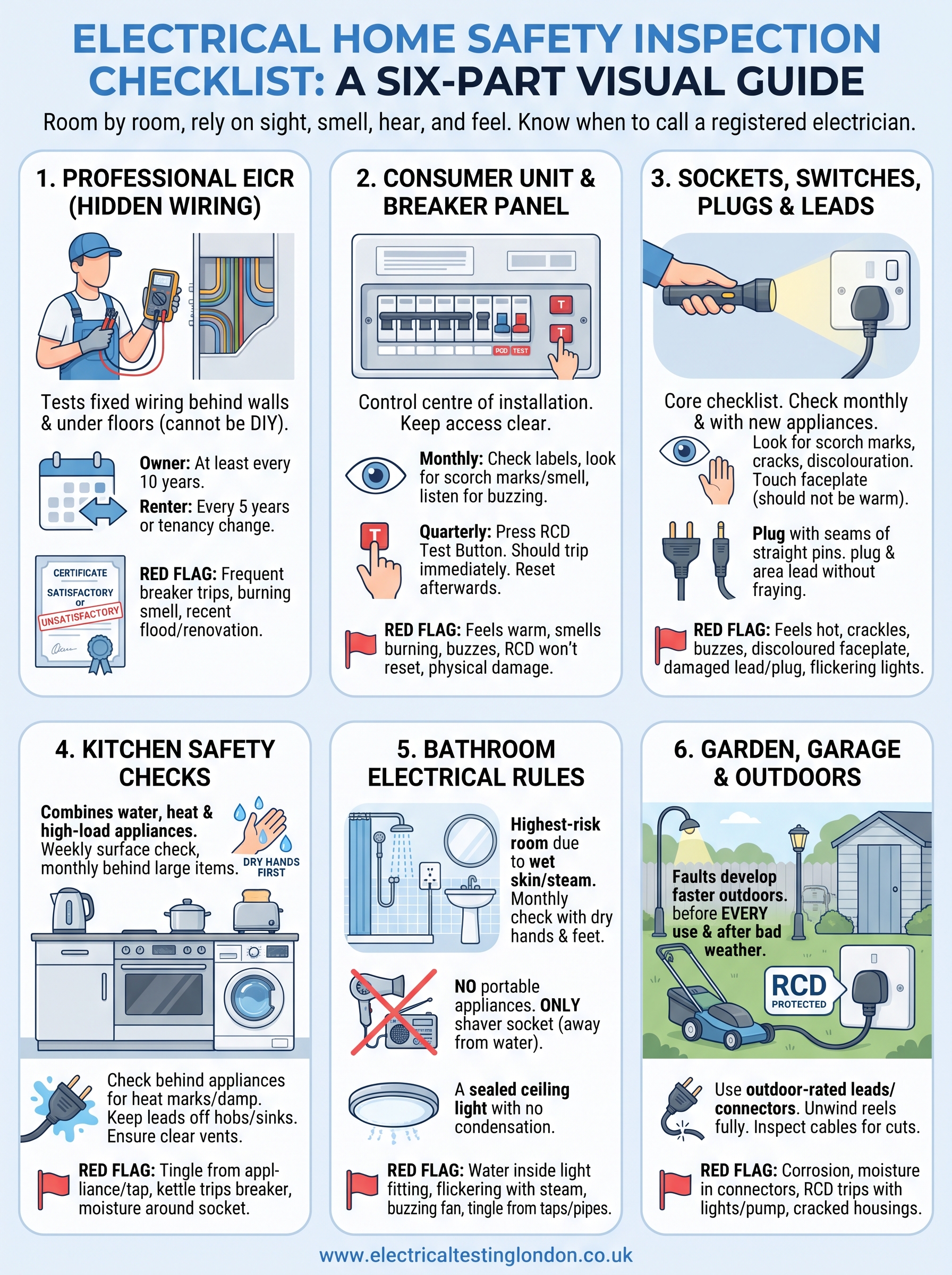
Work through these six areas on a regular schedule: monthly for the consumer unit and sockets, weekly in the kitchen, before every use outdoors, and every three months for the RCD button. Stop at the first sign of heat, smell, noise or tingling. A checklist catches symptoms, while a professional test shows what is happening in the fixed wiring.
If you want that certainty, request a quote for an EICR and we will price the inspection before you commit.

