


Electrical Safety Check: How Long It Really Takes


Booking an electrician for a safety check and not knowing whether to plan your whole day around it or just pop the kettle on is a common headache. Tenants need to move back in, staff need access to the office, and you need a straight answer before you can plan anything else. How long does an electrical safety check take is one of the first questions we get from landlords and homeowners across London, and the honest answer depends on more than just the postcode.
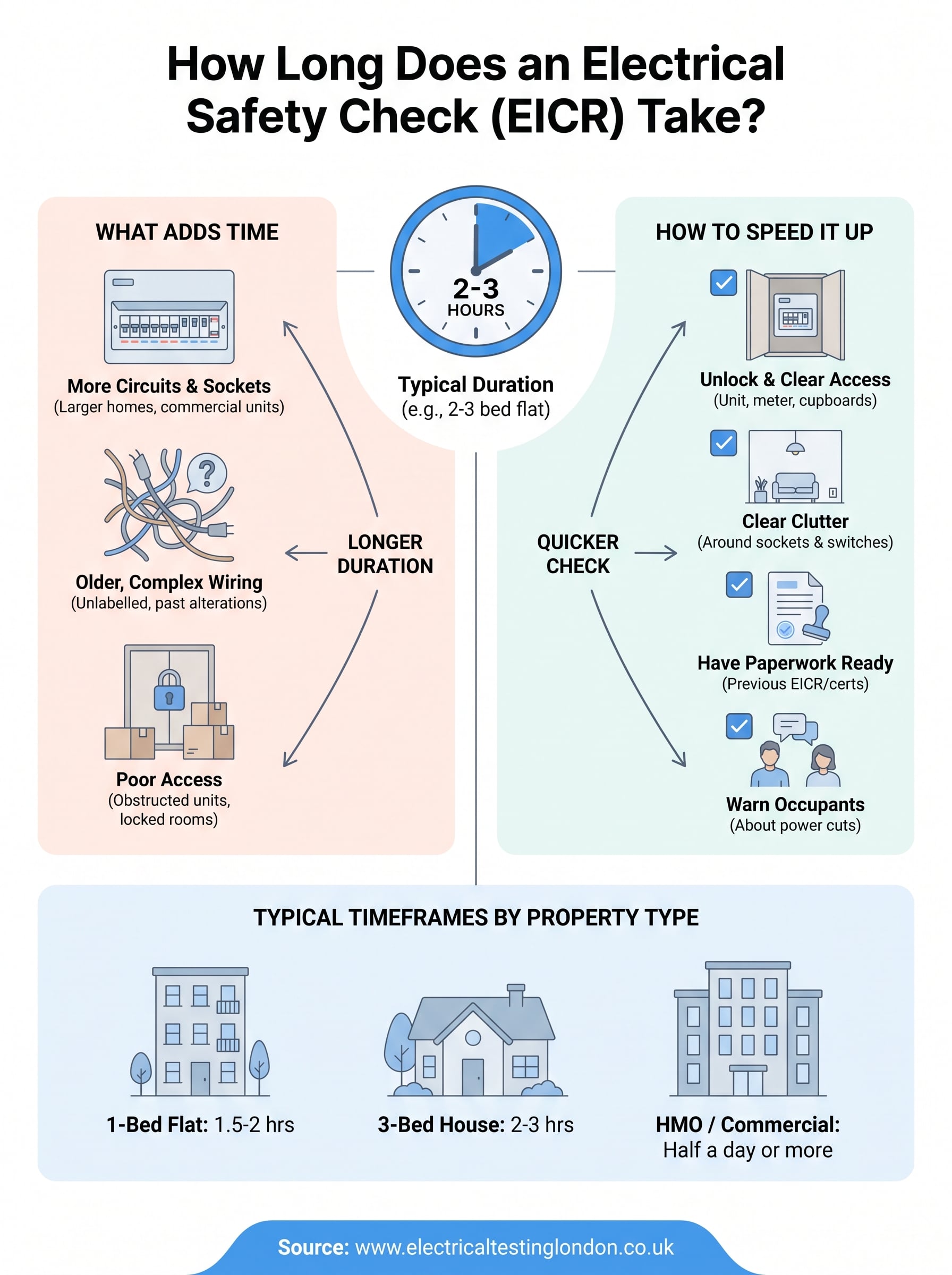
For a typical two or three bedroom flat, an EICR inspection usually takes between 2 and 3 hours, and the typical times and key factors behind an EICR explain why. Larger homes, older wiring, or a property packed with extensions and rewires can push that towards half a day. Commercial units and HMOs often take longer again, simply because there's more to test and more circuits to trace.
In this article, we'll break down exactly what affects the testing duration, from property size and age to the number of circuits and sockets, so you can book with confidence and plan your day, or your tenant's, around it properly.”
Why the length of your check matters
Duration isn't just a scheduling detail, it's the difference between a smooth day and a logistical mess. Landlords juggling multiple tenancies need to know exactly how long an inspection will tie up a property before they can hand back keys or let tenants back in, on top of the rules and EICR timing that apply to rented homes. Businesses can't always shut down a floor or a till point for an unpredictable stretch of time, so an accurate estimate lets you plan cover, warn staff, and avoid lost trading hours. It's the question we hear again and again from callers who just want a straight answer: how long does a electrical safety check take before life gets back to normal?
Downtime and disruption
Every hour an electrician spends testing is an hour some part of your property is without power. Sockets get isolated, circuits get switched off one at a time, and lights may flicker as the engineer works through the consumer unit. For a home, that might mean no kettle for twenty minutes. For a commercial kitchen or a server room, even a short interruption can cost real money. Knowing the likely testing timeframe in advance means you can schedule the inspection for a quiet period, whether that's overnight for a shop or during a tenant changeover for a rental flat.
A safety check that's planned around your schedule causes far less disruption than one that catches you off guard.
Cost is tied to time
Most electricians price an EICR partly on the time they expect to spend on site, so a longer inspection usually means a higher bill, which is reflected in what an electrical inspection costs in 2026. This isn't padding, it reflects the genuine extra work of testing more circuits, tracing more cabling, and checking more sockets and fittings. Understanding this link helps you budget properly and spot a quote that looks too good to be true. A three-hour flat inspection and an eight-hour commercial unit inspection are simply not the same job, and the price should reflect that.
|
Property type |
Typical duration |
Typical price driver |
|---|---|---|
|
One-bed flat |
1.5 to 2 hours |
Fewer circuits, single consumer unit |
|
Three-bed house |
2 to 3 hours |
Standard circuit count, easy access |
|
HMO |
Half a day or more |
Multiple tenants, shared circuits |
|
Small commercial unit |
3 to 6 hours |
Three-phase supply, more distribution boards |
Coordinating with other work
Many of our clients book an EICR inspection alongside other jobs, such as a consumer unit replacement or remedial works to fix issues from a previous report. If you know roughly how long the safety check itself will take, you can plan these follow-on jobs into the same visit rather than paying for a second call-out. This is especially useful for landlords managing several properties, where every wasted hour of travel time between jobs adds up. Getting the sequencing right saves both time and money across a portfolio.
Planning around an accurate timeframe also protects your relationship with tenants and staff. Nobody likes being told "it'll take an hour" only to still have no power four hours later. Setting the right expectation from the start, based on your property's actual size and complexity, keeps everyone on side and avoids awkward calls chasing an electrician who's still elbow-deep in a distribution board.
How to prepare for a quicker safety check
A bit of preparation on your end can shave a genuine chunk off the clock, sometimes turning a four-hour visit into a three-hour one. Electricians lose time hunting for keys, moving furniture, or waiting for someone to let them into a locked cupboard, and none of that counts towards actually testing your wiring. If you're wondering how long does electrical safety check take in your own home or unit, the answer partly depends on how ready you are before the engineer even arrives.
Clear access to every circuit
Make sure the consumer unit, meter cupboard, and any outbuildings are unlocked and unobstructed before the appointment. Move boxes away from sockets, clear the loft hatch if there's wiring up there, and unlock any rooms that might otherwise be missed. Clear access means the electrician can move straight from one circuit to the next without waiting on you to find a key or shift a wardrobe.
Every minute spent finding a key is a minute not spent testing your wiring.
Have your paperwork ready
Dig out any previous EICR, electrical certificates, or records of past rewires and consumer unit upgrades, especially if you're working out how to get an electrical safety certificate for the first time. This history gives the electrician a head start, letting them focus on what's changed rather than mapping the whole installation from scratch. Previous certificates are especially useful in older properties where circuits have been added or altered over the years.
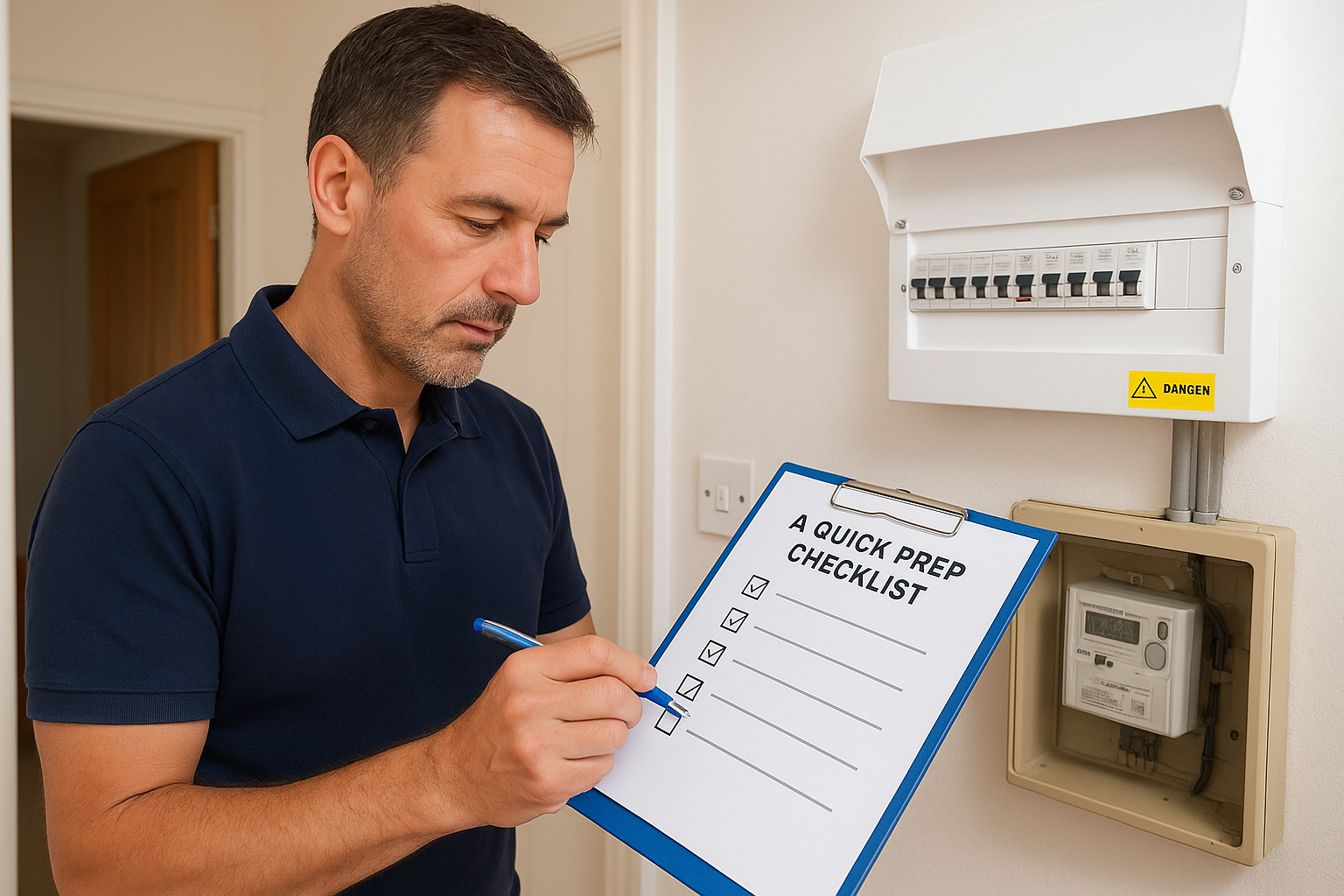
A quick prep checklist
-
Unlock the consumer unit, meter cupboard, loft, and any outbuildings
-
Clear furniture, boxes, or clutter away from sockets and switches
-
Gather any previous EICR or electrical certificates
-
Let tenants or staff know the rough time the visit will start and finish
-
Make sure someone's available to answer questions about known issues
-
Switch off sensitive equipment you don't want powered down mid-test
Warn tenants and staff in advance
If you're a landlord or business owner, tell the people using the property what to expect. Warn tenants that the power will cut in and out, and let staff know which areas will be off-limits. This avoids confused calls mid-inspection and stops someone flicking a switch back on while the electrician's mid-test. A short heads-up email or text the day before is usually enough to keep everyone on the same page and the inspection moving without interruption.
What affects how long your check takes
Several things push an inspection past the average, and most of them come down to how much wiring the electrician actually has to test. Property size is the obvious one, but it's not the only factor, and it's worth knowing what else can add hours before you book a slot. Anyone asking how long does an electrical safety check take for their specific home or unit needs to look beyond square footage alone and check the UK timings for an electrical inspection.
Property size and number of circuits
Bigger properties simply have more circuits, sockets, and lighting points to test one by one, and each extra circuit adds real minutes to the visit. A studio flat with a single consumer unit will always finish faster than a five-bedroom house with a garage, outbuilding, and separate feed for a home office. Circuit count matters more than floor area on its own, since two similarly sized homes can have very different numbers of distribution boards depending on how they've been wired over the years.
Age and condition of the wiring
Older installations take longer because the electrician has to work harder to trace circuits that weren't labelled clearly, or that use outdated cabling like rubber-insulated wiring. Older wiring often means more faults to note down too, and each one needs recording and photographing as evidence for the report.
The age of your wiring often matters more than the size of your property.
Extensions, alterations and hidden wiring
Homes that have been extended, converted, or rewired in stages tend to have wiring added by different electricians at different times, which makes tracing circuits slower. Properties like this often hide surprises behind walls or under floors that a straightforward new-build simply won't have.
|
Factor |
Effect on duration |
|---|---|
|
Number of circuits |
More circuits mean more individual tests |
|
Age of wiring |
Older cabling takes longer to trace and assess |
|
Past alterations |
Non-standard wiring slows down tracing |
|
Access to consumer unit |
Poor access adds waiting time |
|
Number of sockets and fittings |
Each one needs an individual check |
Ultimately, the honest answer to how long does electrical safety check take is that it scales with complexity, not just square metres. Two homes of identical size can take very different amounts of time depending on their wiring history, which is exactly why a good electrician will ask a few questions about your property before quoting a fixed slot.
What happens if the electrician finds a fault
Finding a fault doesn't automatically mean your inspection grinds to a halt, but it does change what happens next. Most issues get logged, photographed, and coded on the report rather than fixed there and then, since an EICR is a snapshot of the installation's condition, not a repair job, as our step-by-step guide to how an EICR is carried out sets out. Understanding this distinction helps you answer how long does an electrical safety check take when problems turn up, because the inspection itself usually still finishes close to schedule.
Minor faults rarely slow things down
Small issues, like a missing socket cover or a slightly loose connection, get noted as a lower-priority code (C3) and added to the report without holding up the visit. The electrician simply records it, snaps a photo as evidence, and moves on to the next circuit. Minor issues like these add only a few extra minutes across the whole inspection.
Serious faults can extend the visit
Dangerous faults are a different story. If the electrician finds exposed live wiring, an overloaded circuit, or anything coded C1 or C2, they'll usually need to isolate that circuit immediately for safety. This can add time on site while they confirm the extent of the problem and make sure nothing else nearby is affected. Dangerous faults sometimes mean part of the property loses power there and then, even before the full report is written up.
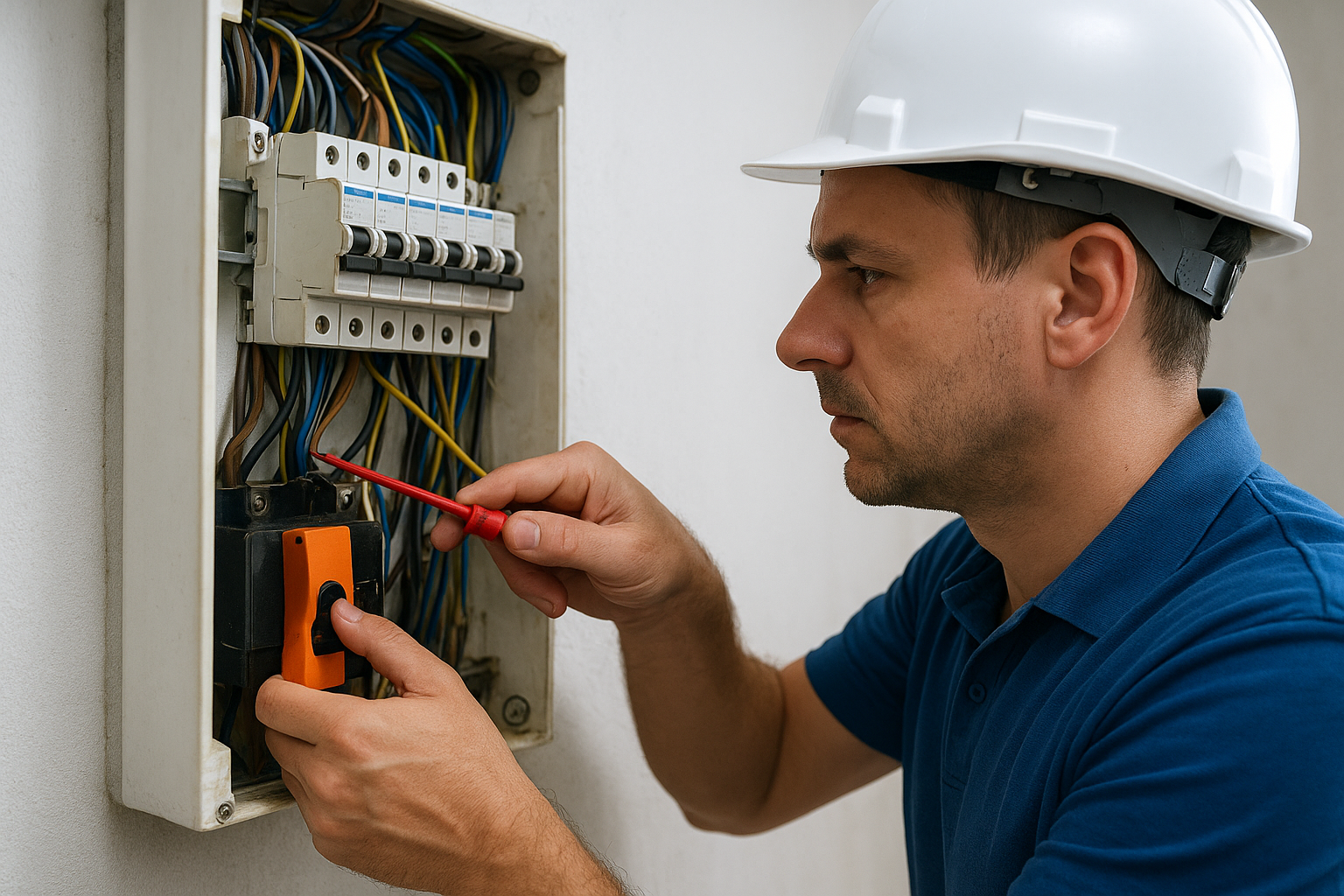
A serious fault gets isolated on the spot, but the full fix almost always happens on a separate visit.
What happens after the report
Once the inspection wraps up, you'll get a written report with each fault coded by severity, from C1 (danger present) through to C3 (improvement recommended) and FI (further investigation needed). Fixing anything found is a separate job, usually booked once you've reviewed the findings.
|
Code |
Meaning |
Typical next step |
|---|---|---|
|
C1 |
Danger present |
Isolate immediately, repair urgently |
|
C2 |
Potentially dangerous |
Repair as soon as reasonably practicable |
|
C3 |
Improvement recommended |
Repair at your convenience |
|
FI |
Further investigation |
Book a follow-up inspection |
If your report comes back with any C1 or C2 codes, our team can usually schedule the fix quickly, often before your certificate needs renewing, and it's worth knowing the costs and deadlines for EICR remedial works first.
Planning ahead for your safety check
So, how long does an electrical safety check take? For most homes, budget 2 to 3 hours. For larger properties, HMOs, or commercial units, plan for half a day or more. The real answer always comes down to circuit count and wiring condition, not just square footage, which is why two similar-looking properties can take very different amounts of time.
Once you know what drives the testing timeframe, booking becomes far less of a guessing game. Clear access beforehand, dig out old certificates, and warn tenants or staff what to expect, and you'll keep disruption to a minimum whatever size job you've got.
Every property is different, so the safest way to get an accurate estimate for yours is to ask directly. Get a quote from our team and we'll give you a realistic timeframe and price before anyone sets foot on site.

