






Electrician Qualifications UK: Levels and Requirements Explained



Ask ten electricians about their qualifications and you'll get ten different answers involving letters, levels and awarding bodies that mean little to anyone outside the trade. If you're trying to work out electrician qualifications UK wide, whether you're hiring someone or considering the career yourself, that confusion is a real problem when you need to check someone's credentials before they touch your wiring.
This article breaks down exactly what qualifies as a competent, certified electrician in Britain today. You'll get a clear rundown of NVQ Levels 2 and 3, the AM2 assessment, and how schemes like NICEIC and NAPIT fit into the picture, plus what separates a fully qualified electrician from someone who's simply done a short course.
We deal with electrical compliance every day, from EICR inspections to remedial works across London, so we know how much it matters that the person signing off your paperwork actually holds the right qualifications. By the end, you'll know exactly what to look for on a certificate and why it matters for your safety and your legal compliance.
Why electrician qualifications matter in the UK
Unlike doctors or solicitors, anyone in the UK can legally call themselves an electrician and pick up a screwdriver. There's no single licence you must hold to work on wiring in most domestic settings, which surprises a lot of homeowners. That gap is exactly why electrical qualifications matter so much in practice: they're the only reliable proof that the person in your loft actually knows what they're doing, rather than someone who watched a few videos and bought a van with a logo on the side.
An unqualified electrician isn't just a risk to your wiring, they're a risk to your family and your insurance policy.
The legal side you can't ignore
Building Regulations Part P covers electrical work in dwellings across England and Wales, and certain jobs, like a full rewire or a new circuit in a kitchen or bathroom, must be notified to building control or carried out by someone registered with a competent person scheme, which is what makes a Part P registered electrician worth asking for. Landlords face an even stricter duty under the Electrical Safety Standards in the Private Rented Sector (England) Regulations 2020, and these landlord electrical safety requirements mean a periodic EICR inspection must be carried out by a qualified and competent person at least every five years. Get this wrong and you're not just risking a fine, you're risking prosecution if something goes wrong later and it comes out that the work was never properly certified. We cover exactly what these checks involve on our domestic EICR London page, and the qualification of the person doing the inspection is the first thing any competent scheme or local authority will ask about if there's ever a dispute.
What happens when qualifications are missing
Insurance is where this usually bites hardest. Most home and landlord insurance policies contain a clause requiring electrical work to be carried out by a certified electrician, and if a fire investigation later shows the wiring was done by someone without proper qualifications, insurers can and do refuse to pay out. Property sales get complicated too. Conveyancing solicitors routinely ask for electrical certificates, and a homebuyer's survey that flags unqualified past work can knock thousands off an offer or kill the sale outright. Ninety percent of the disputes we see between landlords and letting agents come down to paperwork that either doesn't exist or was signed by someone whose credentials nobody checked at the time.
Why the trade regulates itself this way
Since there's no single government licence, the industry has built its own layered system of proof instead, and that system decides who can issue an electrical safety certificate. This is why you'll hear about NVQ levels, the AM2 assessment, and competent person schemes like NICEIC and NAPIT in almost every conversation about electrician qualifications. Each layer exists to answer a specific question: does this person understand the theory, can they apply it safely on site, and is their ongoing work being independently checked. Skip any one of these and you're relying on trust alone, which isn't good enough when the stakes involve fire risk and electric shock.
The consequences of getting it wrong
Commercial clients face their own version of this problem, often with higher stakes attached. A business that skips proper compliance testing, whether that's an EICR, PAT testing, or emergency lighting checks, isn't just risking equipment failure, it's risking a Health and Safety Executive investigation if an incident occurs on the premises, which is why we group these electrical services in London together. Employers have a legal duty of care under health and safety law, and that duty doesn't disappear because the electrician who did the work seemed competent enough at the time. Verifying qualifications upfront, before any work starts, is far cheaper than dealing with the fallout afterwards, whether that fallout is a failed insurance claim, a lost property sale, or a regulatory investigation.
Why this matters more in London specifically
Zoning laws, older housing stock, and a dense mix of Victorian terraces alongside new-build flats mean London properties often have wiring histories that are genuinely hard to trace. A qualified electrician working here needs to recognise outdated fuse boards, spot the remnants of old rewiring jobs, and know when remedial work is genuinely urgent versus cosmetic. That local knowledge, backed by proper qualifications, is what separates a safe inspection from a box-ticking exercise, and it's exactly why we insist every engineer we send out holds current, verifiable credentials before they set foot on a job.
How to become a qualified electrician in the UK
Becoming a qualified electrician in the UK isn't a weekend course or a certificate you print at home. It's a structured pathway that combines classroom learning, supervised site work, and a final practical assessment that trips up plenty of people who thought they were ready. Understanding this pathway is the fastest way to make sense of electrician qualifications UK wide, because every credential you'll ever see on a certificate traces back to one of the routes below.
The apprenticeship route
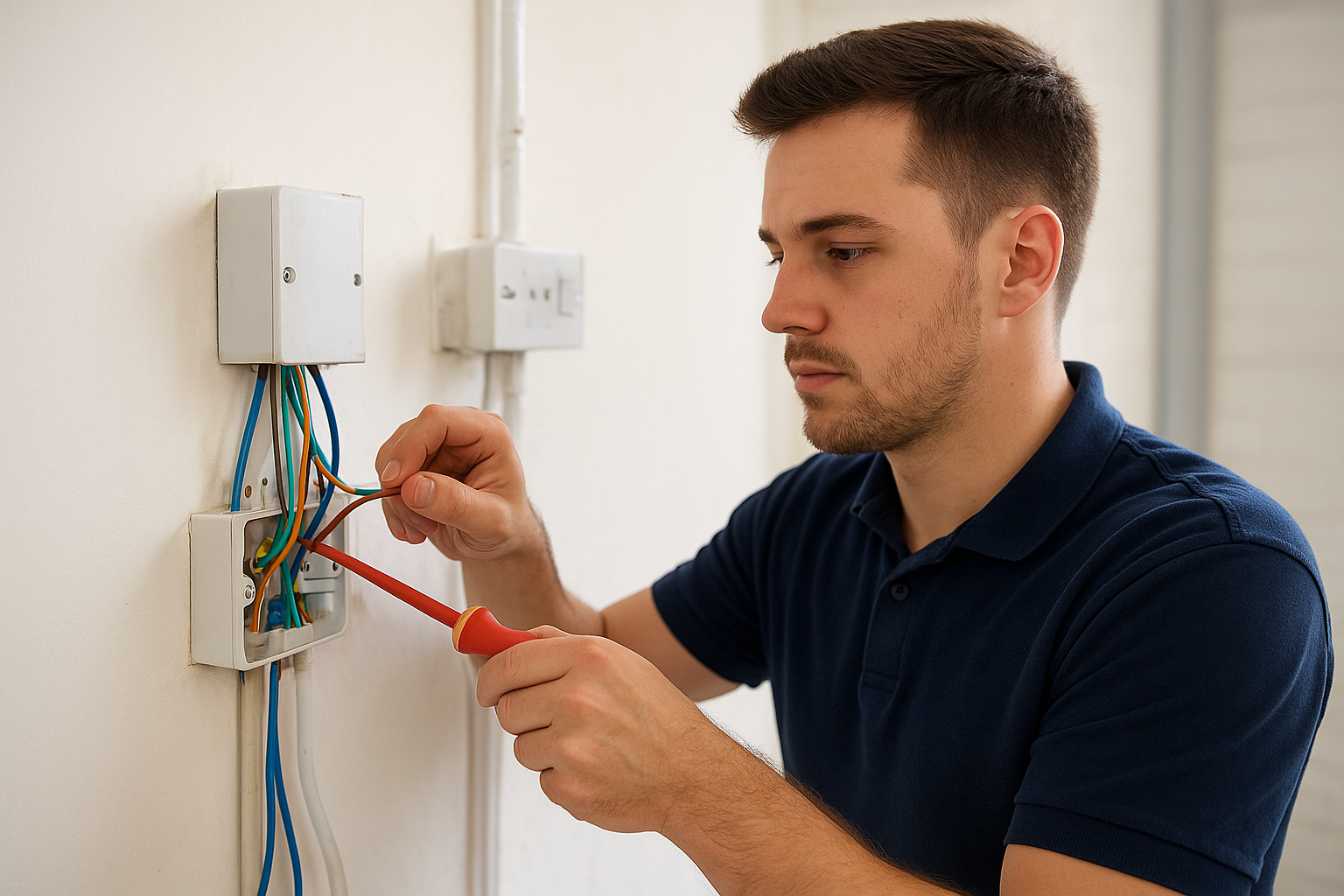
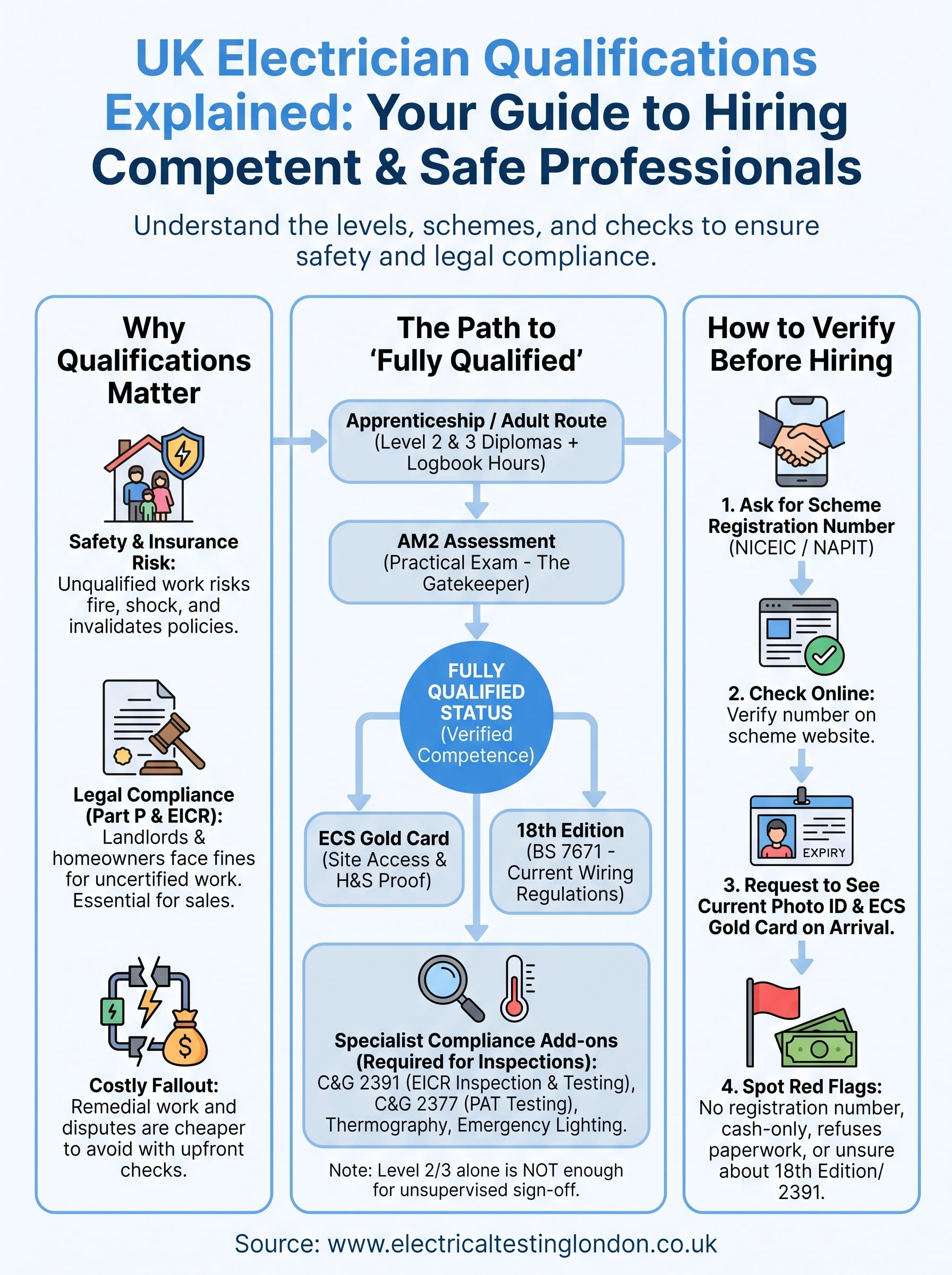
Most electricians in Britain qualify through a formal apprenticeship, usually starting at 16 or 18 and lasting three to four years. You'll work under a supervising electrician while studying at college one or two days a week, building up real site hours alongside the theory. This route typically looks like:
-
Level 2 Diploma in Electrical Installation, covering basic wiring, safety, and health and safety regulations
-
Level 3 Diploma, adding inspection, testing, and design principles
-
On-site logbook hours, usually 8,000 or more, signed off by a qualified supervisor
-
The AM2 assessment, sat once college work and logbook hours are complete
Employers value this route because it proves someone has actually handled live circuits under supervision, not just passed exams.
Fast-track and adult routes
Career changers rarely have four years to spare, so private training providers offer condensed programmes that compress the Level 2 and 3 content into shorter blocks, sometimes 12 to 18 months of intensive study. These courses still lead to the same qualifications on paper, but you'll need to find your own placement to log the practical hours before you're eligible for AM2. Be wary of any provider that promises a full qualification without supervised site experience. That gap is exactly what separates a genuinely certified electrician from someone with a certificate but no real-world competence, and it's the first thing a competent person scheme will probe when you apply for registration.
The AM2 assessment
Every route, whether apprenticeship or fast-track, ends at the same gate: the AM2. This is a two-day practical exam covering installation, inspection, testing, fault diagnosis, and safe isolation, run at an independent test centre rather than your own college. It's designed to be tough, and pass rates reflect that.
Nobody calls themselves a fully qualified electrician until they've passed the AM2, no matter how many diplomas sit on the wall.
After qualifying
Once you've cleared AM2, you're eligible to join a competent person scheme like NICEIC or NAPIT, which brings periodic assessments and audits into the picture. Passing this final hurdle also opens the door to specialist add-ons, like the 18th Edition wiring regulations qualification and inspection and testing courses, both of which we'll cover next when we look at how the levels stack up in practice.
Qualification levels explained: from Level 2 to Gold Card
Once you understand the pathway, the next step is decoding what each level actually certifies, because homeowners and landlords often see these terms on invoices without knowing what they mean. Each level represents a specific stage of competence, and none of them are interchangeable, despite what some adverts imply. Here's how the main stages of electrician qualifications UK wide actually break down.
|
Qualification |
What it covers |
Who typically holds it |
|---|---|---|
|
Level 2 Diploma |
Basic wiring, safety procedures, tools and materials |
Trainees, first and second year apprentices |
|
Level 3 Diploma |
Inspection, testing, circuit design, regulations |
Apprentices nearing completion, career changers |
|
AM2 Assessment |
Practical competence under exam conditions |
Anyone seeking full qualified status |
|
18th Edition (BS 7671) |
Current wiring regulations, updated every few years |
All practising qualified electricians |
|
ECS Gold Card |
Verified qualifications plus health and safety test |
Fully qualified electricians on site |
Level 2 and Level 3: the building blocks
Level 2 gives someone the basics: how to install cable safely, how to follow drawings, and the fundamentals of electrical theory. It's a genuine qualification, but it isn't enough on its own to work unsupervised. Level 3 is where things get serious, covering inspection and testing, fault-finding, and the design calculations behind a safe installation. Someone holding only a Level 2 certificate shouldn't be signing off an EICR inspection or issuing certificates unsupervised, and if they are, that's a red flag worth asking about directly when you book an EICR in London.
A Level 2 certificate proves someone can wire a socket, not that they can be trusted to inspect a whole property.
The 18th Edition and why it keeps changing
The 18th Edition, formally BS 7671, is the current wiring regulations document, and it gets amended periodically as technology and safety standards evolve. Genuine electricians retake this qualification every time it updates, because working to outdated regulations invalidates certificates and can leave installations non-compliant without anyone realising. Ask any electrician quoting for work which edition they're certified against, and a hesitant answer tells you plenty about how current their electrical qualifications actually are.
The Gold Card: proof that's hard to fake
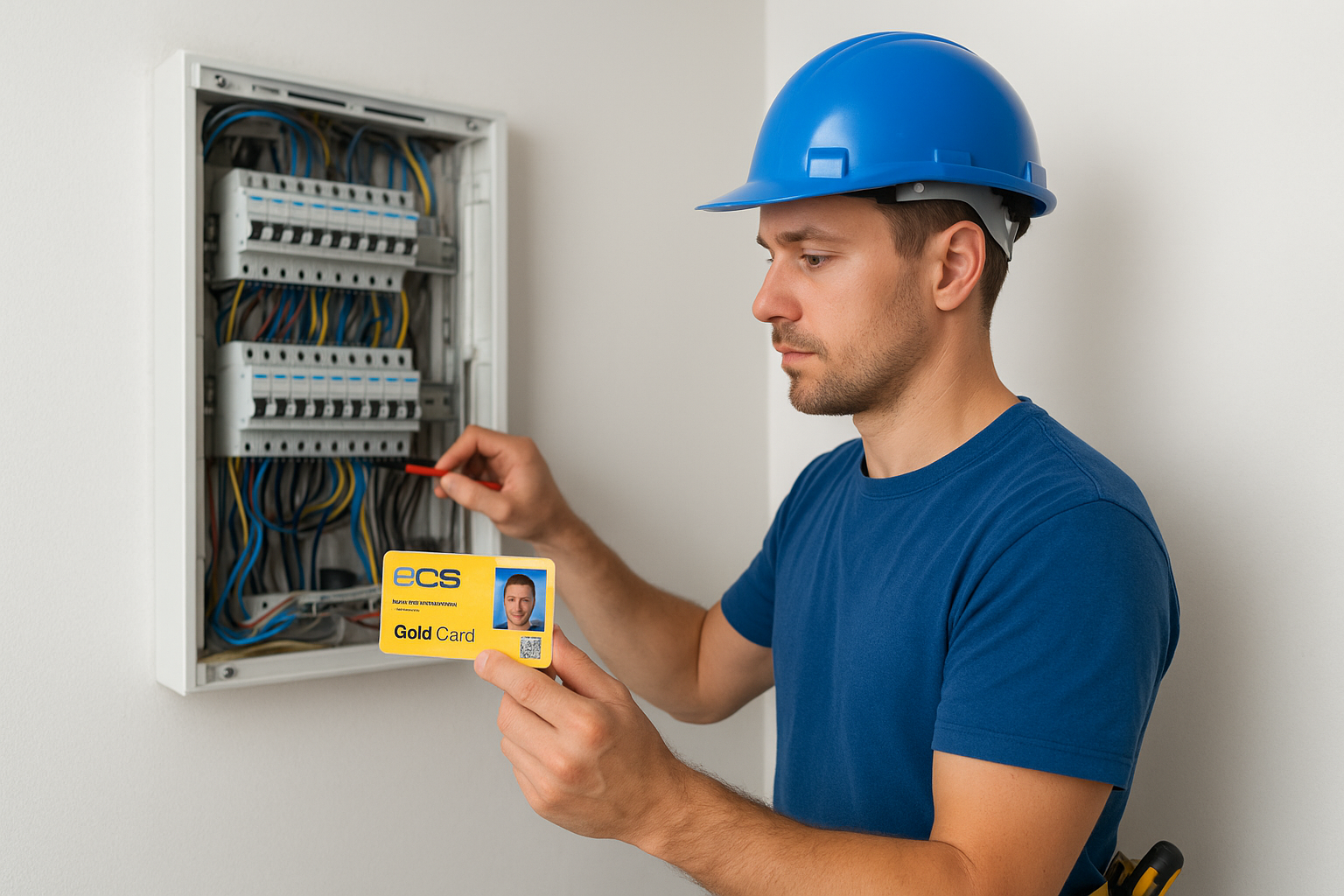
The ECS Gold Card, issued by the Electrotechnical Certification Scheme, sits above the diplomas as a verification layer rather than a qualification in itself. Holding one confirms someone has completed their NVQ Level 3, passed AM2, and cleared a health and safety test, all checked against a central database rather than taken on trust. Cards carry a photo and expiry date, and most commercial sites won't let anyone through the gate without one visible. Gold Cards get renewed periodically too, so an expired card, even if the person once qualified properly, is worth questioning before you let them start work on your property or premises.
Specialist qualifications for testing and compliance work
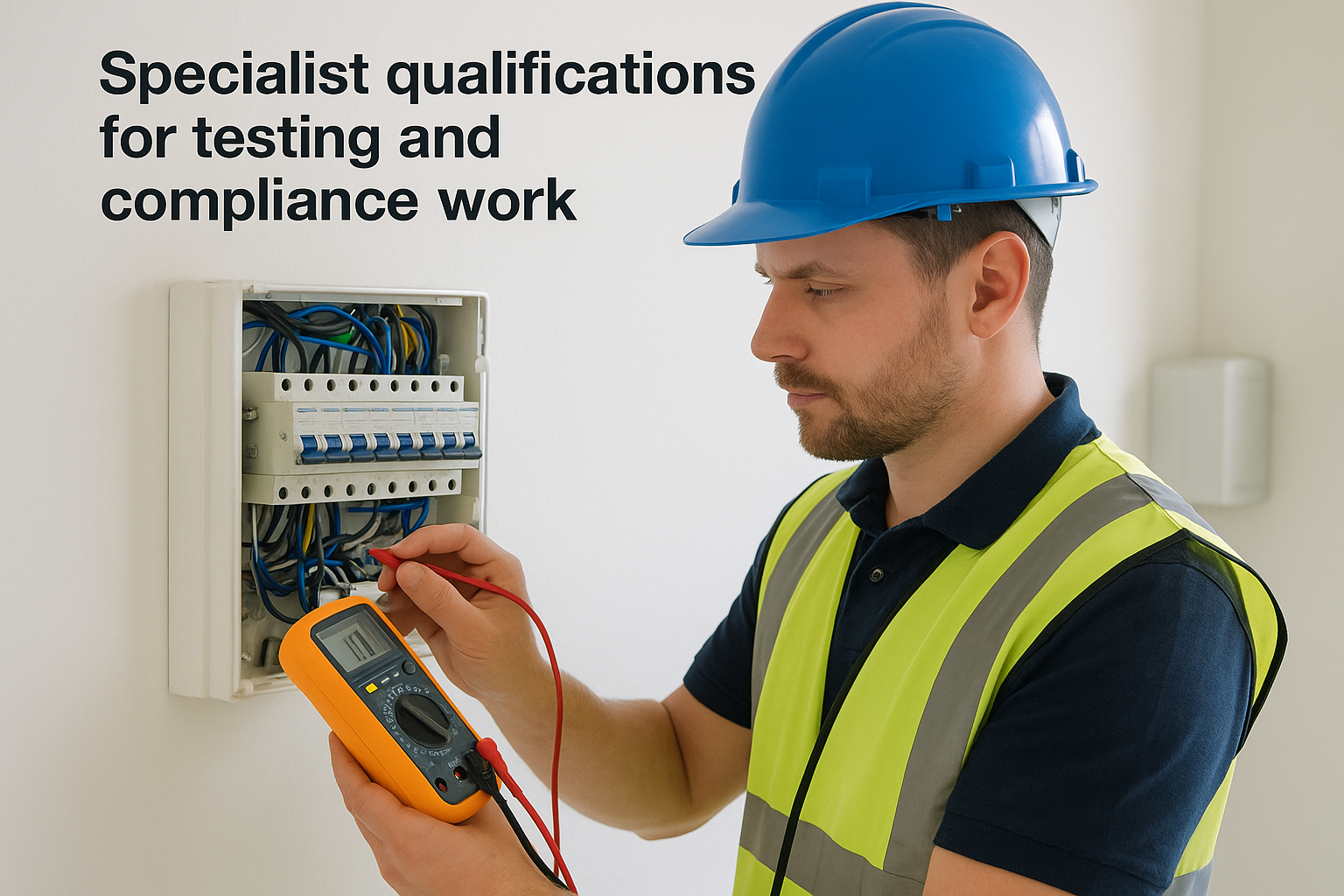
Holding a Level 3 diploma and a Gold Card proves someone can install and maintain electrical systems, but compliance work, the inspections, reports and certificates that landlords and businesses rely on, needs an extra layer of qualification on top. This is where a lot of confusion creeps in, because plenty of electricians who are perfectly competent at installation have never sat the specific courses that qualify them to inspect, test, or sign off compliance paperwork. Knowing which specialist qualifications apply to which job is essential if you're hiring for anything beyond a straightforward install.
The 2391 inspection and testing qualification
City & Guilds 2391 is the qualification that specifically covers periodic inspection and testing, and it's what you should look for on the certificate of anyone carrying out an EICR inspection. Without it, an electrician might be excellent at wiring a new consumer unit but genuinely unqualified to assess an existing installation and classify the faults they find using the correct C1, C2, or C3 codes, which is the heart of how an EICR is carried out. We only send engineers holding current 2391 qualifications out on our EICR jobs, precisely because misclassifying a fault can mean a landlord thinks a property is safe when it isn't.
An installer and an inspector aren't automatically the same person, and the 2391 qualification is what proves the difference.
PAT testing certification
Portable Appliance Testing has its own qualification pathway, usually a City & Guilds 2377 course, and it's shorter and more focused than the full electrician training route. That doesn't make it less important. A business relying on someone without proper PAT testing training risks passing faulty appliances as safe, which becomes a serious problem the moment an incident investigation starts asking who can carry out PAT testing and who signed off the last check. We detail exactly what's involved on our PAT testing London page, including how often different environments need retesting.
Emergency lighting and thermal imaging qualifications
Emergency lighting testing follows BS 5266 and requires specific training beyond general electrical qualifications, since it involves duration testing, battery checks, and an understanding of escape route regulations that don't come up in standard installation work. Thermal imaging inspections go further still, requiring a recognised qualification in electrical thermography to interpret heat patterns correctly, since a poorly trained operator can easily misread a hotspot as a fault or miss a genuine one entirely. Both are specialist add-ons that a general electrician's certificate won't cover on its own.
|
Specialist qualification |
Covers |
Relevant service |
|---|---|---|
|
City & Guilds 2391 |
Periodic inspection, testing, fault classification |
EICR inspections |
|
City & Guilds 2377 |
Appliance safety testing procedures |
PAT testing |
|
BS 5266 emergency lighting training |
Duration testing, escape route compliance |
Emergency lighting testing |
|
Thermography certification |
Reading and interpreting thermal images |
Thermal imaging inspections |
Commercial clients in particular should ask for proof of these specific certificates rather than assuming a general electrical qualification covers everything. It rarely does, and the gap only becomes obvious when something goes wrong.
How to check an electrician's qualifications before hiring
Knowing what the qualifications mean is only half the job. You still need to verify them before anyone touches your wiring, and that means asking direct questions rather than accepting a business card at face value, whether you found the name locally or through a directory like Checkatrade. Most homeowners never think to ask for proof, which is exactly why so many disputes only surface after the work is done and something's gone wrong.
Ask for registration numbers, not just names
Every electrician registered with NICEIC or NAPIT holds a unique registration number, and both organisations run free online checkers where you can confirm that number matches an active, current member. Checking an electrician's qualifications this way takes two minutes and costs nothing, so there's no excuse for skipping it. You can verify NICEIC registrations directly through the NICEIC website, and NAPIT offers the same lookup tool for its members.
If an electrician can't produce a registration number you can independently verify, treat that as a refusal, not an oversight.
What to ask before you book
A short conversation before booking tells you almost everything you need to know. Run through these before agreeing to any work:
-
Which competent person scheme are you registered with, and what's your registration number?
-
Do you hold a current ECS Gold Card, and can you show it on arrival?
-
Are you qualified against the current 18th Edition (BS 7671), or an older version?
-
For inspection work specifically, do you hold a City & Guilds 2391 qualification?
-
Can you provide references or examples of similar jobs completed recently?
Pause and reconsider if you get vague or defensive answers to any of these. Genuine engineers answer this instantly, because they've been asked before and they've got nothing to hide.
Documents to request on the day
Separately from the phone conversation, ask to see physical proof when the electrician arrives on site. Photo ID with an expiry date, a Gold Card, and a copy of their scheme registration certificate should all be produced without hesitation. Reputable firms build this into their process automatically. On our own jobs, every engineer we send carries current identification and registration proof as standard, without a customer needing to ask twice.
Red flags worth walking away from
Some warning signs matter more than others, and a few should end the conversation immediately:
|
Warning sign |
Why it matters |
|---|---|
|
No scheme registration number offered |
Can't be independently checked |
|
Cash-only, no paperwork |
Signals avoidance of accountability |
|
Can't confirm 18th Edition status |
May be working to outdated regulations |
|
Reluctant to show ID or Gold Card |
Common tactic to avoid scrutiny |
|
Pressures you to skip a written quote |
Leaves you with no recourse if disputes arise |
Spotting even one of these should slow you down. Together, they're a strong signal you're dealing with someone unqualified rather than simply informal.
Why paperwork protects you afterwards
Thorough checking before the job starts also protects you months or years later. Verified qualifications, kept alongside your certificate, become essential if you ever need to make an insurance claim, sell the property, or prove compliance to a local authority. Trusting your instincts matters, but instincts backed by a verified registration number hold up far better than instincts alone when someone else is asking questions.
Typical costs and timelines for each qualification
Understanding what these qualifications actually cost, in time and money, helps explain why properly qualified electricians charge what they do. Electrician qualifications UK wide aren't cheap to earn, and that investment gets reflected in day rates whether you're hiring a sole trader or a larger firm. It also explains why cut-price quotes from unregistered traders should raise questions rather than excitement.
The apprenticeship route in numbers
A full apprenticeship, covering Level 2, Level 3, and the AM2 assessment, typically runs three to four years and costs very little out of pocket for the trainee, since employers and government funding usually cover college fees. The trade-off is time: apprentices earn a reduced wage throughout, often starting below minimum wage bands designed for trainees, precisely because they're building the 8,000-plus logged hours that prove real competence. Fast-track adult courses compress the same content into 12 to 18 months but shift the cost onto the individual, with total fees for Level 2 and 3 combined often reaching £4,000 to £8,000 depending on the provider, before you even factor in AM2 exam fees.
Cheap and fast rarely both apply to a genuine electrical qualification, and any provider promising otherwise deserves scrutiny.
What the AM2 and specialist courses cost
The AM2 assessment itself typically costs between £700 and £900, sat once at an independent centre after logbook hours are complete, and failing means paying again for a resit. Specialist add-ons stack further costs on top, and these matter most for anyone hiring for compliance work rather than a straightforward install.
|
Qualification |
Typical cost |
Typical duration |
|---|---|---|
|
Level 2 Diploma |
Often employer or grant funded |
1 year (part-time study) |
|
Level 3 Diploma |
Often employer or grant funded |
1 to 2 years (part-time study) |
|
AM2 Assessment |
£700 to £900 |
2 days |
|
18th Edition (BS 7671) update |
£200 to £400 |
3 to 5 days |
|
City & Guilds 2391 (inspection and testing) |
£600 to £900 |
4 to 5 days |
|
City & Guilds 2377 (PAT testing) |
£150 to £300 |
1 to 2 days |
Why this matters when you're comparing quotes
Remember these figures next time you're comparing quotes and one comes in dramatically lower than the rest. Someone charging significantly less than the market rate has often skipped one of these qualifications entirely, or lets a certificate lapse rather than paying to renew it against the current 18th Edition. Ongoing costs matter too, since scheme membership fees, insurance, and periodic reassessments through NICEIC or NAPIT all continue well after someone first qualifies, and those costs get built into every genuine electrician's pricing whether the customer sees them itemised or not.
Choosing a properly qualified electrician
Getting to grips with electrician qualifications UK wide isn't about memorising acronyms for their own sake. It's about knowing what to ask for before someone starts work in your home or on your premises. Level 2 and Level 3 diplomas, the AM2 assessment, an 18th Edition update, and specialist certificates like the 2391 all exist to answer one question: can this person be trusted with your electrics and your paperwork?
Skip the verification step and you're gambling with your safety, your insurance, and potentially your property sale. Ask for registration numbers, check them online, and request proof on the day. Genuine electricians expect this and welcome it.
If you'd rather leave the checking to us, every engineer we send holds current, verifiable credentials as standard. Get a quote and we'll match you with someone properly qualified for the job.