






EV Charging Point Installation Government Grant: 2026 Rules



Section 1
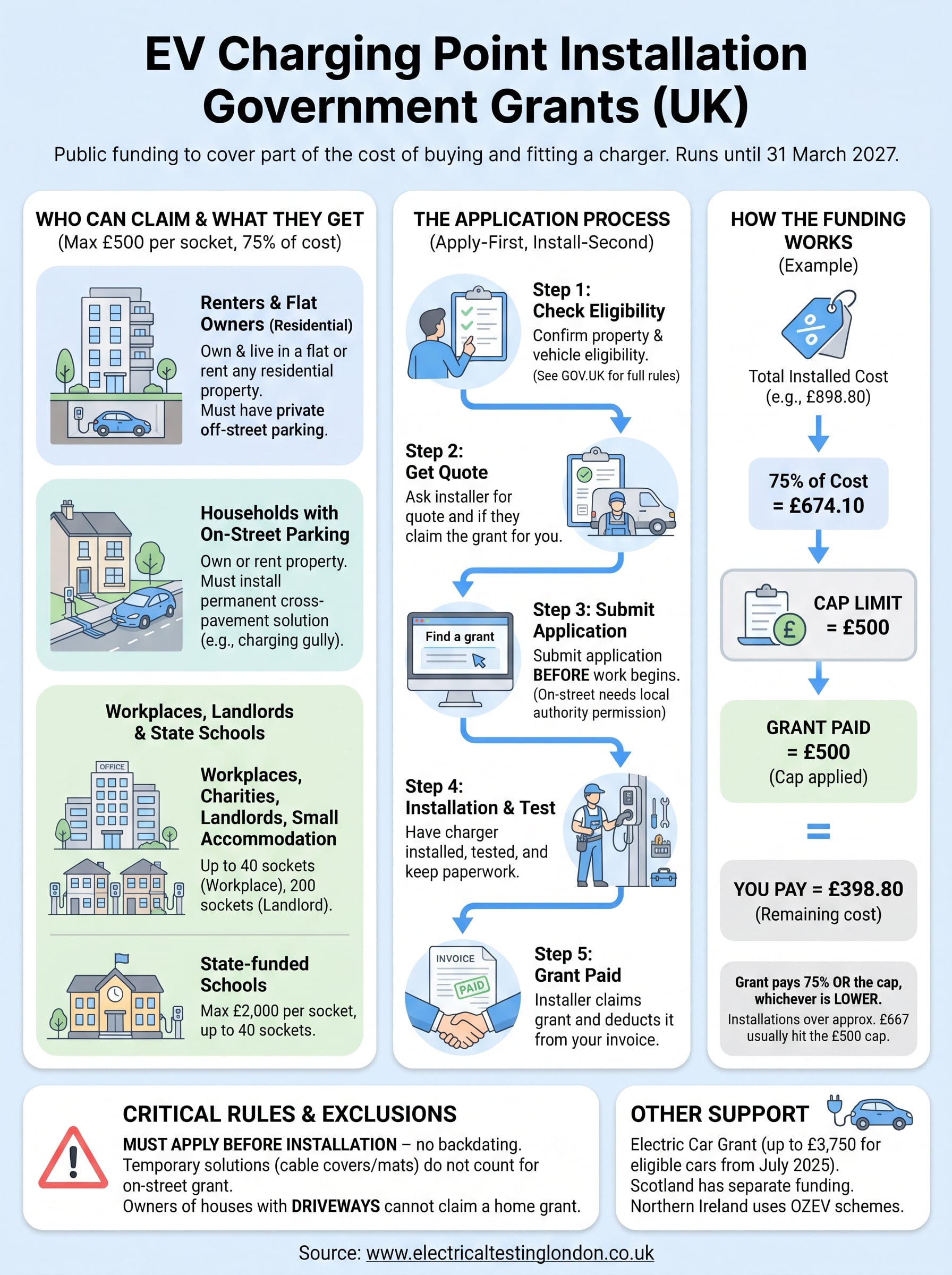
An EV charging point installation government grant is public funding that pays part of the cost of buying and fitting a charger. In the UK, the main schemes cover 75% of the bill, capped at £500 per socket, and they run until 31 March 2027. The Office for Zero Emission Vehicles (OZEV) runs them. Renters, flat owners and households with only on-street parking can claim for a home charger. Owners of houses with a driveway cannot.
The rules differ by scheme, and the old £350 cap still appears on many web pages. This article gives you the current figures, the eligibility test for each scheme, the steps to apply, and what to do if you miss out.
We install EV chargers for homeowners, landlords and commercial clients in London and the South East. We wrote this so you can check your position before you ask for a quote.
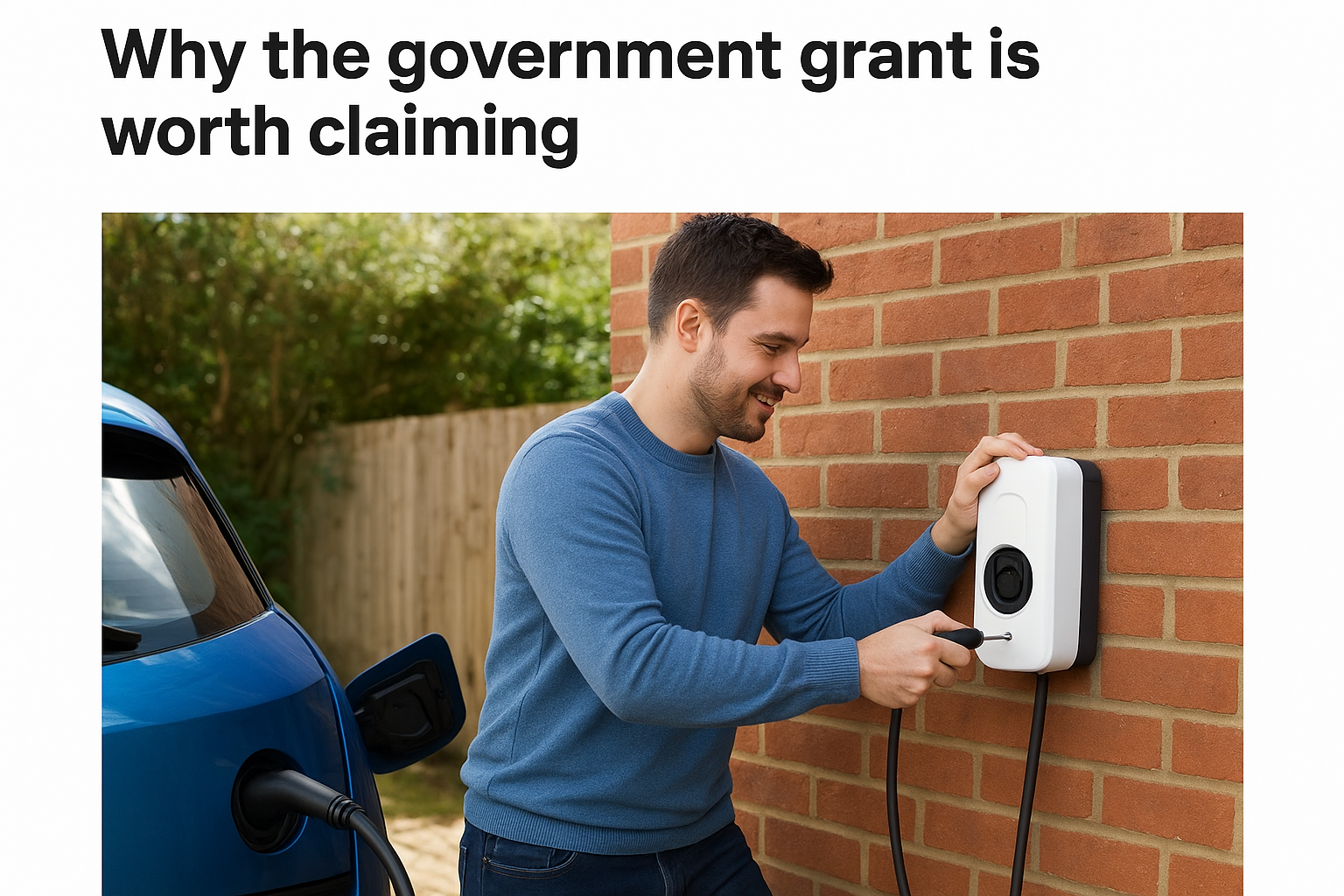
Why the government grant is worth claiming
The grant is worth claiming because it can take up to £500 off an installation that you would otherwise pay for in full. Under the schemes that apply from 1 April 2026, it pays 75% of the cost of buying and installing a socket, up to a maximum of £500. The cap was £350 before that date, so any page quoting £350 is out of date.
How much you actually save
The saving depends on your quote because of the cap. Once your installed price passes about £667, 75% of it exceeds £500, so the cap applies. The table below shows the pattern.
|
Installed price |
75% of price |
Grant paid |
You pay |
|---|---|---|---|
|
£600.00 |
£450.00 |
£450.00 |
£150.00 |
|
£898.80 |
£674.10 |
£500.00 |
£398.80 |
|
£1,200.00 |
£900.00 |
£500.00 |
£700.00 |
The middle row is our EV Charging Installation, which starts at £749 plus VAT, or £898.80 with VAT. That covers a single phase 7.4 kW charge point, up to 15 metres of cable, up to 3 metres of trunking and up to 4 hours of labour. The table only shows how the formula works. Your eligibility and your scheme's guidance decide what is actually paid, and the Workplace Charging Scheme counts costs including VAT.
The grant pays 75% of the bill but never more than £500, so any installation above roughly £667 earns the full amount.
Why timing matters now
OZEV extended its home and workplace schemes for a final year, with five grants open until 31 March 2027. After that date, you should not assume any replacement exists. If you plan to buy an EV or fit a charger in the next few months, apply within this window.
You should also treat every scheme as apply-first, install-second. The on-street parking grant, for example, cannot be backdated if you have already installed your chargepoint.
How to apply for a home chargepoint grant
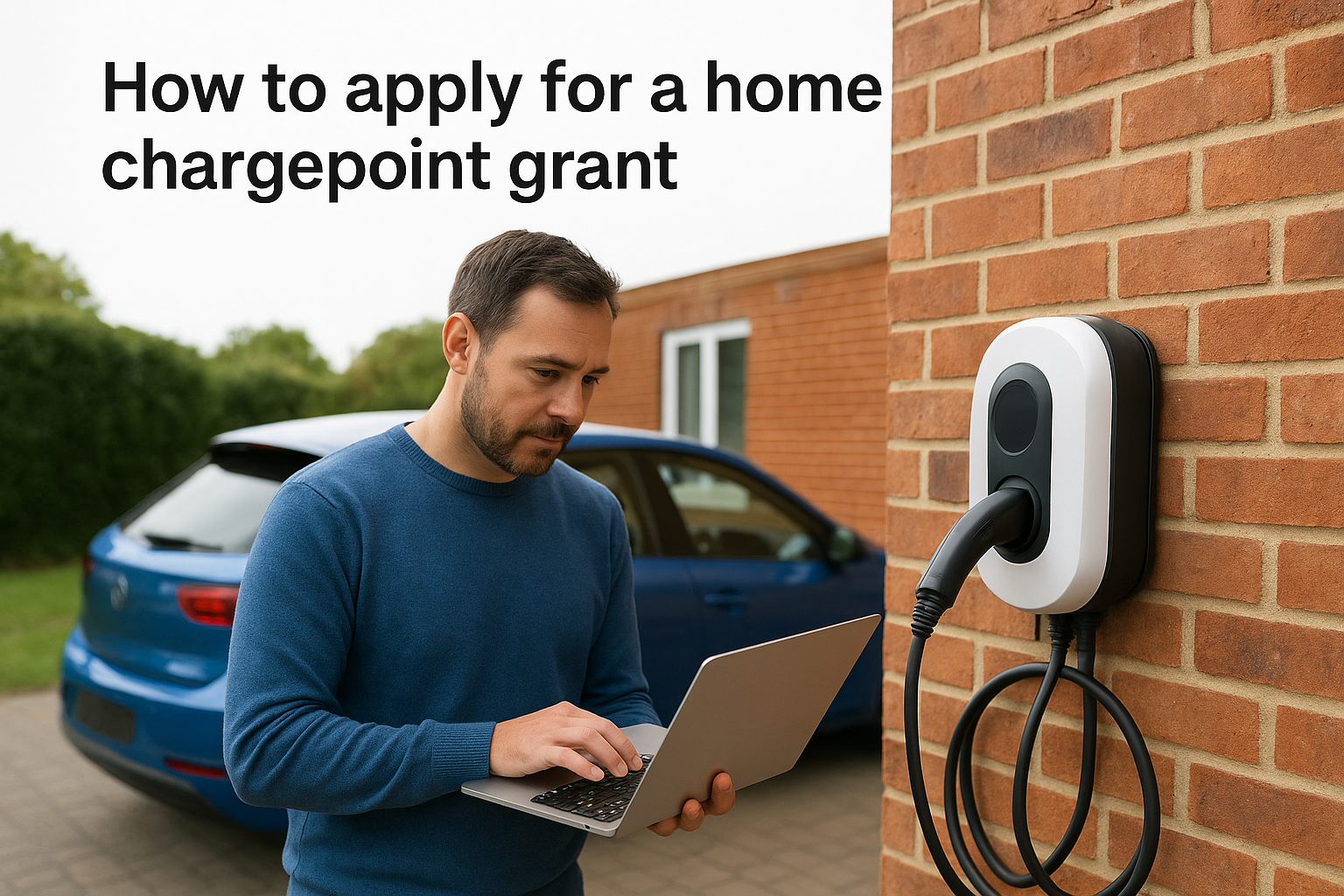
You apply through the GOV.UK Find a grant service, and your installer usually handles the claim and takes the grant off your invoice. First work out which of the two home grants fits your property. The full rules sit on the official GOV.UK chargepoint grants page.
Which home grant fits you
Each grant pays up to £500 and has its own eligibility test.
-
Renters and flat owners: you own and live in a flat, or rent and live in any residential property. You need private off-street parking and an eligible vehicle.
-
Households with on-street parking: you own or rent the property you live in and have only on-street parking. You must also install a permanent cross-pavement solution, such as a charging gully.
If you own a house with a driveway, neither grant applies to you. Renters will also need their landlord's permission to fit anything to the property.
The application steps
Follow these steps in order, because skipping one can cost you the grant.
-
Confirm which grant matches your property and that you own or are responsible for an eligible vehicle.
-
Ask your installer for a written quote, and ask whether they can claim the grant for you.
-
On-street applicants should get permission from the local highways authority, which in London is usually your borough council. You must also declare that you will obtain any planning permission required.
-
Submit the application before work begins.
-
Have the charger installed and tested, and keep the certificate and paperwork.
Mistakes that lose the grant
The most common mistake is installing first and applying later. The second is using a temporary solution for the on-street grant. Cable covers and mats laid over a cable do not count, because the solution must be permanent. A third is applying under the flats and renters grant without genuinely private off-street parking. Check each point before you book.
Apply before work starts, because a charger already on your wall is the quickest way to lose a grant you qualified for.
Workplace, landlord and school grants compared
Three further schemes pay for non-domestic installations: the Workplace Charging Scheme, a landlord grant and a grant for state-funded schools. Each pays 75% of the cost up to a per-socket cap.
|
Scheme |
Who can apply |
Maximum per socket |
Socket limit |
|---|---|---|---|
|
Workplace Charging Scheme |
Businesses, charities, public sector bodies, small accommodation businesses |
£500 |
40 across all sites |
|
Landlord grant |
Private landlords, registered social housing providers, public sector bodies, property managers acting for a landlord |
£500 |
200 across all sites |
|
State-funded education |
State-funded schools and education institutions |
£2,000 |
40 across all sites |
Workplace Charging Scheme
Commercial clients can claim for up to 40 sockets across all their sites, so a business with 40 sites gets one socket per site. Grants are counted per socket, not per unit, so check how many sockets your chosen charger has.
Take a business fitting 10 sockets at £1,000 each including VAT. The grant pays £500 per socket, so £5,000 in total, and the business pays the other £5,000. Independent schools can also apply through this scheme.
Landlord grants and fleets
Landlords can claim for residential properties with up to 200 sockets across all sites. Applicants must be registered at Companies House or VAT registered. If you manage a rental portfolio, make sure the charger serves a tenant's parking space.
Fleet operators should look at the separate Depot Charging Scheme. It part-funds charging at depots for HGVs, vans and coaches. The 2026/27 round covers 70% of costs up to £1 million, and later rates are unconfirmed, so check GOV.UK before you plan.
For businesses the cap is the key number: £500 per socket, up to 40 sockets, so a large site recovers a limited share of its bill.
What to do if you do not qualify for a grant
If you own a house with a driveway, no OZEV home grant covers you, so budget for the full home EV charger installation cost. That is less painful than it sounds, because on a typical single-phase installation the cap would have saved you at most £500.
Owners of houses with off-street parking
A single-phase 7.4 kW charger from us starts at £749 plus VAT. That price includes the cable run, trunking, labour, testing, handover and a three-year warranty. Ask any installer what is included and what counts as an extra, such as a longer cable run.
Check your electrics first as well. An old fuse box may need upgrading before a charger goes in. A consumer unit replacement from us starts at £390 plus VAT. Ask your installer how any such work is treated under the grant you are using.
Other support worth checking
The Electric Car Grant is separate from chargepoint grants. It takes £1,500 to £3,750 off eligible new electric cars priced at £37,000 or under, ordered from 16 July 2025. The seller applies the discount, so you do not make an application.
Scotland has its own domestic charge point funding through Energy Saving Trust Scotland, worth up to £400 at the time of writing. Northern Ireland households can use the OZEV schemes. Rules change, so confirm any figure on the official page before you commit.
If you own a house with a driveway, the grant will not help you, so compare installation quotes on what is included instead.
Claim the grant before it closes
The government pays 75% of an EV charger installation, up to £500 per socket, to renters, flat owners, on-street households, workplaces, landlords and state-funded schools. Owners of houses with driveways are the main group left out. Apply before installation, match your property to the right scheme, and do it before 31 March 2027.
If you are ready to price up a charger, request a quote for your EV charging installation. Tell us your property type and parking arrangement, and check your grant eligibility before you book.