






Gas and Electrical Safety Certificates: Do You Need Them to Sell?



Selling your house soon and wondering whether you need a gas and electrical safety certificate selling house transaction requires? You're not alone. Solicitors and buyers often ask about these documents at the last minute, and the confusion between what's legally mandatory and what's simply good practice catches a lot of sellers off guard, sometimes days before completion.
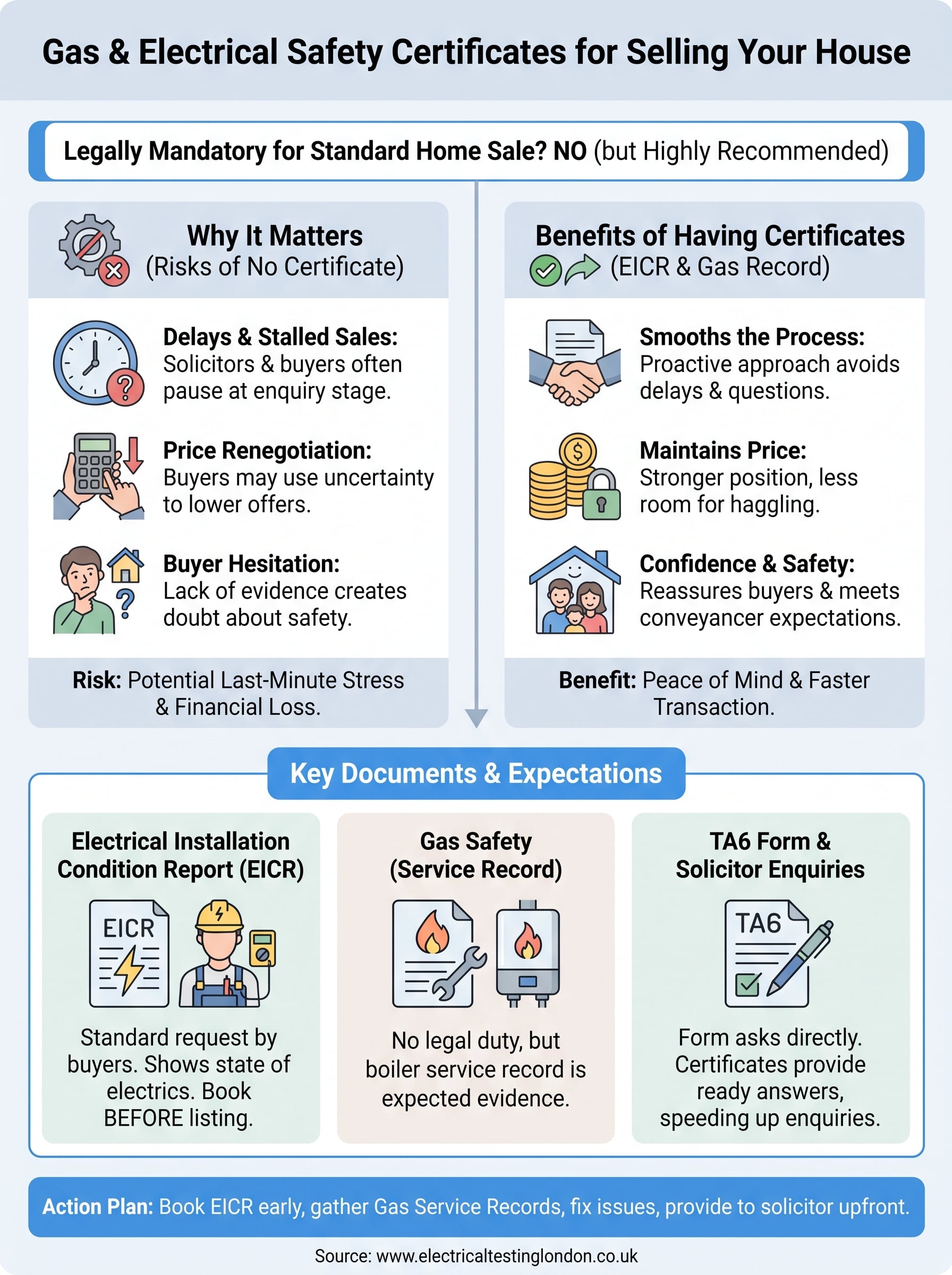
Here's the short answer: there's no legal requirement for a standalone gas or electrical safety certificate when selling a residential property in England or Wales, unlike the mandatory Gas Safety Certificate landlords need for rented properties. That said, most conveyancing solicitors and cautious buyers will expect some evidence that the electrics and gas installations are safe, and an Electrical Installation Condition Report (EICR) is fast becoming the standard document buyers request.
In this article, we'll explain exactly what sellers are legally obliged to provide, what buyers typically ask for anyway, and why having a recent EICR in hand can smooth your sale, avoid renegotiation over price, and give buyers confidence from day one.
Why these certificates matter when selling a house
The legal picture: what's actually required
England and Wales impose no blanket law demanding a gas or electrical safety certificate before you can complete a house sale, and the UK rules on an electrical safety certificate for a house sale set out exactly where the line falls. Unlike renting out a property, where landlords must hold a valid Gas Safety Certificate and increasingly an EICR too, selling your own home carries no equivalent statutory checklist. Gas Safe registration rules under the Gas Safety (Installation and Use) Regulations 1998 apply to landlords and engineers, not to homeowners selling up. If you're selling a property that's currently let, though, you're still bound by your existing landlord obligations right up until completion, so don't let those lapse mid-sale.
No certificate, no problem legally, but no certificate often means a stalled sale in practice.
Why buyers and solicitors ask anyway
Despite the lack of legal compulsion, conveyancing solicitors routinely raise the question of electrical and gas safety during the enquiries stage. Buyers, particularly first-time buyers using a mortgage, want reassurance that they're not inheriting a rewiring bill or a dangerous boiler flue, which is why electrical checks when buying a house come up so often during enquiries. Mortgage lenders don't usually demand certificates directly, but valuers and surveyors flag old fuse boards, missing RCD protection, or unsafe-looking gas appliances in their reports, and that can trigger a request for further evidence before the lender releases funds.
The real cost of not having one
Sellers who can't produce a recent EICR or gas safety record often find themselves negotiating from a weaker position. Buyers use uncertainty as leverage, sometimes knocking thousands off an offer to cover the theoretical cost of a full rewire, even when the property is perfectly safe. A £150 to £250 EICR, arranged before you list, removes that ammunition entirely and speeds up the legal process because there's nothing left for solicitors to chase, and how much an electrical safety certificate costs in 2026 varies mainly with property size.
Safety comes first, paperwork second
Beyond the sales negotiation, these checks matter because faulty wiring genuinely causes fires. Government figures show electrical faults are involved in thousands of house fires across the UK every year, so a certificate isn't just a box-ticking exercise for buyers, it protects whoever lives there next.
How to get your gas and electrical checks sorted
Booking an EICR before you list
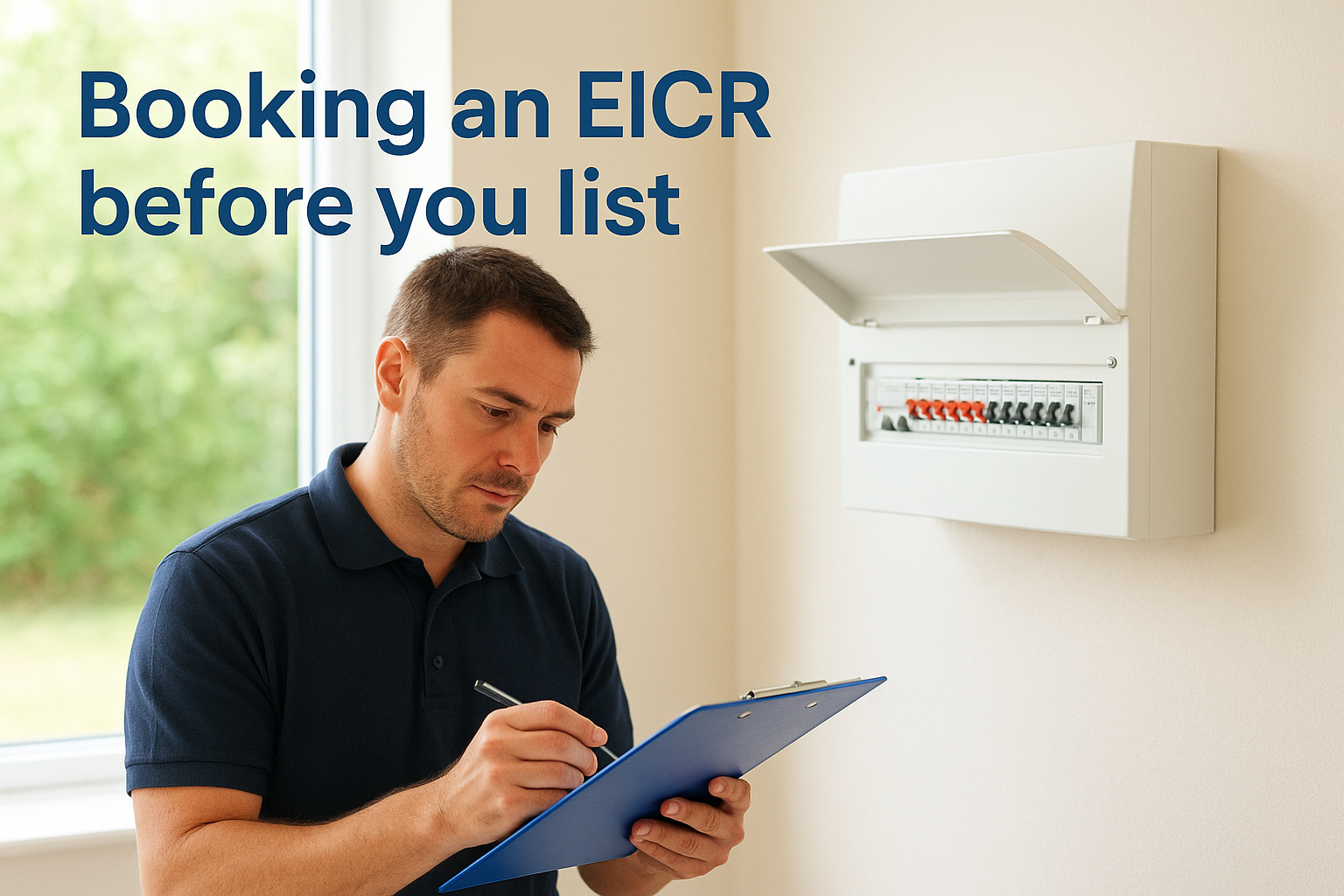
Getting your electrical safety check organised is simpler than most sellers expect. A qualified electrician inspects your consumer unit, wiring, sockets, and earthing arrangements, then issues a report graded from satisfactory to needing urgent attention, and the full checklist of what an EICR covers shows every element tested. Book this before your property goes on the market, not after an offer arrives, so you have time to fix anything flagged without holding up the chain, and booking an EICR in the UK takes far less effort than sellers assume. Electrical Testing London's EICR service covers exactly this, with engineers who hold at least ten years' experience and can usually turn a report around within a few days.
Sorting out gas safety evidence
Homeowners selling their own property have no legal duty to commission a gas safety check, but if a boiler service was done recently, dig out that paperwork anyway. Gas Safe registered engineers leave a service record showing the appliance was tested and is working correctly, and that record does the same reassuring job a certificate would.
A same-week EICR costs less than most sellers lose in last-minute price haggling.
A simple pre-sale checklist
Follow this order to avoid delays once solicitors get involved:
-
Book an EICR with a qualified electrician as soon as you decide to sell
-
Gather any existing gas boiler service records or Gas Safe certificates
-
Address any C1 or C2 issues the EICR identifies before listing
-
Keep digital and paper copies ready to hand your solicitor immediately
Handled this way, the conveyancing process moves faster because there's nothing left to chase.
What buyers and solicitors will expect to see
The TA6 form and its awkward questions
Before contracts exchange, your solicitor sends the buyer's side a TA6 Property Information Form, and it asks directly whether you hold electrical or gas safety certificates for the property. Answering "none available" isn't illegal, but it's the kind of gap that makes cautious buyers pause and start asking follow-up questions through their solicitor. Ticking that box with a recent EICR attached closes the conversation before it starts.
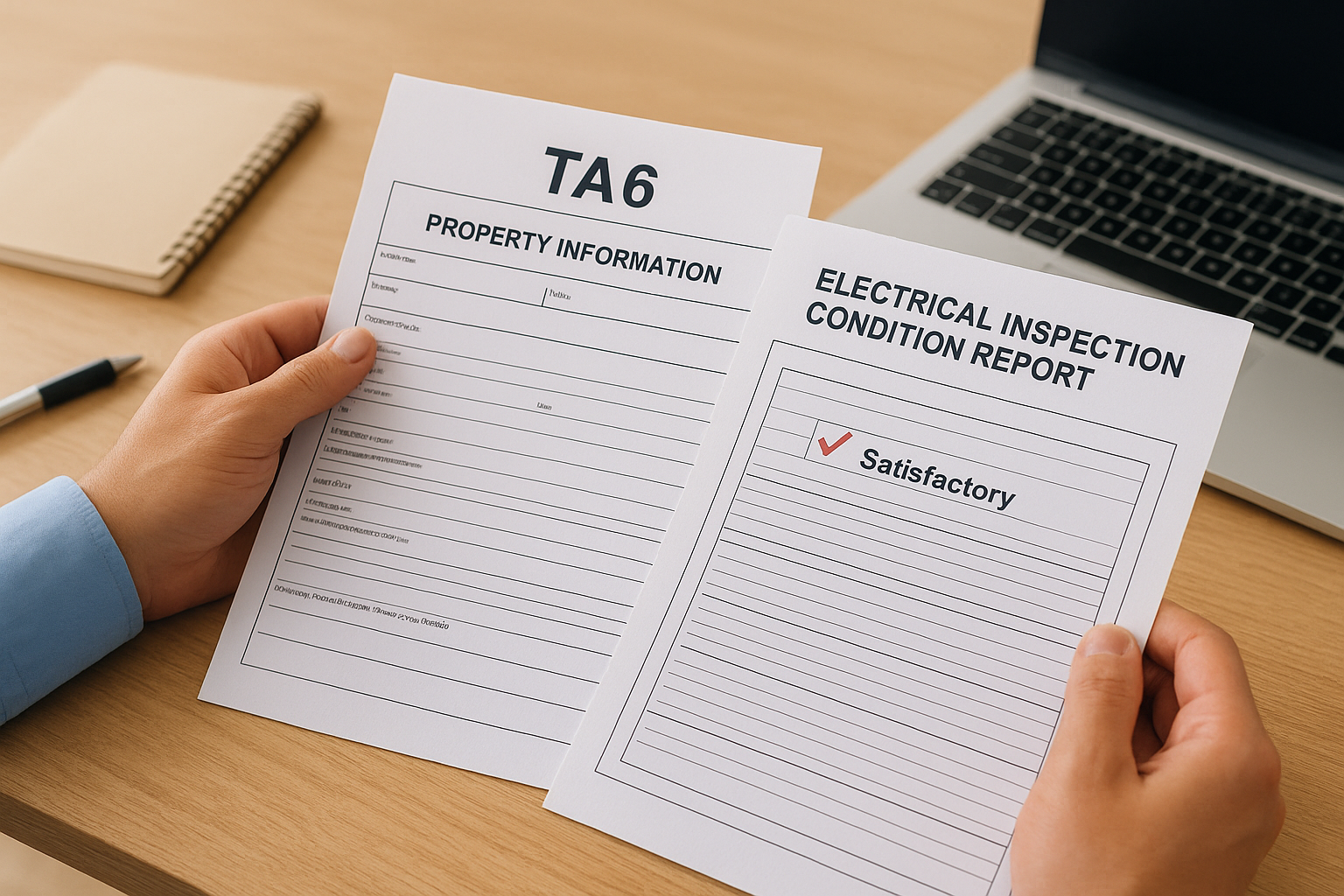
A completed TA6 with certificates attached answers questions before buyers even ask them.
What a thorough buyer typically requests
Buyers and their solicitors generally look for a consistent set of documents, and having them ready shows you've run the property properly:
-
A recent EICR graded satisfactory, or evidence that flagged issues have been fixed
-
Boiler service history or a Gas Safe engineer's record, even without a formal certificate
-
Building regulations compliance certificates for any electrical work carried out, such as a new consumer unit or rewire
-
Confirmation of PAT testing if the sale includes appliances like an integrated oven or hob
Why solicitors push harder than buyers realise
Conveyancing solicitors carry professional liability, so they'd rather over-ask than let a client complete on a property with unresolved safety questions. This is why even a straightforward chain-free sale can stall for a week or two while your solicitor chases paperwork you could have gathered before listing. Handing everything over upfront, rather than scrambling once enquiries land, keeps your sale on the timetable you actually want and avoids the awkward renegotiation that missing paperwork tends to invite.
What to do if a certificate is missing or lost
Finding out you never had a gas safety record or that your last EICR vanished years ago isn't a crisis, but it does need sorting before enquiries land on your solicitor's desk. Don't panic and don't try to bluff your way through the TA6 form either, since an honest "none held" followed by swift action reads far better to a buyer than silence or contradictory paperwork later in the chain.
Reordering a replacement quickly
If a previous EICR exists somewhere but you've simply misplaced it, ask the electrician or firm who carried it out for a duplicate copy first, since many keep digital records for years. When no record exists at all, or the property hasn't been checked in over a decade, booking a fresh electrical installation condition report is the faster route. Electrical Testing London can usually inspect and issue a report within days, and knowing how long an EICR takes to complete is often quicker than chasing down an old paper file from a company that may no longer trade.
A missing certificate is a delay, not a dealbreaker, as long as you act on it straight away.
When the old certificate shows serious faults
Sometimes sellers avoid digging up an old report because they suspect it flagged problems. If that's the case, get the outstanding C1 or C2 issues fixed and request a follow-up report confirming remedial work was completed, and seeing what a completed EICR report looks like helps you judge whether the paperwork does its job, since a documented fix reassures buyers far more than an unexplained gap ever will.
Selling with peace of mind
Selling a house doesn't legally require a gas or electrical safety certificate, but treating that as permission to skip the checks is a false economy. Buyers, solicitors, and mortgage lenders all lean on these documents to move a sale forward without friction, and turning up empty-handed just invites delay and price haggling you don't need. Getting an EICR sorted before you list, alongside whatever gas records you already hold, puts you in control of the timetable rather than scrambling once enquiries land.
Think of it as removing every excuse a buyer might use to slow things down or knock money off. A property with clean paperwork sells with fewer questions and less stress on everyone involved. If you're getting ready to put your home on the market, get a quote from our team and have your electrical safety documentation sorted before it ever comes up.