






Home Inspection: Electrical Panel Checks and Common Defects



A home inspection: electrical panel check is the part of a property inspection where the main distribution board is examined to judge whether it is safe, correctly protected and in sound condition. In UK homes the panel is usually called a consumer unit or fuse box. The inspector looks at the enclosure, the fuses or breakers inside, the RCD protection, the wiring connections and any sign of heat or tampering. They then report what needs repair or further testing.
This guide explains why the panel carries so much weight in a property purchase, how the check is done step by step, which defects turn up most often and what to do with the findings. We are Electrical Testing London, and our engineers test homes across London and the South East, so the advice is aimed at buyers, landlords and owners in that area.
Why the electrical panel matters in a home inspection
The panel matters because every circuit in the property runs through it. A fault here affects the whole home and is often one of the costliest findings in an inspection.
What the panel does
Power enters from the meter and the panel splits it into separate circuits for lighting, sockets, the cooker and so on. It also holds the devices that cut the power when something goes wrong. If those devices are old, mismatched or missing, a fault that should trip in a fraction of a second can overheat a cable or leave a live metal part dangerous to touch.
|
Term |
Meaning |
|---|---|
|
Consumer unit, fuse box, distribution board |
UK names for what US inspectors call the electrical panel |
|
MCB |
Switch that trips on overload or short circuit |
|
RCD |
Trips when current leaks to earth, protecting against shock and some fires |
|
RCBO |
An MCB and an RCD combined in one device for a single circuit |
|
Rewirable fuse |
Older type with replaceable fuse wire, found in older boards |
Why buyers should care
A panel finding changes what a house really costs you. Our consumer unit replacement starts at £390+VAT, takes 3 to 5 hours and ends with an Electrical Installation Certificate. That is a manageable figure when you know about it before exchange and an unpleasant surprise when you find it afterwards.
A board that predates current standards is not unlawful by itself. It will usually fall short of modern protection, though, and the report will say so. Knowing that early gives you room to negotiate.
A defect in the panel is rarely cosmetic, because every circuit in the house depends on it.
How an inspector checks the electrical panel
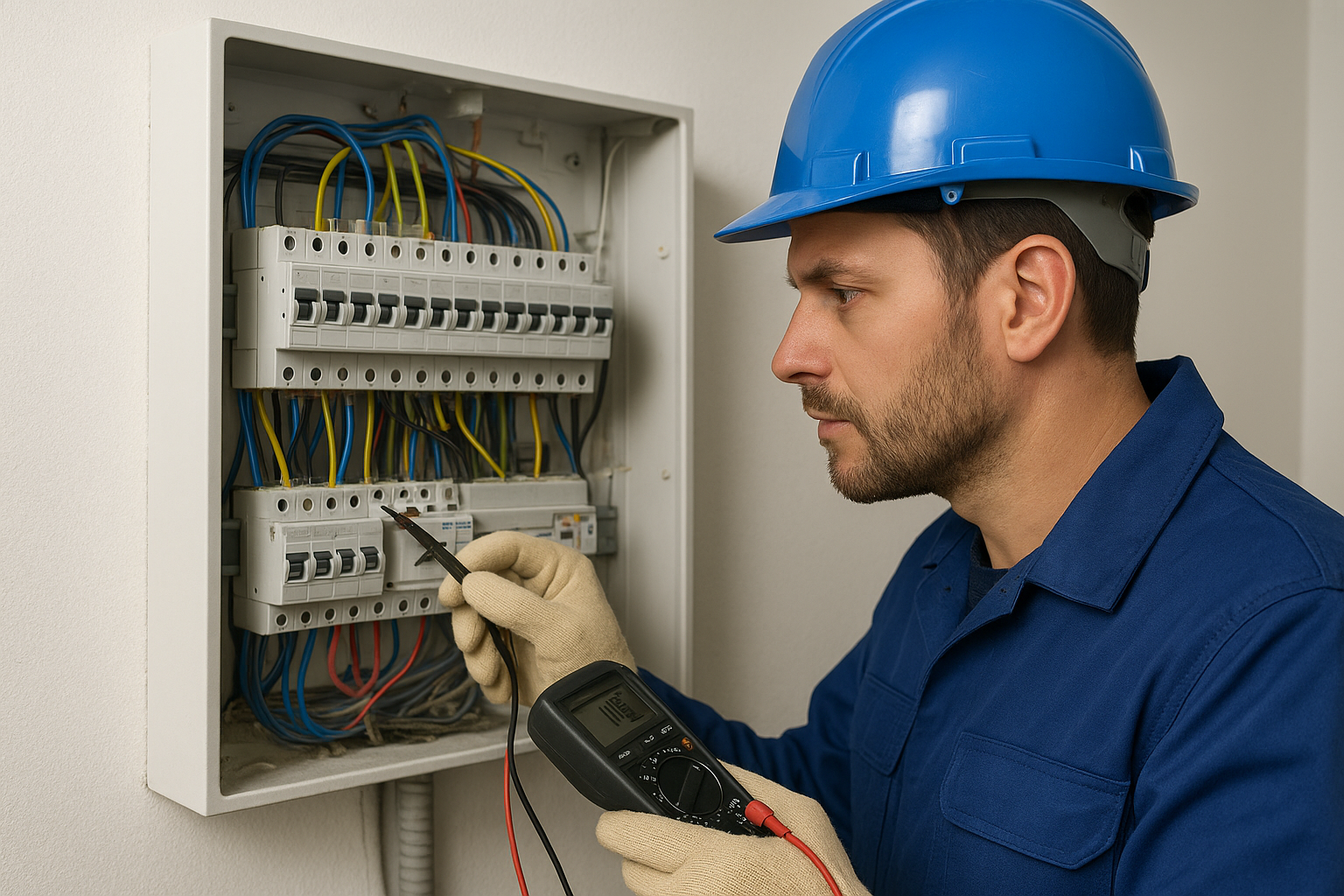
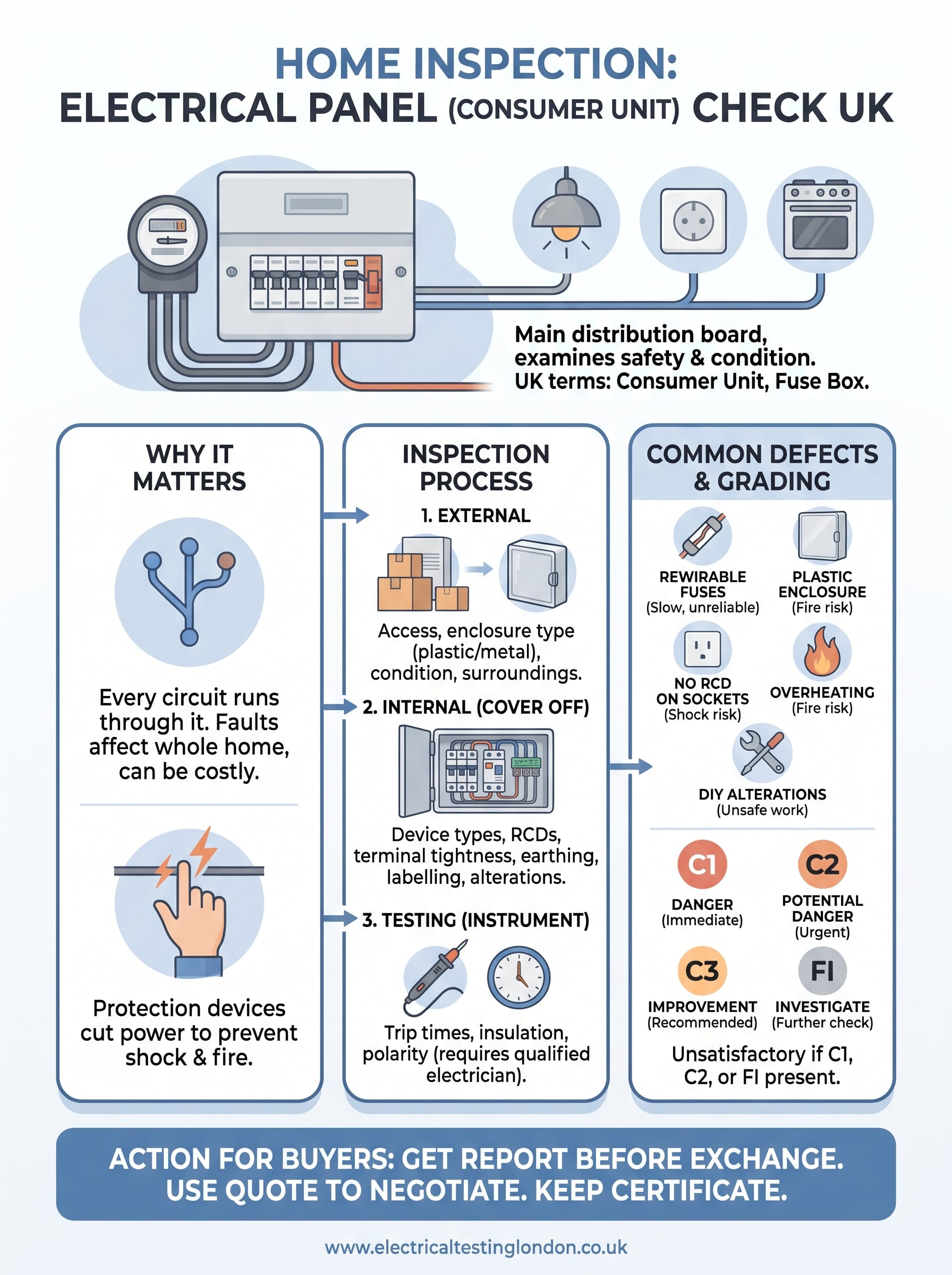
An inspector checks the panel in three stages: the outside and its surroundings, the inside with the cover removed, and, in a full electrical report, instrument testing. A visual look alone never covers all three.
Before the cover comes off
The inspector first notes where the panel is and whether it can be reached safely. A board blocked by stored items or squeezed into a cramped cupboard is a finding in itself, because the supply must be isolated quickly in an emergency.
The enclosure comes next. Since 2016, domestic consumer units have had to be made of non-combustible material, usually steel. A plastic board therefore marks an older installation. It is not an automatic fail, but it is noted, particularly under a staircase. Cracks, damp, scorch marks and a missing cover are also recorded.
With the cover removed
Only a qualified person should take the cover off a live board. Do not try it yourself. Once it is off, the inspector works through the inside of the unit:
-
the type of protective devices, such as MCBs, RCBOs or rewirable fuses
-
whether RCD protection covers the socket circuits
-
whether each device rating suits the cable it protects
-
the condition and tightness of terminals, and any discoloured insulation
-
empty slots without proper blanks
-
the main earthing and bonding connections
-
circuit labels and a legible chart
-
signs of amateur alterations
Testing that a visual check cannot replace
Looking at a board cannot tell you whether the RCD trips quickly enough. Testing does that, using instruments to measure RCD trip times, earth fault loop impedance, insulation resistance and polarity. A general home survey is visual and usually advises you to call an electrician for these tests.
A Homebuyer Electrical Report takes between one and four hours on site.
The cover-off look finds what is visible, but only testing proves the protection actually works.
Common electrical panel defects and what they mean
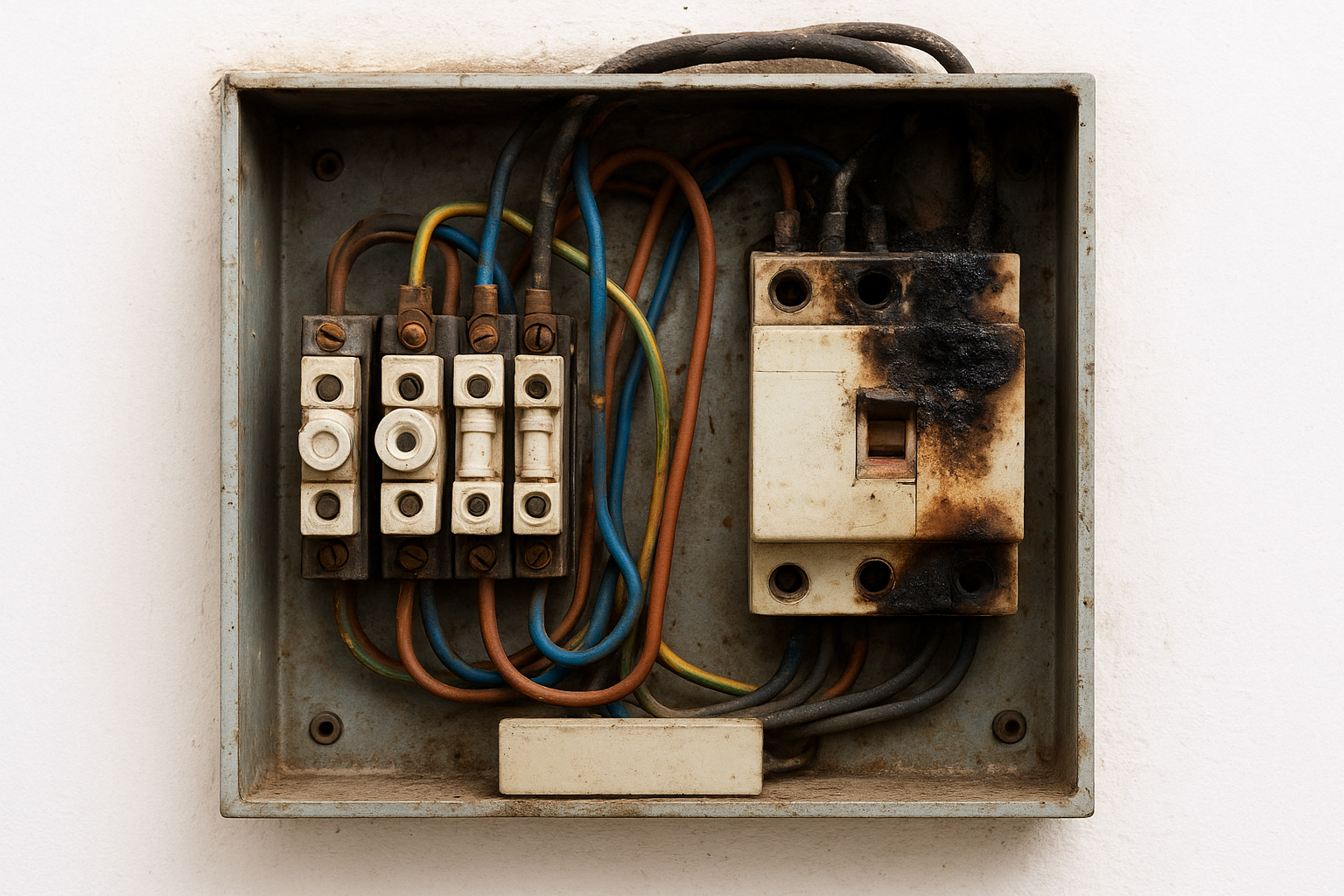
The defects found most often are old rewirable fuses, plastic enclosures, missing RCD protection, loose or overheated connections, poor labelling and unsafe DIY alterations. Each tells you something different about the risk.
The defects inspectors find most often
|
Defect |
Why it matters |
Usual outcome |
|---|---|---|
|
Rewirable fuses |
Slow, unreliable protection, and the wrong wire is easy to fit |
Replacement advised |
|
Plastic enclosure |
Can contribute to a fire spreading |
Upgrade to a metal unit |
|
No RCD on sockets |
Higher risk of electric shock |
Add RCD or RCBO protection |
|
Scorching, melted insulation, loose terminals |
Overheating and fire risk |
Urgent repair |
|
Missing blanks or damaged cover |
Live parts can be reached |
Fit blanks or replace the cover |
|
Unlabelled circuits |
Slows isolation in an emergency |
Label and chart the circuits |
|
Mixed cable colours, several cables in one terminal |
Signs of unqualified work |
Further investigation |
|
Inadequate earthing or bonding |
Fault current may not clear properly |
Remedial work |
Often one finding leads to another. A board with rewirable fuses and no RCD protection is typically fixed in one go with a new consumer unit.
How severity is graded
An EICR grades each observation with a code. C1 means danger is present and needs immediate action. C2 means potentially dangerous and needs urgent attention. C3 means improvement is recommended. FI means further investigation is needed.
Any C1, C2 or FI gives an Unsatisfactory result, while C3 items alone do not. We send the quotation for rectifying any defects together with the certificate, so you see the problem and the price at the same time.
One C1, C2 or FI code is enough to make an electrical report Unsatisfactory.
What to do with the findings before you buy
Get the report before you exchange contracts, rank the defects by code, get a fixed quotation for the repairs and use it to negotiate or budget. Timing is the part buyers get wrong.
A practical order of action
-
Book the electrical report as soon as your offer is accepted, so it arrives before exchange.
-
Read the codes first. C1 and C2 items need dealing with, and C3 items are your decision.
-
Ask for a quotation covering every defect, not just the worst one.
-
Use the quotation to ask for a price reduction, or ask the seller to complete repairs and supply the certificate.
-
After any work, keep the certificate. A new consumer unit comes with an Electrical Installation Certificate.
What the check costs
Allow for the report turnaround. Our Homebuyer Electrical Report is delivered within 5 working days, so book early. Prices rise with property size, and both reports include up to eight circuits.
|
Property size |
Homebuyer Electrical Report |
Domestic EICR |
|---|---|---|
|
Studio |
£149 |
£115 |
|
1 bedroom |
£159 |
£130 |
|
2 bedrooms |
£169 |
£145 |
|
3 bedrooms |
£189 |
£155 |
|
4 bedrooms |
£209 |
£170 |
|
5 bedrooms |
£229 |
£190 |
|
6 bedrooms |
£249 |
£210 |
Each additional circuit costs £15 plus VAT. For example, a three-bedroom house with ten circuits costs £189 for the homebuyer report, plus £30 plus VAT for the two extra circuits. A Domestic EICR suits existing owners and landlords, and it is valid for 5 years or until a change of tenancy.
Getting your panel checked properly
The electrical panel is the heart of a home's installation, so it deserves more than a glance. A visual home inspection shows you the enclosure, the labels and obvious damage. Testing shows whether the protection works. The defects that matter most are old fuses, missing RCD protection, plastic enclosures and signs of overheating, and the codes in the report tell you which ones to act on first.
If you are buying in London or the South East and want the board tested before you exchange, you can request a quote for a homebuyer electrical report and we will confirm the price for your property size.