






Home Inspection Electrical: What It Covers, Faults Found



A home inspection electrical check is a professional assessment of the fixed wiring and safety devices in a property: the consumer unit, circuits, sockets, lighting and earthing. In the UK the formal version is an Electrical Installation Condition Report (EICR). A qualified electrician inspects and tests the installation against BS 7671, the wiring regulations, and records a Satisfactory or Unsatisfactory result. A general home survey only notes electrical concerns the surveyor can see, then tells you to call a specialist.
This guide explains why the inspection matters, what the electrician checks and tests, which electrical issues turn up most often, and what happens on the day. It also gives the cost for a typical home, so you know what to expect before you book.
Electrical Testing London carries out these inspections for homeowners, landlords and homebuyers across London and the South East. The process and prices below describe how an inspection works for homes in that area. Read it first and you will know what the electrician is looking for and what the report means.
Why a home electrical inspection matters
An electrical inspection matters because wiring wears out where you cannot see it. Testing the installation is the only reliable way to find a fault before it causes a shock or a fire. Most people never see the wiring behind their walls, so problems can sit unnoticed for years.
What an inspection protects you from
Cables age, connections loosen and protective devices stop doing their job. Add decades of alterations by different people, and an installation that looked fine when it was fitted may no longer disconnect quickly in a fault. A test shows how the installation behaves, not just how it looks. A tidy consumer unit can hide poor earthing, and a socket that works perfectly can sit on a circuit with failing insulation.
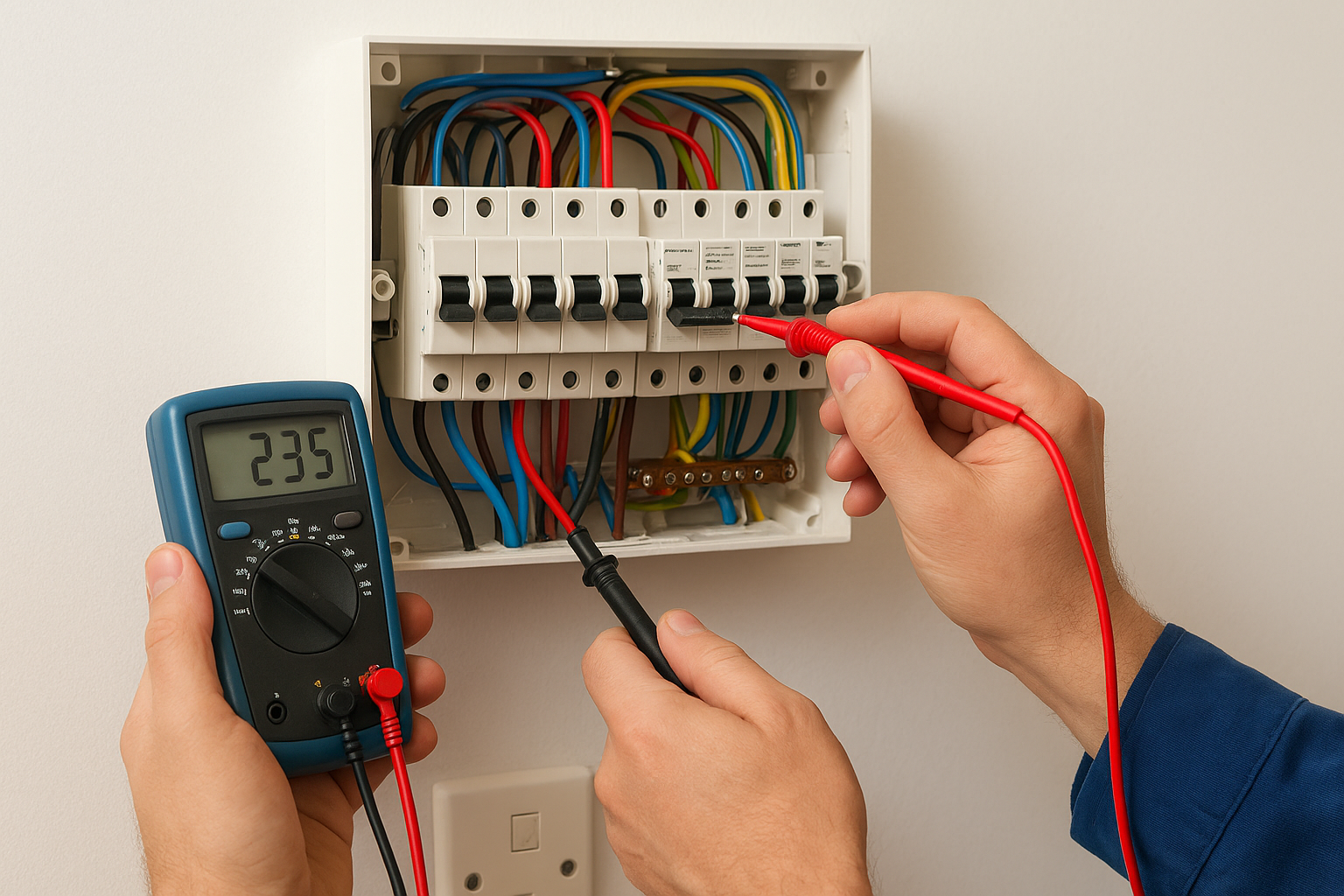
A working socket proves nothing about the safety of the circuit behind it.
When you need one
Electrical Safety First recommends the intervals below. Landlords in England have a legal duty on top of that: the installation must be inspected at least every five years, and tenants must receive a copy of the report within 28 days. Some insurers and lenders also ask for a recent report.
|
Situation |
Recommended timing |
|---|---|
|
Owner-occupied home |
Every 10 years |
|
Rented home |
Every 5 years, or at change of tenancy |
|
Buying a property |
Before you commit to the purchase |
|
Flickering lights, tripping circuits, warm or scorched sockets |
As soon as possible |
Buyers get the most from a report before they exchange contracts. A homebuyer electrical report shows the overall condition of the wiring while you can still negotiate the price or walk away.
What a home electrical inspection covers
A thorough inspection covers the whole fixed installation: the consumer unit, every circuit, earthing and bonding, and the sockets, switches and light fittings. The electrician works through a visual check and then a series of electrical tests. Plugged-in appliances are not part of it, because they fall under PAT testing.
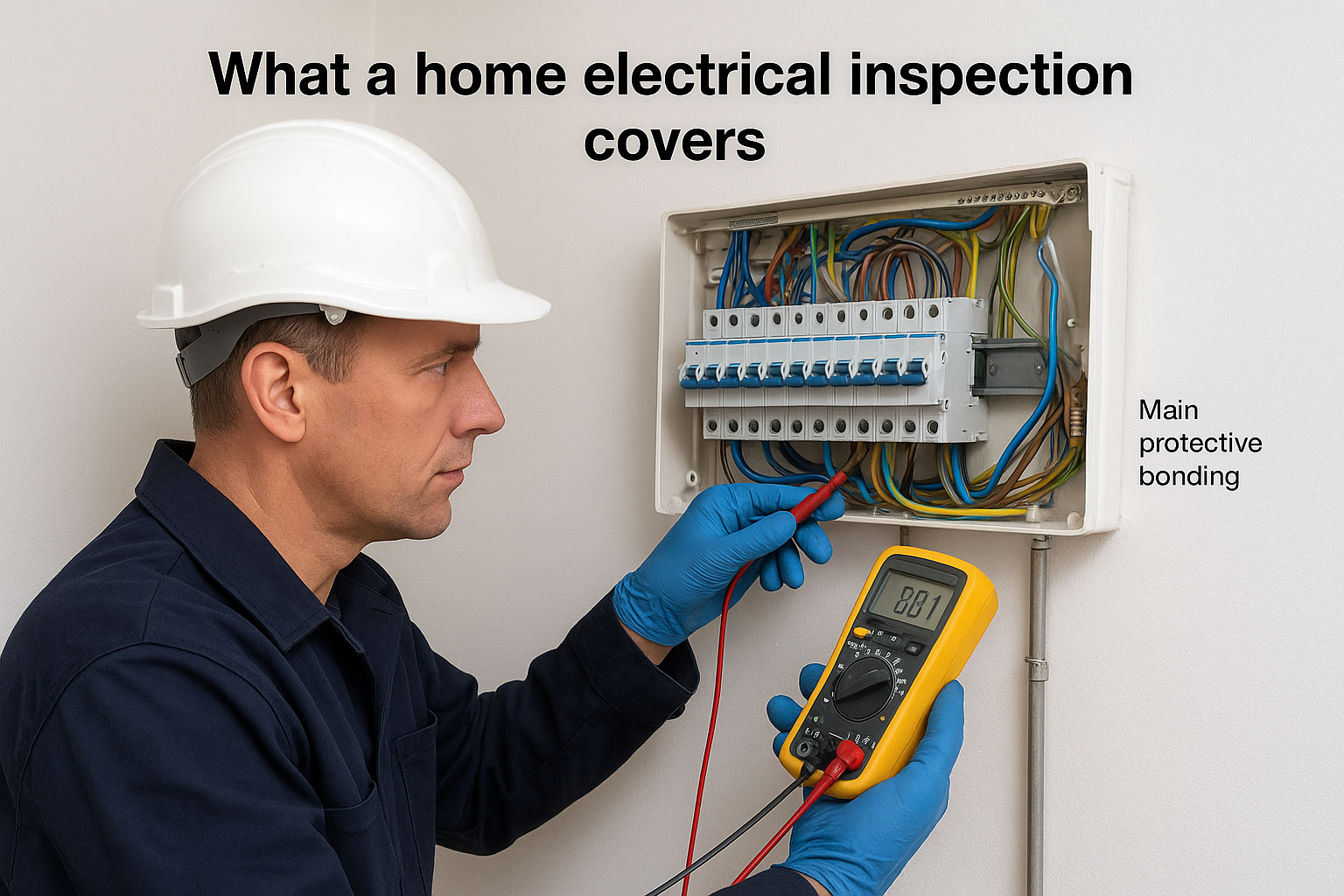
The visual inspection
The electrician starts at the consumer unit. They check that it has the right protective devices, secure connections, no signs of heat damage and clear circuit labels. They then confirm that main protective bonding connects the incoming gas and water pipes to the earth, and they check accessories for cracks, scorching and loose fixings.
Inspections are normally non-invasive. Floorboards stay down and walls stay closed unless you agree otherwise, and any limitation is written into the report.
The tests the electrician runs
Testing is what separates an EICR from a visual look-over. The main tests are below.
|
Test |
What it shows |
|---|---|
|
Continuity of protective conductors |
Earth paths are unbroken, so fault current has a safe route |
|
Insulation resistance |
Cable insulation is not breaking down or leaking current |
|
Polarity |
Live and neutral are connected the right way round |
|
Earth fault loop impedance |
A protective device will trip fast enough in a fault |
|
RCD operation |
The RCD trips within the required time when it detects leakage |
The results only mean something if the instruments are accurate. Electrical Testing London's engineers each have at least 10 years of experience, its test equipment is calibrated annually, and a Qualifying Supervisor checks the results and defect analysis before preparing the certificate.
The tests tell you whether the protection works, which no visual check can do.
Electrical issues inspectors commonly find
The electrical issues found in a home inspection are fairly predictable. They are ageing consumer units, missing RCD protection, weak earthing and bonding, damaged accessories and unsafe DIY work. Homes that have been altered several times over the decades tend to show the most of them.
The faults that turn up most
The table below shows each common fault, why it matters and the code it often receives. The engineer's judgement on site decides the final code.
|
Fault |
Why it matters |
Often coded |
|---|---|---|
|
Old fuse box with rewirable fuses or no RCD protection |
Slower or no automatic disconnection in a fault |
C2 or C3 |
|
Missing or undersized bonding to gas and water pipes |
Metalwork can become live in a fault |
C2 or C3 |
|
Cracked, loose or scorched sockets and switches |
Overheating and arcing |
C2 |
|
Exposed live conductors or broken accessories |
Direct risk of shock |
C1 |
|
DIY extensions, buried joints, unsuitable cable |
Unknown quality and protection |
C2 or FI |
|
Unlabelled circuits, no circuit chart |
Hard to isolate safely |
C3 |
An old consumer unit is the finding most homeowners are surprised by. A unit that still works can fall short of current standards, and that is why replacement is so often recommended.
How the report codes each finding
Every observation gets a code. C1 means danger is present and needs immediate action. C2 means potentially dangerous and needs urgent remedial work. C3 means improvement is recommended. FI means further investigation is required.
The report is Unsatisfactory if it contains any C1, C2 or FI. C3 items alone leave it Satisfactory. The same fault can earn different codes in different homes, depending on the circuit it affects and the protection around it.
One C2 or FI is enough to turn a Satisfactory result into an Unsatisfactory one.
What to expect on the day and what it costs
A domestic EICR typically takes 2 to 4 hours, with the power switched off in stages. You then receive a certificate that rates the installation and lists any defects. A homebuyer report takes between one and four hours.
Before, during and after the visit
-
Before: give the engineer clear access to the consumer unit and to every room. Tell them about any past problems.
-
During: circuits are isolated one at a time. Save your work, plan around the outages and unplug sensitive equipment.
-
After: the certificate is prepared electronically in the office. Electrical Testing London sends a quotation for fixing any defects with it. A homebuyer report follows within 5 working days.
If the result is Unsatisfactory, qualified electricians then carry out the remedial works. For consumer unit replacement the price is £390+VAT. The job takes 3 to 5 hours and comes with an Electrical Installation Certificate and a one-year parts and labour warranty.
What it costs
Prices depend on property size. Both services include up to eight circuits, and each extra circuit costs £15 plus VAT.
|
Property |
Domestic EICR |
Homebuyer report |
|---|---|---|
|
Studio |
£115 |
£149 |
|
1 bedroom |
£130 |
£159 |
|
2 bedroom |
£145 |
£169 |
|
3 bedroom |
£155 |
£189 |
|
4 bedroom |
£170 |
£209 |
|
5 bedroom |
£190 |
£229 |
|
6 bedroom |
£210 |
£249 |
As a worked example, a three-bedroom house with ten circuits costs £155 for the first eight, plus £30 for two extra circuits. That is £185 on the listed prices, with VAT applied as quoted at booking. Electrical Testing London uses standardised rates, so you know the full cost when you book.
Price an inspection by bedrooms and circuits, then add the cost of any remedial work the report finds.
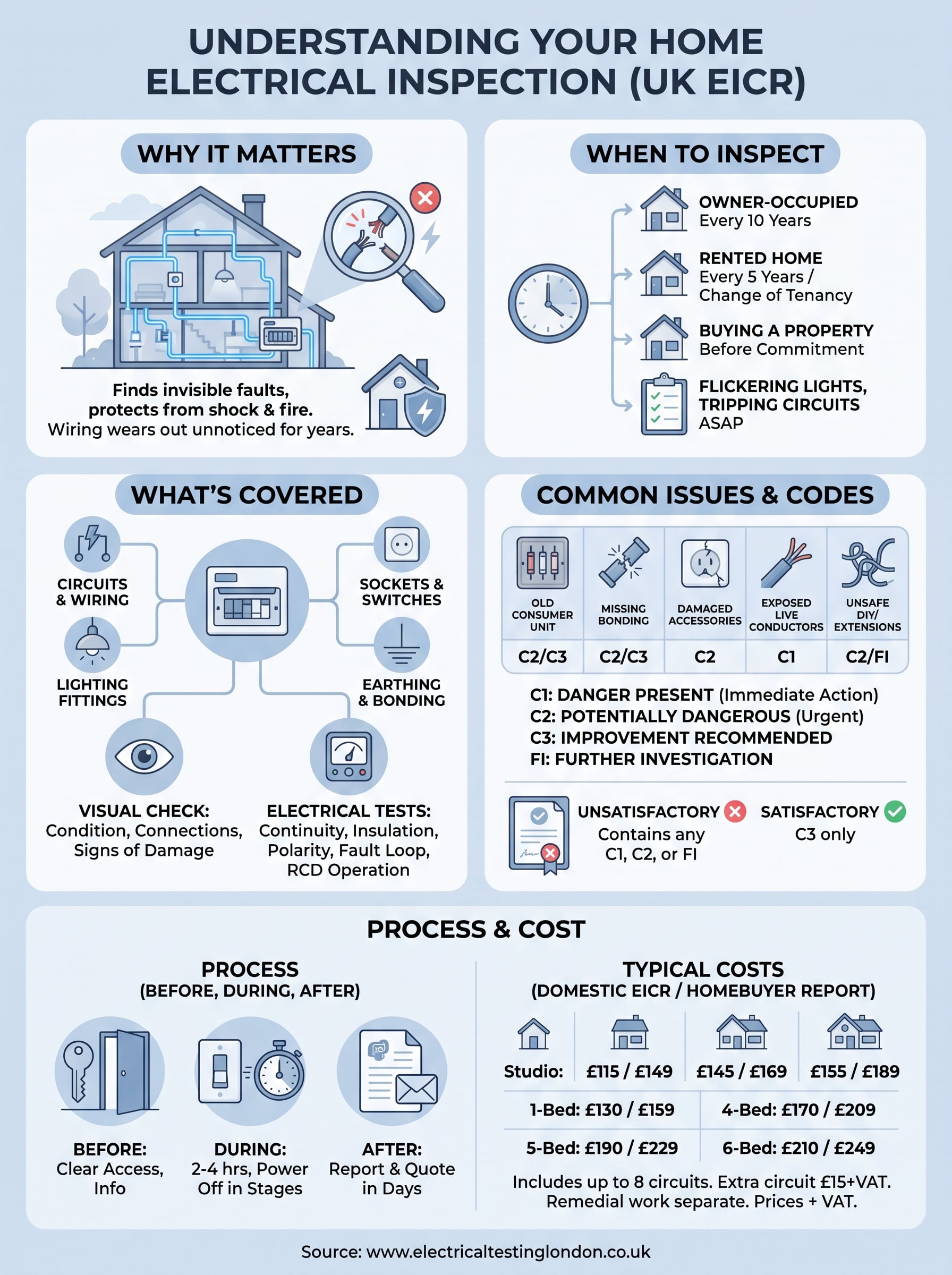
Getting your electrics checked
A home electrical inspection is a tested, documented check of everything fixed in your wiring. It is worth doing every 10 years in your own home, every 5 years or between tenants in a rental, and before you buy. The faults it finds are usually ordinary, such as an old consumer unit, weak bonding or damaged sockets. Found early, they are far cheaper to fix than to ignore.
If you want a clear answer on your own property, request a quote for your inspection. Tell us the property size and number of circuits, and you will have the full price before you book.