


How to Check an Electrical Safety Certificate (EICR)


You've been handed an electrical safety certificate, or you're hunting for one that seems to have gone missing, and you need to know it's genuine. Learning how to check electrical safety certificate paperwork properly matters whether you're a landlord proving compliance, a tenant checking your rights, or a buyer reviewing an electrical safety certificate for a house sale before completion. A certificate with the wrong details, a missing registration number, or an unqualified signatory isn't worth the paper it's printed on.
The good news is that verifying an EICR (Electrical Installation Condition Report) takes a few straightforward steps. You can check the electrician's registration with a competent person scheme, confirm the certificate's unique reference number, and request a duplicate directly from the issuing engineer if the original has been lost. Each of these checks takes minutes once you know where to look.
In this guide, we'll walk through exactly how to verify a certificate's authenticity, what details a legitimate EICR must include, and how to get a replacement copy quickly if you can't find yours. We'll also cover what to do if the certificate looks incomplete or you suspect it wasn't issued by a properly qualified engineer, so you're not left exposed on compliance or safety.
What you need to know before checking your certificate
Before you start checking, make sure you know what document you're actually holding. People often use "electrical safety certificate" as a catch-all term, but there are several different certificates an electrician can issue, and confusing them causes most of the confusion during verification. Knowing which one you have determines where you look for proof it's genuine and what details it should contain.
Know which certificate you're dealing with
Different jobs produce different paperwork, and the types of electrical certificates issued in the UK each cover something distinct. An EICR covers the condition of a property's fixed wiring and is what landlords need for compliance and what buyers should ask for before completion. An EIC (Electrical Installation Certificate) is issued after new electrical work, like a rewire or consumer unit swap, and it's worth understanding how an EIC differs from an EICR. A Minor Electrical Installation Works Certificate covers smaller jobs such as adding a socket. PAT testing certificates, meanwhile, relate to portable appliances, not the fixed installation, and won't satisfy an EICR requirement. If you're not sure which certificate you have, check the title printed at the top of the document, it should say clearly.
An EICR proves the fixed wiring is safe; it's not the same as a PAT record or a certificate for new work, and checking the wrong document wastes your time.
What a genuine EICR must contain
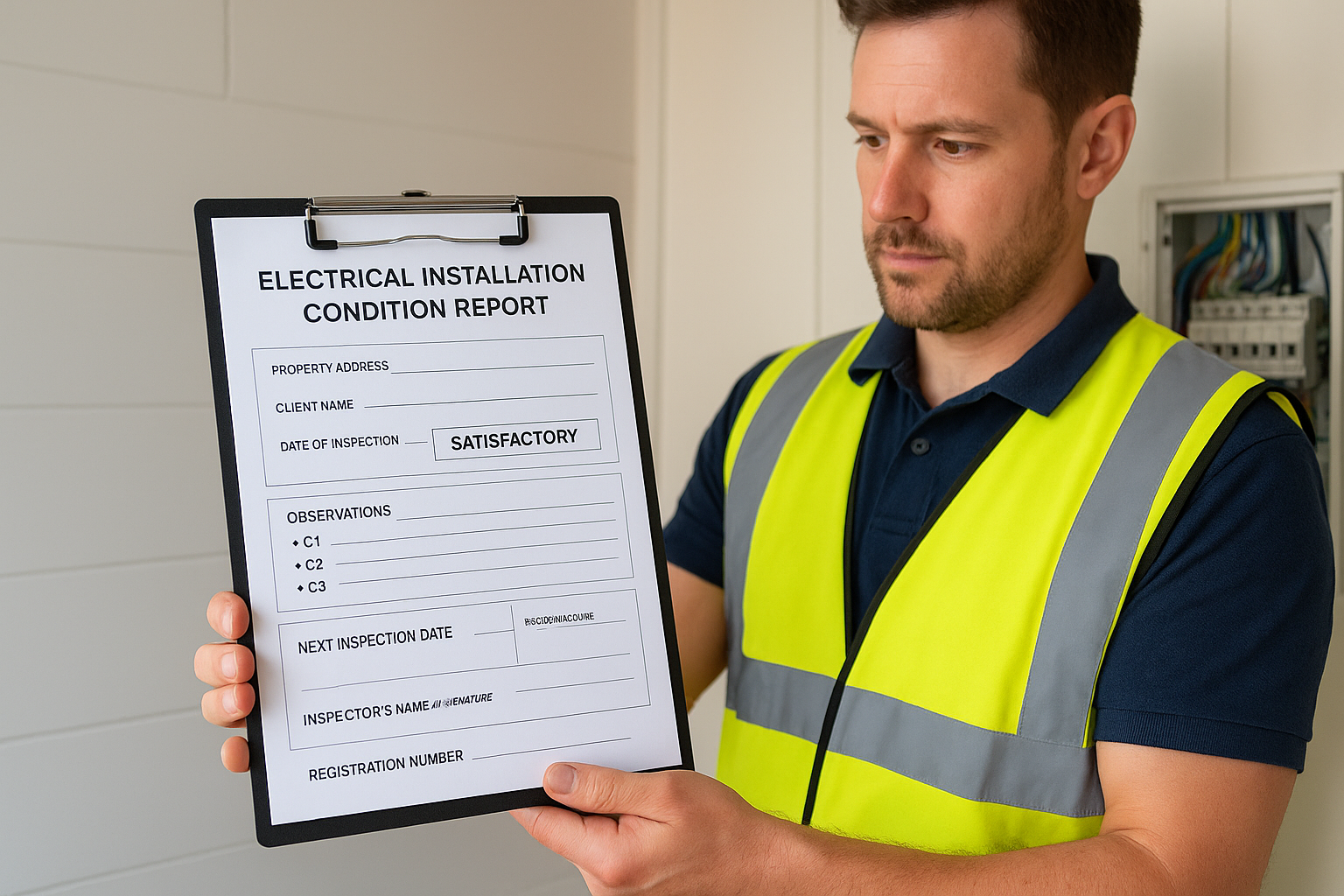
Every valid EICR follows a standard format based on BS 7671, the UK wiring regulations. Missing fields are one of the fastest ways to spot a problem before you even get to verifying the electrician's credentials.
|
Field |
What to look for |
|---|---|
|
Property address |
Matches the property being checked exactly |
|
Client name |
Landlord, owner, or managing agent named |
|
Date of inspection |
Recent, and matches any invoice or booking record |
|
Overall condition |
Marked satisfactory or unsatisfactory |
|
Observations |
Coded C1, C2, C3, or FI where issues are found |
|
Next inspection date |
Usually five years for rented property, ten for owner-occupied |
|
Inspector's name and signature |
Present and legible |
|
Registration number |
Scheme membership number for NICEIC, NAPIT, or similar |
Certificate wording varies slightly between electricians, but every one of these fields should appear somewhere on a properly completed report. Gaps in this table, particularly a missing registration number or an unsigned report, are a red flag worth chasing up before you rely on the document.
Understand who's allowed to issue one
Legally, anyone can attempt an electrical inspection, but only a competent, qualified electrician registered with a recognised scheme can issue an electrical safety certificate that stands up to scrutiny from insurers, local authorities, or a court in a dispute. Registration bodies include NICEIC, NAPIT, ELECSA, and a handful of smaller schemes, all overseen under the same government-recognised competent person framework described on GOV.UK. This is why checking the register, which we'll cover in Step 3, matters so much: it confirms the person who signed your certificate was actually entitled to.
Know your validity windows
Finally, check the clock. A domestic EICR is typically valid for five years, or sooner if the electrician flags a shorter interval due to the property's condition. Rental properties in England must be reinspected at least every five years under the landlord EICR renewal requirements set by the Electrical Safety Standards in the Private Rented Sector Regulations 2020, while commercial premises are often reviewed more frequently depending on use. If your certificate's next inspection date has already passed, treat it as expired, even if the wiring hasn't visibly changed, and arrange a fresh EICR rather than relying on outdated paperwork.
Step 1. Check your own paperwork and records
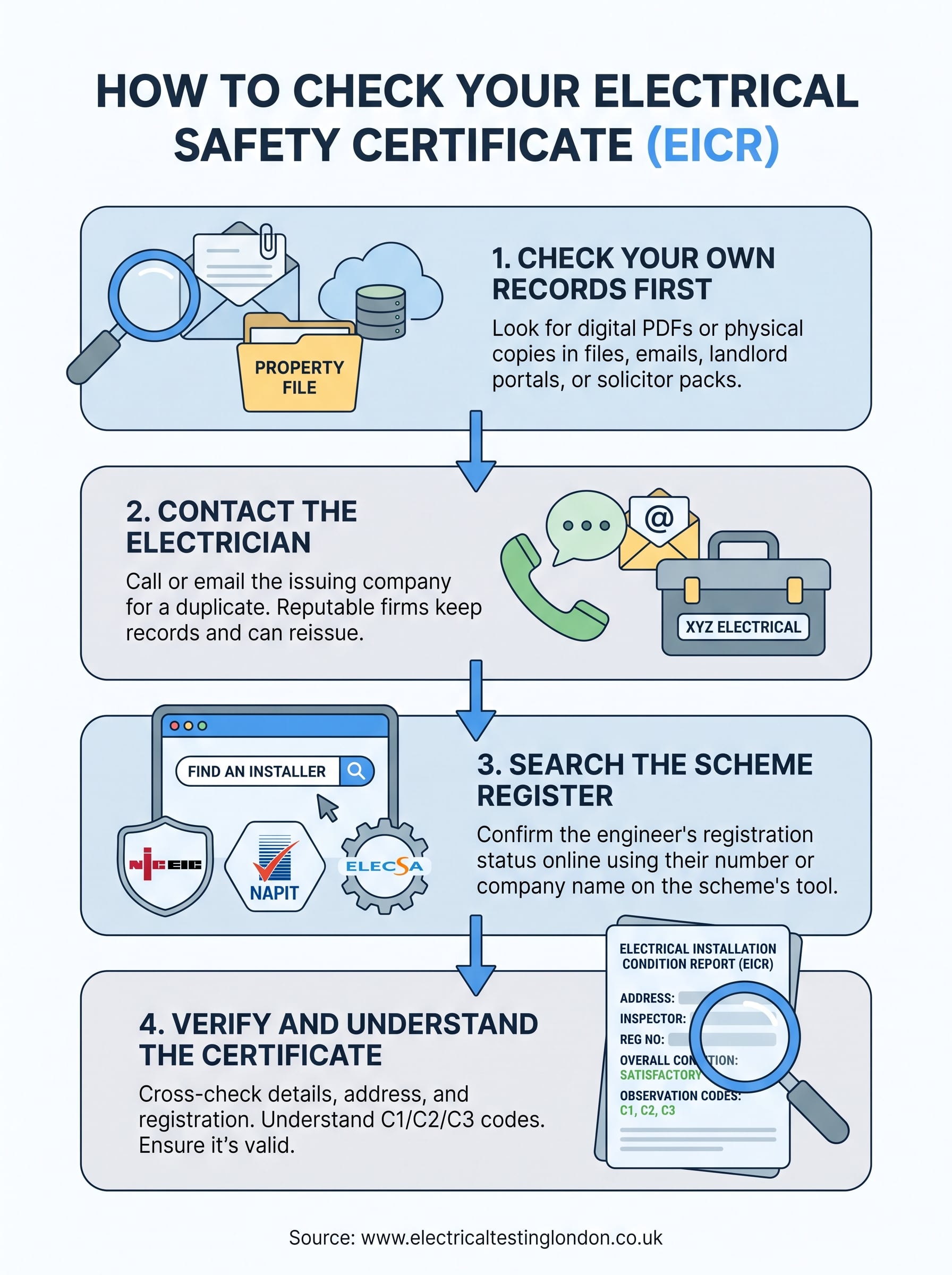
Before you chase anyone else, look closer to home. Most people who think they've lost an electrical safety certificate actually have a copy sitting in an email inbox, a property file, or a folder from a house move. Checking your own records first saves time and often resolves the search within minutes, especially if the work was done recently or through an estate agent or managing agent who typically keeps compliance documents on file.
Where to look first
Start with the obvious digital trails, since most electricians now issue certificates as PDFs rather than paper copies.
-
Search your email inbox for terms like "EICR", "certificate", or the electrician's company name
-
Check any property management portal if you use a letting agent
-
Look in your solicitor's completion pack if you bought the property recently
-
Review your mortgage or insurance documents, which sometimes include a copy submitted at the time
-
Check physical files: house purchase paperwork, a folder from the previous owner, or a landlord compliance binder
Don't overlook the boiler cupboard or consumer unit itself. Electricians sometimes leave a sticker or a printed summary near the fuse board noting the date of the last inspection and the company that carried it out, which gives you a starting point even without the full report.
What to check once you've found it
Already found a document that looks right? Compare it against the table of required fields from the previous section, and against an example of a completed EICR report, before assuming it's valid. Confirm the property address matches, the inspection date is recent enough to still be within its validity window, and the registration number is present and legible. A certificate missing a signature or registration number needs following up before you can rely on it.
If you can't find a signature, a registration number, and a matching property address on the document, don't treat it as valid yet, check it before you use it.
Finally, note down any reference numbers, the electrician's name, and the company details printed on the document, even if the certificate itself looks incomplete. This information becomes essential in Step 2, when you contact the issuing electrician directly for confirmation or a replacement copy. Having these details ready before you call saves a back-and-forth and speeds up getting a verified copy, particularly if the original job was completed some years ago and the company needs to dig through archived records.
Step 2. Contact the electrician or company who issued it
If your own search comes up empty, the next call is to the electrician or firm named on the certificate. Reputable companies keep compliance records for years, often well beyond the certificate's validity period, and most can email a duplicate within a day or two once they've confirmed who you are and which property it covers. This route works whether you lost a paper copy or never received a soft copy in the first place.
Ask for a duplicate certificate
Reach out by phone first if you can, since a quick call often gets a faster response than an email sitting in a queue. Have the property address, the approximate date of the original inspection, and any reference number from Step 1 ready before you make contact. If phone isn't practical, send a short written request instead:
Subject: Request for duplicate EICR - [Property Address]

Hi [Electrician/Company Name],

I'm trying to locate a copy of the Electrical Installation Condition Report
carried out at [full property address] around [month/year].

Could you confirm you hold this on file and send a duplicate copy,
along with the registration number used at the time?

Many thanks,
[Your name]
[Phone number]
A genuine electrician will have no problem confirming their own work and reissuing a copy; hesitation or a refusal to provide one is a warning sign.
If the business has closed or you can't trace it
Sometimes the sole trader has retired or the company has folded, and there's no obvious way to reach them. Don't assume the certificate is unrecoverable at this point. Competent person schemes such as NICEIC, NAPIT, and ELECSA hold records of certificates logged by their registered members, sometimes for years after that member has left the scheme, which means a duplicate copy may still exist even if the original business is long gone.
Try the electrician's old website or a Companies House filing first, since a forwarding address or new trading name sometimes turns up there. When that fails, move straight to Step 3 and search the register directly, both to trace the certificate and to confirm the person who signed it was properly registered when the work was carried out.
Step 3. Search the NICEIC, NAPIT or ELECSA register
Every competent person scheme runs a public "find an installer" tool, and this is the fastest way to confirm the electrician on your certificate was actually registered when the work was done. Type in the company name, the registered business number from the certificate, or the postcode of the property, and the register will return a match if that engineer or firm is currently listed. This step matters most when you can't reach the original electrician, or when something about the paperwork looks off and you want independent confirmation rather than taking the certificate at face value.
How to search each scheme
Start with whichever body's logo or scheme number appears on your certificate, then widen the search if you're not sure.
-
Go to the relevant scheme's official checker: NICEIC, NAPIT, or ELECSA (now part of NAPIT) all offer free online search tools.
-
Enter the company name or the registration number printed on your certificate.
-
Cross-check the address returned against the business address on your paperwork.
-
Note the trades listed against that registration, since some electricians are certified for domestic work only, not commercial installations.
-
If nothing matches, try the other two schemes, as electricians sometimes switch registration bodies over time.
A certificate is only as good as the registration behind it, so if the electrician's name doesn't appear on any scheme register, treat the document with real caution.
What the register does and doesn't tell you
A successful match confirms the electrician was registered at the time you're checking, but it doesn't automatically prove they were registered on the exact date the certificate was issued. Membership lapses, renews, and changes over the years, so for older certificates you may need to ask the scheme directly whether that person held valid registration on the inspection date shown.
|
Scheme |
What you can check online |
What requires a direct enquiry |
|---|---|---|
|
NICEIC |
Current registration, trade categories, contact details |
Historic registration status on a specific past date |
|
NAPIT |
Current registration, business address |
Certificate lookup for a specific job |
|
ELECSA (NAPIT) |
Current registration under NAPIT's system |
Legacy ELECSA certificates issued before the merger |
If the register confirms current registration but you need certainty about a historic date, or you want the scheme to trace the actual certificate on file, contact the scheme's customer support team directly with the registration number and property details from your paperwork.
Step 4. Verify the certificate and know your next steps
Once you've traced the certificate and confirmed the electrician's registration, pull the two pieces together for a final check. Compare the registration number on the document against the result from the scheme search, matching it character for character, since a single digit out of place can mean the certificate belongs to a different job entirely. This last check is what turns a plausible-looking document into a genuinely verified electrical certificate you can rely on for compliance or a property sale.
Cross-check every detail against the register result
Go back through the table from earlier in this guide and tick off each field against what the register confirmed. The property address, inspector's name, and registration number should all line up without contradiction. If the scheme's database lists a different trading name or a different registered address to the one printed on your certificate, don't dismiss it outright, businesses rebrand and relocate, but it's worth a quick call to the scheme to confirm the two records refer to the same engineer.
A certificate only counts as verified once the paperwork, the registration number, and the scheme's own records all tell the same story.
Understand what the observation codes mean
A verified certificate still needs reading properly. Look at the overall outcome and any coded observations:
-
Satisfactory: no further action needed until the next inspection date
-
C1: danger present, requiring immediate remedial action
-
C2: potentially dangerous, needing remedial work without delay
-
C3: improvement recommended, not urgent but worth addressing
-
FI: further investigation required before a full assessment can be made
Any C1 or C2 finding means the report is technically unsatisfactory overall, even if most of the installation checked out fine, so it pays to know what each EICR code actually means.
Decide your next move
Assuming the certificate checks out and shows a satisfactory result, file it securely and diarise the next inspection date so you're not caught out in five years' time. Where the report flags C1 or C2 issues, don't treat verification as the end of the job, book the remedial work promptly, since an unsatisfactory EICR left unaddressed can invalidate insurance or breach landlord obligations. If you'd rather have a qualified engineer handle both the fix and the retest, our remedial electrical works team can address the coded faults and issue an updated certificate confirming the property is safe.
Keeping your electrical certificate up to date
Checking a certificate is only half the job. Once you know it's genuine, treat the next inspection date as a fixed deadline rather than a rough guide. Landlords face legal consequences for letting an EICR lapse, and homeowners lose peace of mind the moment wiring goes unchecked for years beyond its recommended interval. Set a reminder now, well before the five year mark, so you're never scrambling to verify paperwork under pressure again.
Running through the steps in this guide, checking your own records, contacting the issuing electrician, searching the scheme register, and cross-checking every detail, gives you a genuinely verified certificate you can trust for compliance, insurance, or a sale. If your current certificate has expired, shows coded faults, or simply doesn't exist, don't wait for a problem to force your hand. Ask our qualified engineers for a quote and get a fresh, fully compliant EICR sorted.

