


How to Get an Electrical Compliance Certificate


If you've been told your property needs an electrical compliance certificate, you're probably wondering where to start. Maybe a letting agent has asked for one, your insurer wants proof, or you're buying a house and want peace of mind before you sign. Working out how to get an electrical compliance certificate shouldn't be complicated, but the terminology alone puts most people off before they even pick up the phone.
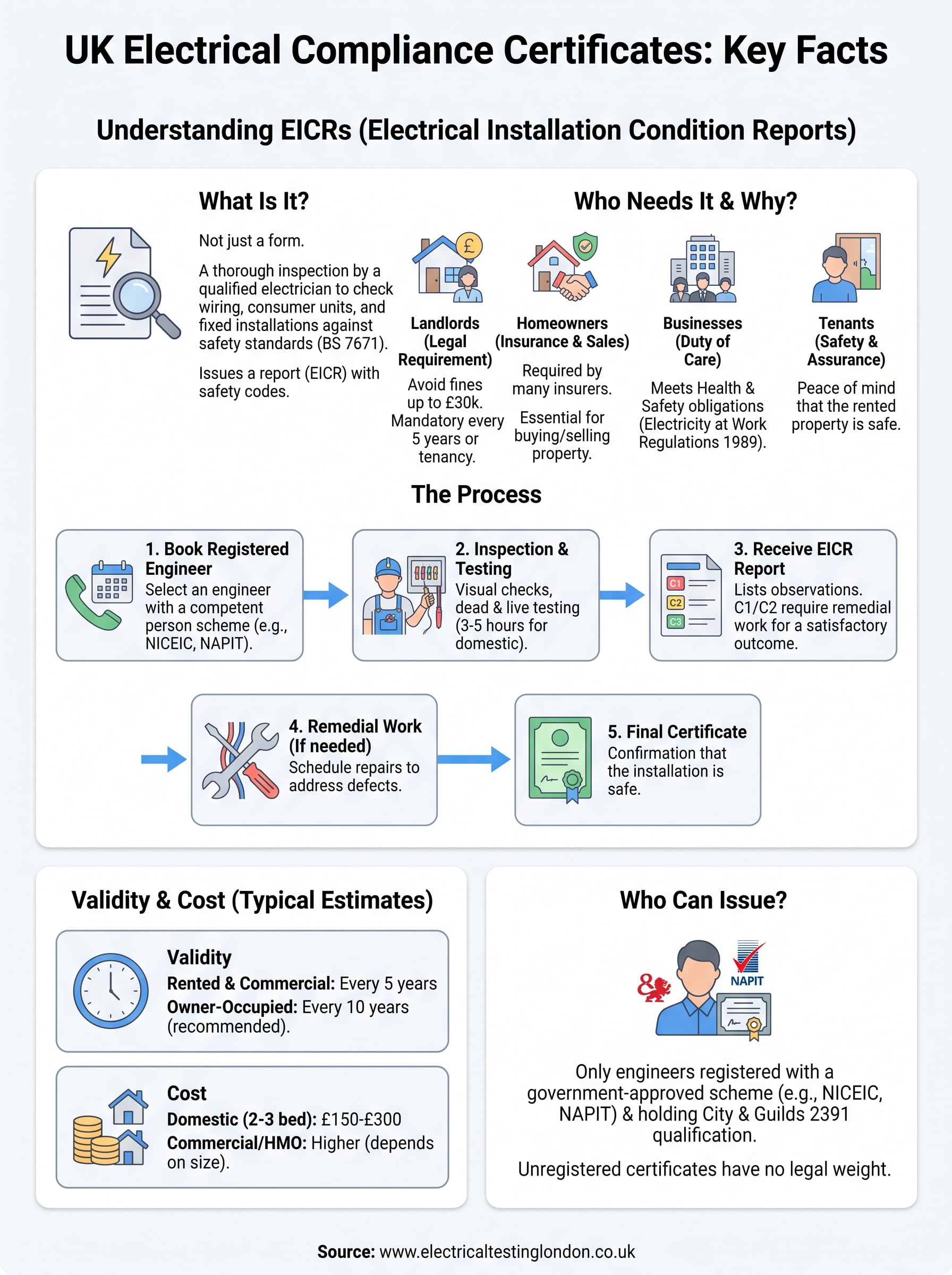
In practice, this usually means arranging an Electrical Installation Condition Report (EICR), carried out by a qualified and registered electrician who inspects the wiring, consumer unit, and fixed installations against current safety standards. The engineer tests the system, notes any defects using a standard coding system, and issues a certificate confirming whether the installation is safe or needs remedial work.
This article walks you through exactly who's qualified to issue one, what the inspection process actually involves, how long it takes, and what you can expect to pay. We'll also cover the difference between an EICR and the other types of electrical certificates in the UK, so you know precisely which document your landlord, insurer, or solicitor is asking for, and how our engineers across London and the South East can get it sorted quickly.
Why you need an electrical compliance certificate
Landlords across London face a straight legal requirement: since 2020, the Electrical Safety Standards in the Private Rented Sector Regulations force you to arrange a full landlord electrical safety certificate in London every five years, or sooner if a new tenancy starts. Skipping this isn't a paperwork technicality. Councils can fine you up to £30,000 for renting out a property without a valid EICR, and the report has to come from a registered engineer, not someone who simply "knows about wiring."
A missing EICR can end up costing a landlord more in fines than a decade of routine electrical testing.
Insurers ask for the same document for a different reason: your policy often depends on it. Many buildings and contents policies specify you must hold a valid EICR, and if a fire investigation later turns up faulty wiring with no certificate on file, your insurance claim can be refused outright. Mortgage lenders and solicitors ask homebuyers for one too, because nobody wants to inherit somebody else's dodgy rewiring job along with the deeds.
Commercial and legal duty of care
Businesses carry their own obligation under the Electricity at Work Regulations 1989, which places a duty of care on employers to keep electrical systems in a safe condition. A commercial EICR in London gives you documented proof you've met that duty, which matters if the Health and Safety Executive ever investigates an incident on your premises, and it demonstrates health and safety compliance to staff, customers, and inspectors alike.
Who typically needs one
-
Landlords renewing a tenancy or letting a new property
-
Homeowners selling, remortgaging, or insuring their property
-
Businesses meeting workplace health and safety obligations
-
Buyers wanting assurance before completing on a purchase
Getting this right protects more than your bank balance, it protects the people living or working in the building. Our EICR testing service covers all of these scenarios across London and the South East.
How to get an electrical compliance certificate
Getting a certificate starts with booking a qualified electrician, not searching for a template to fill in yourself. The engineer visits your property, isolates circuits safely, and works through a fixed checklist covering the consumer unit, wiring condition, earthing, bonding, and any visible damage or overloaded sockets. You don't need to prepare anything special beyond giving access to every room and making sure the fuse board isn't blocked by furniture.
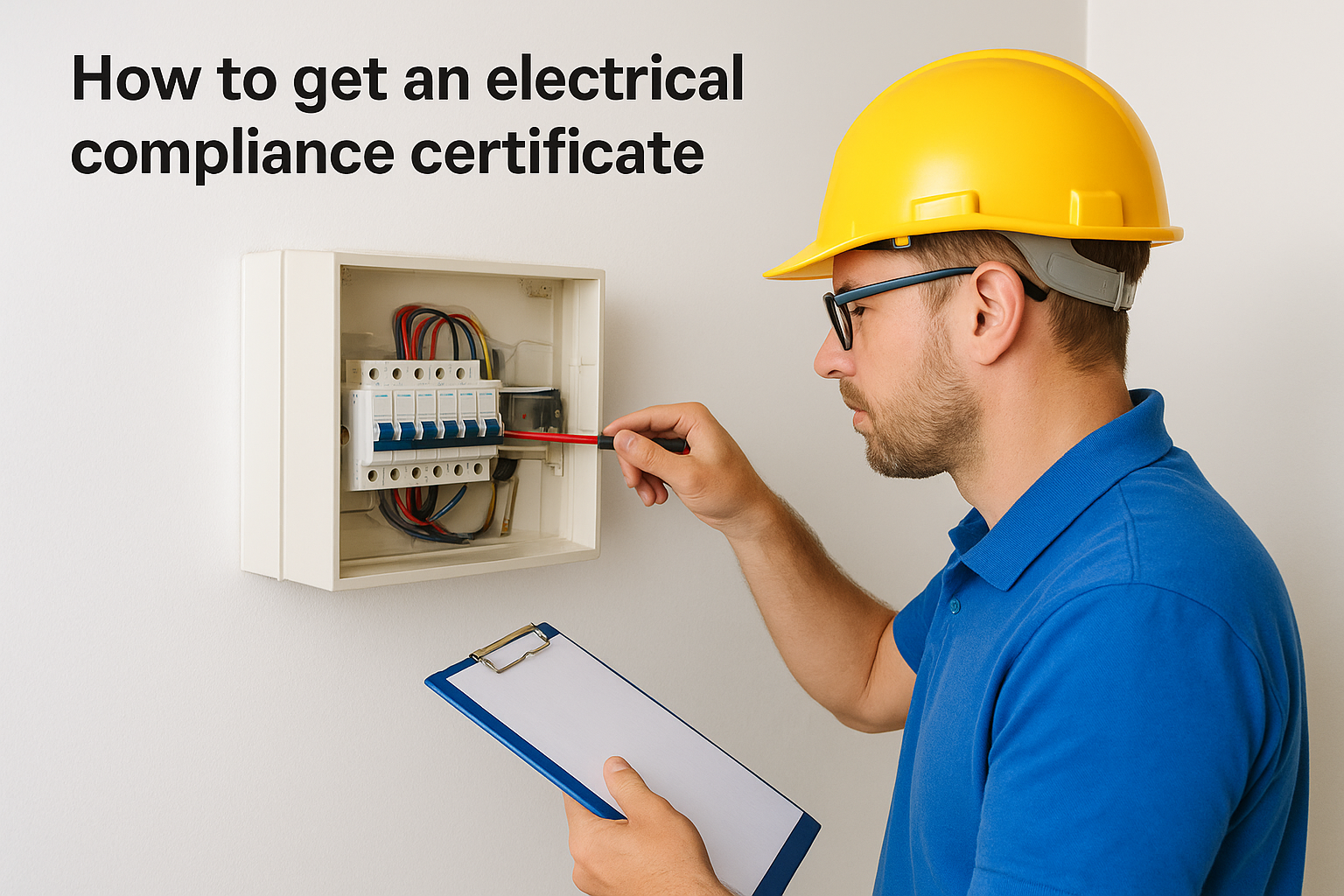
Once the inspection's done, you'll get a written EICR document listing any observations using codes C1, C2, C3, or FI, ranging from immediate danger through to further investigation needed, so it helps to know what an EICR actually checks. A property with no C1 or C2 codes gets marked satisfactory; anything else means remedial work before the certificate can confirm compliance.
You can't shortcut the process, the certificate only means something once the wiring's actually been tested.
Here's the typical sequence from start to finish:
-
Book a registered engineer and agree a date with full property access
-
Engineer carries out visual inspection and dead/live testing on circuits
-
Any defects get coded and explained in plain English
-
You receive the signed EICR certificate, usually within a few days
-
If remedial work's flagged, this gets scheduled and a follow-up certificate issued
Most domestic inspections take three to five hours, longer for larger commercial units with multiple distribution boards.
Who can issue a compliance certificate in the UK
Not just anyone with a screwdriver can sign off your paperwork. A valid electrical compliance certificate has to come from an engineer registered with a government-approved competent person scheme, such as NICEIC, NAPIT, or ELECSA. Registration means the engineer's work gets independently assessed on a regular basis, so their signature actually carries legal weight with councils, insurers, and letting agents.
Qualifications matter here too. Look for engineers holding a recognised City & Guilds 2391 qualification in inspection and testing, alongside membership of a recognised scheme. Anyone can call themselves an electrician, but only registered, qualified inspectors can legally issue an EICR that stands up to scrutiny.
If the electrician isn't registered with a recognised scheme, the certificate isn't worth the paper it's printed on.
Before booking, check for:
-
Membership of NICEIC, NAPIT, or a similar competent person scheme
-
A verifiable registration number you can check online
-
Public liability insurance covering the inspection
-
Experience specifically with EICR inspections, not just installation work
At Electrical Testing London, every engineer we send out has at least ten years of hands-on experience and full registration, so you're never left holding a certificate that won't stand up when your landlord, insurer, or solicitor asks for proof.
How much it costs and how long it lasts
Pricing depends on the size of the property and the number of circuits, but most domestic EICR inspections in London run between £150 and £300 for a typical two or three-bedroom home, as our breakdown of EICR certificate costs in London by property size sets out. Larger properties, HMOs, or commercial units with multiple distribution boards cost more, simply because there's more to test and more circuits to isolate safely. We publish clear, upfront transparent pricing on our EICR testing page, so you're never guessing what the final invoice will look like.
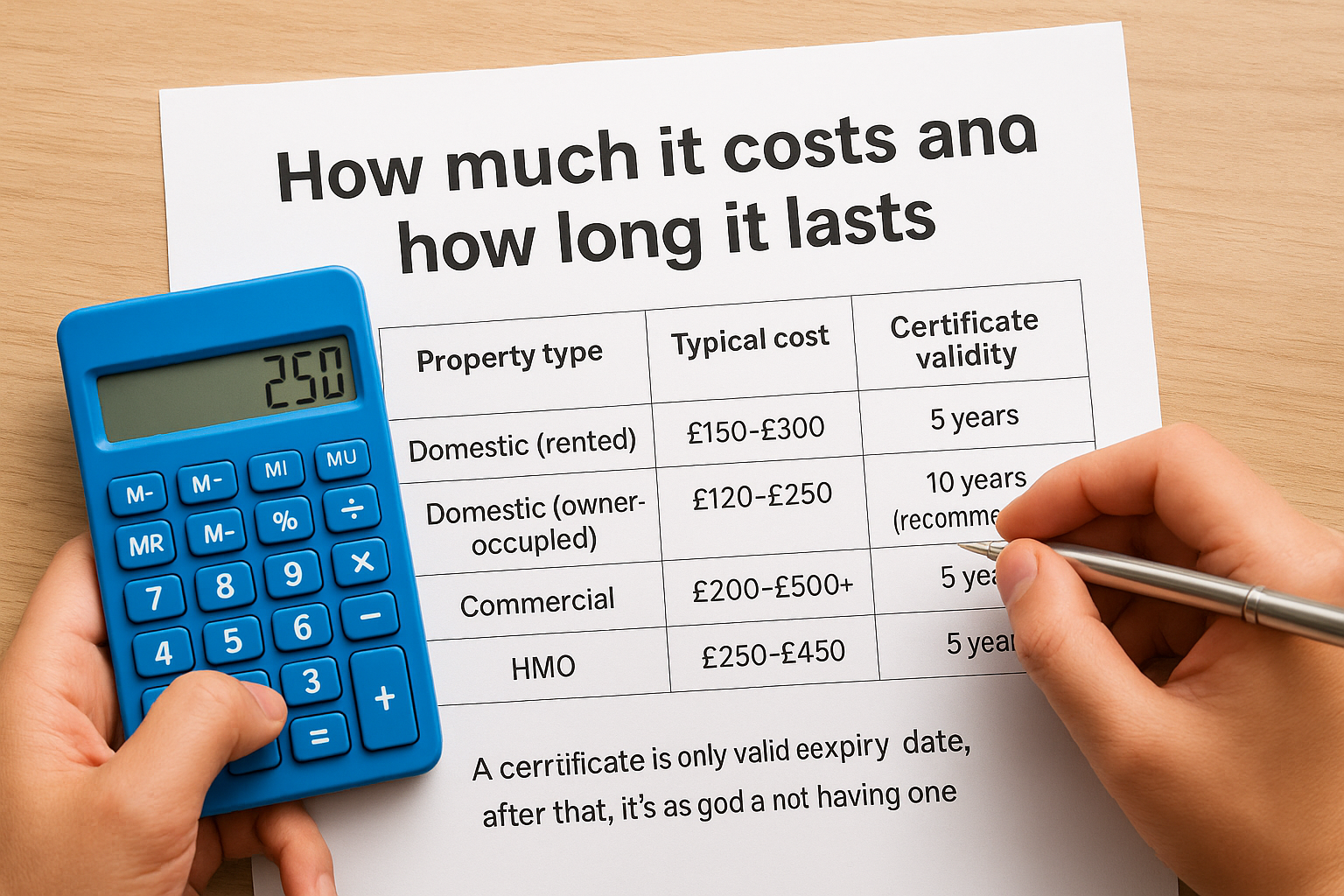
Validity depends on the property type rather than a fixed rule. Rented homes need a fresh certificate every five years under current regulations, commercial premises are generally reviewed every five years too, and older installations or higher-risk properties sometimes need checking more frequently, which is why how long an EICR certificate stays valid is worth confirming for your property type.
A certificate is only valid until its expiry date, after that, it's as good as not having one at all.
|
Property type |
Typical cost |
Certificate validity |
|---|---|---|
|
Domestic (rented) |
£150-£300 |
5 years |
|
Domestic (owner-occupied) |
£120-£250 |
10 years (recommended) |
|
Commercial |
£200-£500+ |
5 years |
|
HMO |
£250-£450 |
5 years |
Booking early, rather than waiting until the deadline, gives you time to fix any defects before the old certificate lapses completely.
What to do if you're missing a certificate
Discovering you don't have a valid certificate isn't a reason to panic, but it does need sorting quickly. Landlords letting without one risk that £30,000 fine mentioned earlier, and homeowners selling a property often find solicitors won't let completion proceed until an EICR certificate turns up. Either way, the fix is the same: book an inspection as soon as possible rather than waiting for a tenant complaint or a lender to flag the gap.
Getting a replacement certificate issued follows the same process as a first-time inspection. A registered engineer visits, tests the installation, and issues fresh paperwork based on the current condition of the wiring, not the previous report's findings. If the old certificate simply expired with no changes to the property, this is usually straightforward. If there's never been an inspection at all, expect the engineer to flag more observations, since older wiring often hasn't been checked against modern standards, and it's worth knowing what happens if an EICR fails before the visit.
A missing certificate is a gap you can close fast, an ignored electrical fault is the problem that actually costs you.
A few practical steps worth following:
-
Book an inspection before advertising a tenancy or listing a sale
-
Keep digital copies of every certificate, not just paper originals
-
Set a calendar reminder well before the five-year expiry date
Our team handles urgent bookings across London and the South East when a deadline's already looming.
Keeping your property safe and compliant
Getting an electrical compliance certificate isn't really about ticking a box for a letting agent or insurer. It's confirmation that the wiring behind your walls won't burn your building down or electrocute someone plugging in a kettle. Book a registered engineer, get the EICR inspection done properly, and keep the paperwork somewhere you can actually find it when someone asks.
Whether you're a landlord facing a five-year deadline, a homeowner selling up, or a business owner covering your legal duty of care, the process is the same: find a qualified, registered electrician and get the property tested before a problem forces your hand. Waiting until a tenant complains or a sale falls through is the expensive way to learn this lesson.
If you need a certificate sorted anywhere across London or the South East, get a quote for your EICR and we'll have a registered engineer booked in quickly.

