






Landlord Electrical Certificate Requirements: The Complete Guide



If you rent out a property in England, the landlord electrical certificate requirements aren't optional guidance, they're law. Since 2020, every private tenancy in England has needed a valid Electrical Installation Condition Report, and getting it wrong can mean fines of up to £30,000. Yet plenty of landlords still aren't sure exactly what's required, when it's due, or what to do once an engineer flags a problem.
This guide answers that directly. You'll get a plain explanation of the certificate you legally need (the EICR), how often it must be renewed, and what your specific obligations are for sharing it with tenants and local authorities. We'll also cover how it differs from related paperwork like PAT testing landlord requirements or a Homebuyers Report, so you're not paying for the wrong thing.
We've written this from years spent testing properties across London and the South East, so it reflects what actually happens on inspection day, not just the regulation text. By the end, you'll know exactly what's expected of you as a landlord and how to stay compliant without last-minute scrambling before a tenancy starts or renews.
Why landlord electrical certificate requirements matter
The legal backbone: the 2020 regulations
Parliament introduced the Electrical Safety Standards in the Private Rented Sector (England) Regulations 2020 to close a gap that had existed for years: gas safety had strict annual checks, but electrics didn't. Now every private landlord in England must have the electrical installation inspected and tested by a qualified, competent person at least once every five years, and hand tenants a copy of the resulting EICR before they move in. New tenancies had to comply from 1 July 2020; existing tenancies followed from 1 April 2021, so there's no property left in a legal grey area, as the EICR regulations for landlords in England make clear.
Who the rules apply to
Coverage is broader than most landlords expect. It applies to:
-
Assured shorthold tenancies
-
Licensed HMOs
-
Student lets arranged through a private landlord
-
Renewals of existing tenancy agreements
Exemptions are narrow: social housing, long leases over seven years, and a handful of specialist arrangements like lodger situations in an owner-occupied home. If you're unsure whether your let counts, check the government's own guidance on the Electrical Safety Standards regulations rather than assume you're exempt.
What non-compliance actually costs you
Skip the inspection, or ignore a report flagging danger, and your local authority can step in directly. Councils have the power to arrange the remedial work themselves and bill you for it, on top of a civil penalty of up to £30,000 per breach. That figure isn't a ceiling reserved for extreme cases either; it applies per property, per offence, so a portfolio landlord with several non-compliant addresses is exposed many times over.
A missing or expired EICR isn't a paperwork technicality, it's a legal breach that can cost you tens of thousands of pounds and put tenants at real risk.
Beyond the fine, an invalid certificate can undermine an eviction notice, complicate insurance claims after a fire or fault, and damage your standing with letting agents who now routinely ask for proof of compliance before marketing a property. Landlords who treat the electrical safety certificate for landlords as a genuine safety measure, not just a box to tick, tend to avoid all of this entirely.
How to get a landlord electrical safety certificate
Finding a qualified engineer
Getting the certificate starts with booking a qualified, competent person, someone registered with a recognised scheme like NICEIC, NAPIT, or ELECSA. Don't just take a local handyman's word for it; ask to see their registration number and check it on the scheme's website before you find and book an electrical safety certificate near you. A qualified electrician for landlord certificates will also carry the right test equipment and know exactly how to structure the report so it's accepted by councils and letting agents alike.
What the inspection actually involves
Once booked, the engineer carries out the EICR step by step, checking the consumer unit, wiring, sockets, switches, and earthing arrangements throughout the property. Expect them to isolate the power at points during testing, so this isn't something you can schedule around a tenant working from home without warning them first. A typical two-bedroom flat takes two to three hours; larger HMOs or commercial units take longer because of the extra circuits involved.
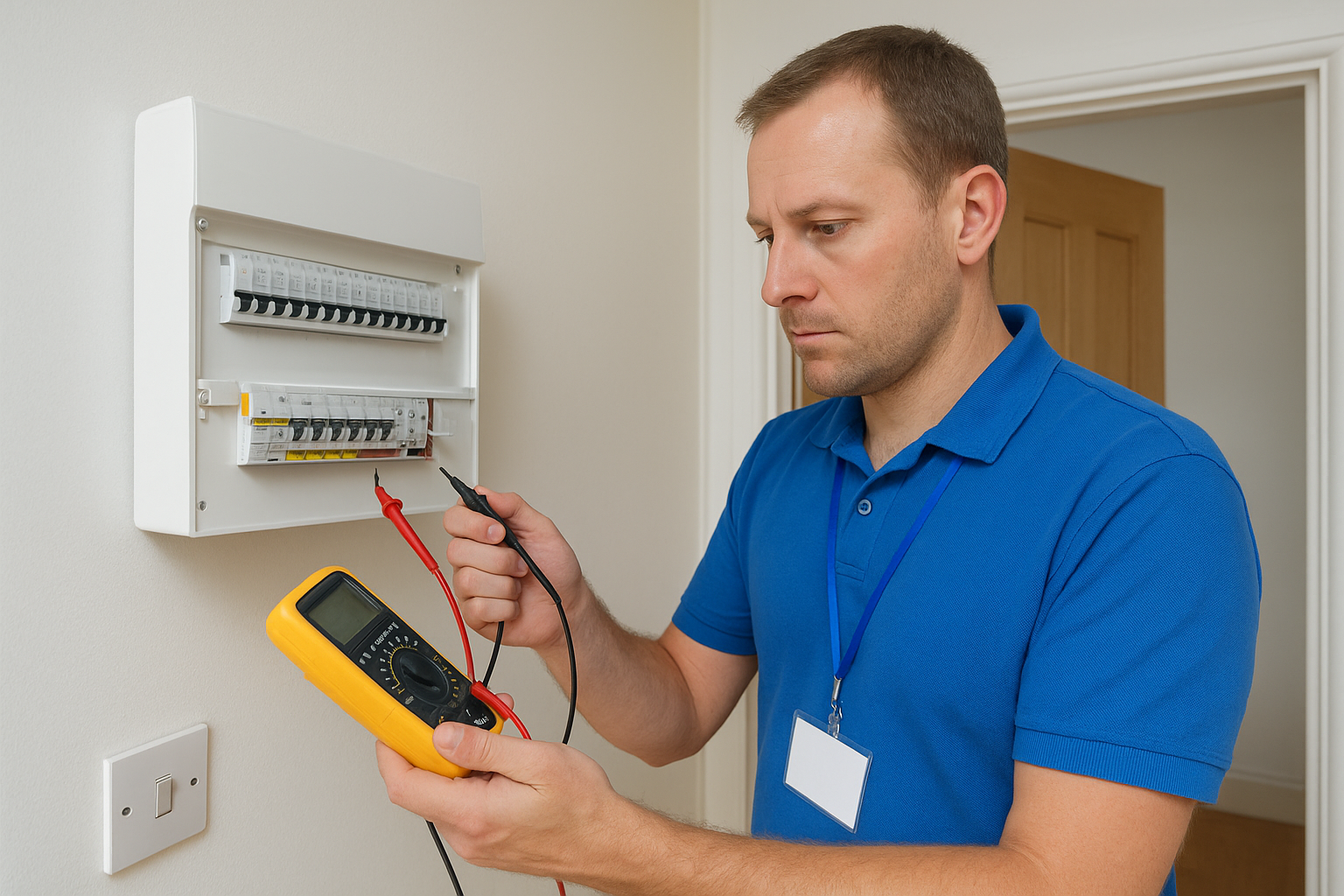
Before the visit, have ready:
-
Access to every room, including lofts and outbuildings with wiring
-
Any previous EICR or electrical certificates for comparison
-
Details of recent electrical work or additions, like a new shower circuit
-
Clear access to the consumer unit, which is often boxed in or blocked by furniture
Sorting these out beforehand shortens the visit and avoids a second trip, which some engineers charge for separately. Tenants should also be given reasonable notice, generally 24 to 48 hours, since the law requires you to arrange access without unreasonable disruption to their tenancy.
Understanding your EICR results and remedial work
Reading the classification codes
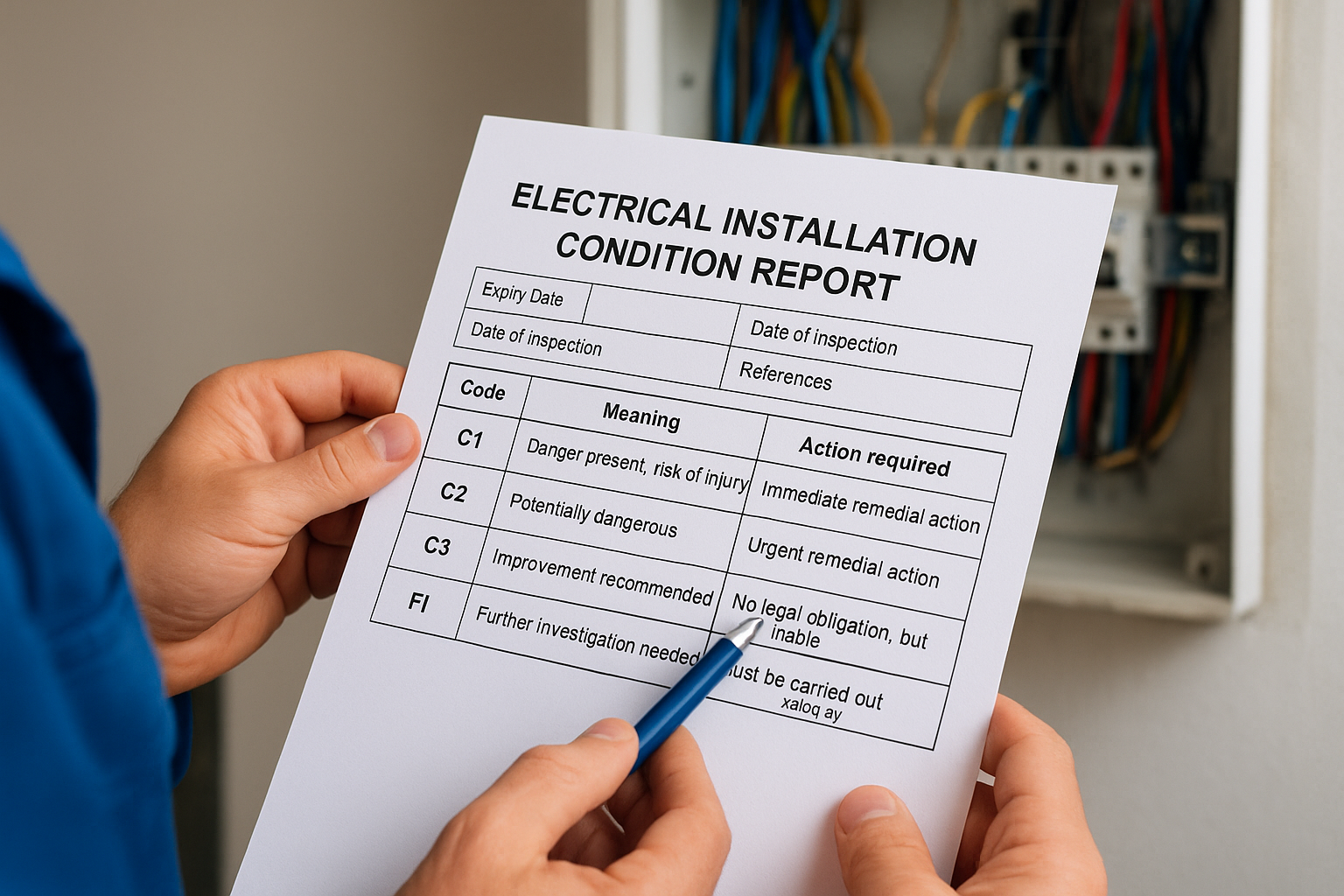
When the report lands, the codes matter more than the pass or fail label at the top. Every observation gets a rating that tells you how urgent it is, and mixing up what the EICR codes mean is the most common mistake landlords make when reading their EICR results.
|
Code |
Meaning |
Action required |
|---|---|---|
|
C1 |
Danger present, risk of injury |
Immediate remedial action |
|
C2 |
Potentially dangerous |
Urgent remedial action |
|
C3 |
Improvement recommended |
No legal obligation, but advisable |
|
FI |
Further investigation needed |
Must be carried out without delay |
A satisfactory EICR with a C3 noted is fine to hand over as-is; a report with a single C1 or C2 is not something you can quietly file away.
What counts as an unsatisfactory report
Anything carrying a C1, C2, or FI code makes the whole report unsatisfactory, and the regulations then require you to fix the issue within 28 days, or sooner if the engineer specifies an earlier deadline. You must send written confirmation of the completed remedial work to your tenant and, if requested, to the local authority, within 28 days of the follow-up inspection.
Getting the remedial work done properly
Skipping straight to a quick fix without a follow-up test leaves you exposed, because the original unsatisfactory report is still the one on file until it's superseded, so it pays to understand how EICR remedial works, deadlines and hiring should be handled. Using the same firm that carried out the original electrical installation condition report for the remedial work usually speeds this up, since they already know the property's wiring history and won't need to re-survey circuits that already passed.
Costs and renewal timelines to plan for
What an EICR typically costs
Expect to pay somewhere between £120 and £300 for a standard two or three-bedroom rental in London, with EICR prices by property size and circuits driven by the number of circuits the engineer has to test. A studio flat with a modern consumer unit sits at the lower end; a large HMO with multiple kitchens and shared bathrooms pushes costs up because each additional circuit adds inspection time. Commercial units and larger portfolios often benefit from a fixed quote per property, which is worth asking for if you're managing more than a handful of addresses.
|
Property type |
Typical EICR cost |
|---|---|
|
Studio or one-bed flat |
£120 to £160 |
|
Two to three-bed house |
£150 to £220 |
|
HMO (per licence) |
£200 to £350 |
|
Small commercial unit |
£250 to £400+ |
Renewal timelines to mark in your diary
When and how to renew your EICR certificate follows a five-year cycle by default, but that clock resets sooner in a few situations: a change of tenancy where the previous certificate is close to expiry, a fault reported by a tenant, or an engineer recommending a shorter interval on the report itself. HMOs under licence often need checks more frequently because local authorities attach their own conditions on top of the national rules.
Treat the five-year certificate as a maximum, not a target, since a change of tenant or a reported fault can bring the deadline forward.
Budgeting for remedial work on top
Unexpected costs usually come from remedial work rather than the inspection fee itself. A straightforward socket replacement might add £40, while rewiring a full circuit or replacing an ageing consumer unit can run into several hundred pounds. Setting aside a modest contingency each year, rather than treating the certificate as a one-off cost, keeps this from becoming a nasty surprise at renewal time.
Staying on top of your electrical obligations
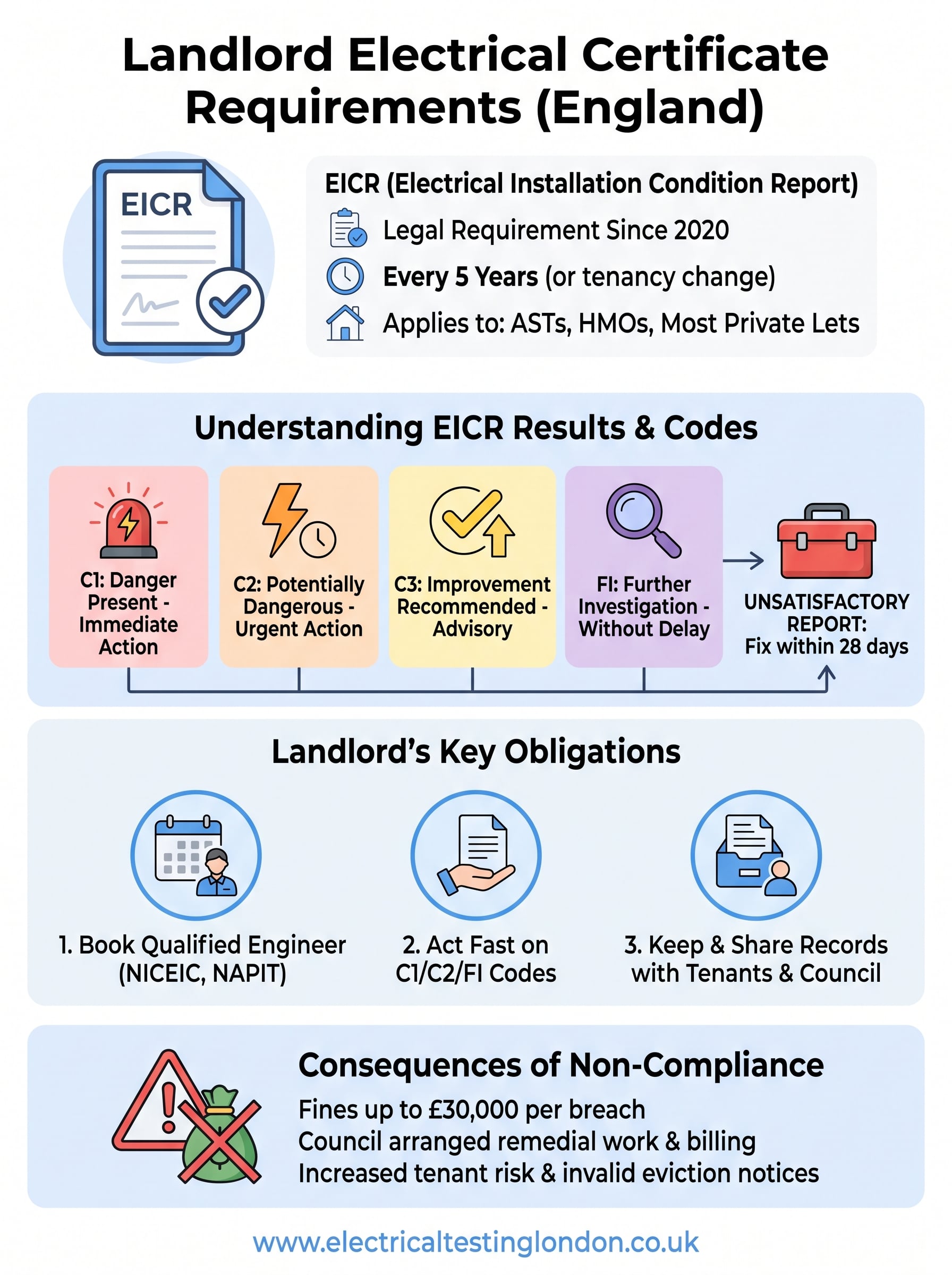
Meeting landlord electrical certificate requirements really comes down to three habits: booking a qualified engineer before your current EICR expires, acting fast on any C1, C2 or FI code, and keeping paperwork ready to hand to tenants or the council on request. Skip any of these and you're not just risking a fine of up to £30,000, you're risking a genuine safety incident in a property you're legally responsible for.
Getting into a rhythm makes this far less stressful than treating it as a crisis every five years. Diarise your renewal date the moment a new certificate lands, budget for likely remedial work, and use the same trusted engineer each time so they already know your property's wiring history.
If your EICR is due, overdue, or you've just had a report come back unsatisfactory, don't wait for a letter from the council. Get a quote for your landlord EICR from our team and get it sorted properly, the first time.