


NICEIC Emergency Lighting Periodic Certificate Explained


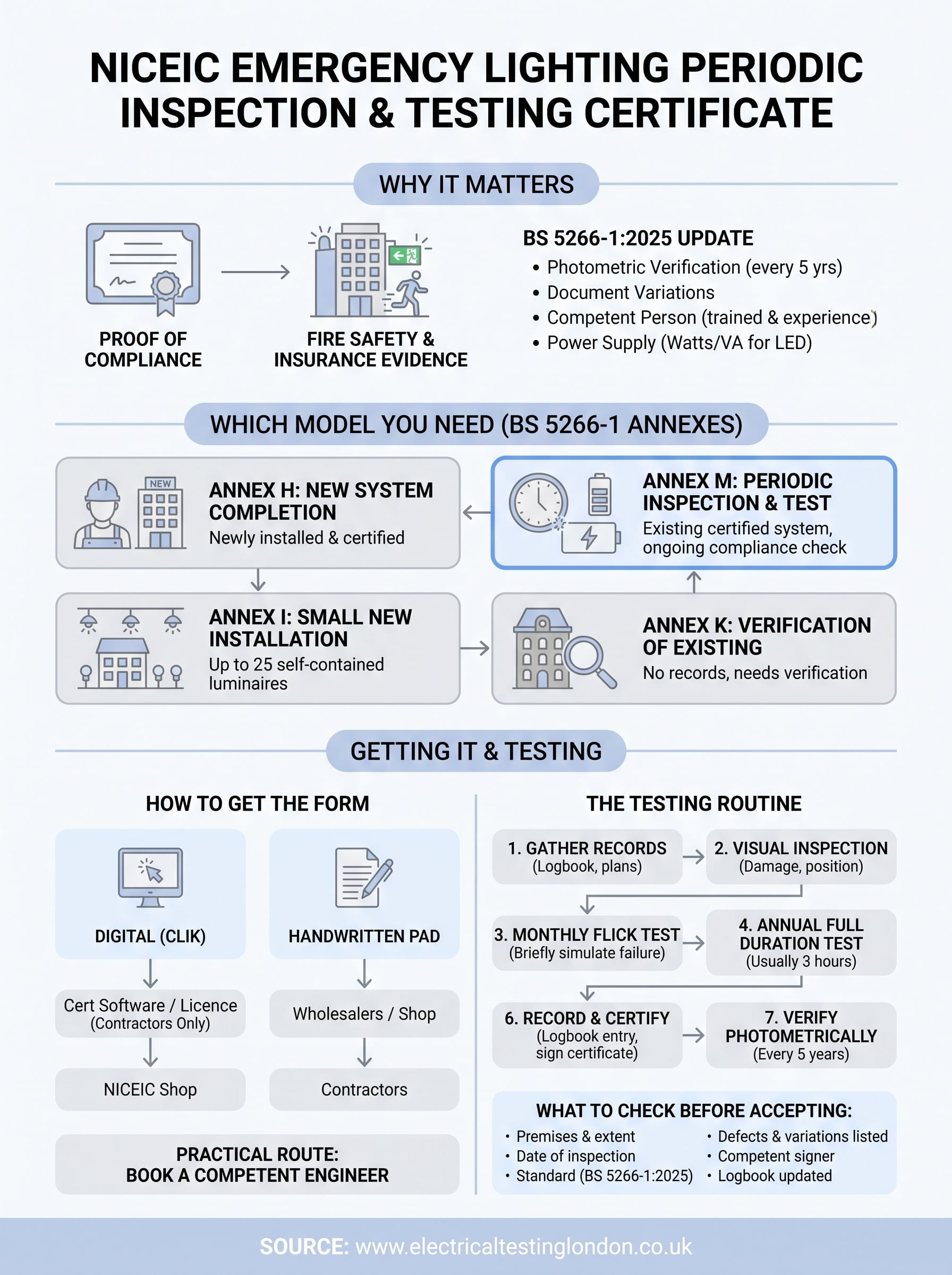
The emergency lighting periodic inspection and testing certificate from NICEIC is a signed record, based on the Annex M model in BS 5266-1, that a competent person has inspected and tested an existing emergency lighting system and found it suitable for continued use. It comes as a digital certificate or a handwritten pad. NICEIC sells the digital version only with its Cert software or an additional licence, so most building owners get the certificate by hiring an engineer to complete it.
Electrical Testing London tests emergency lighting for landlords, commercial property owners and businesses across London and the South East. People often search for the form when what they really need is the test, the logbook entry and a certificate that stands up to scrutiny.
This article explains why the certificate matters and which model you need. It covers how to get the digital or handwritten version, how the inspection and testing behind it work, with worked costs, and what to check before you accept a signed certificate.
Why the periodic inspection certificate matters
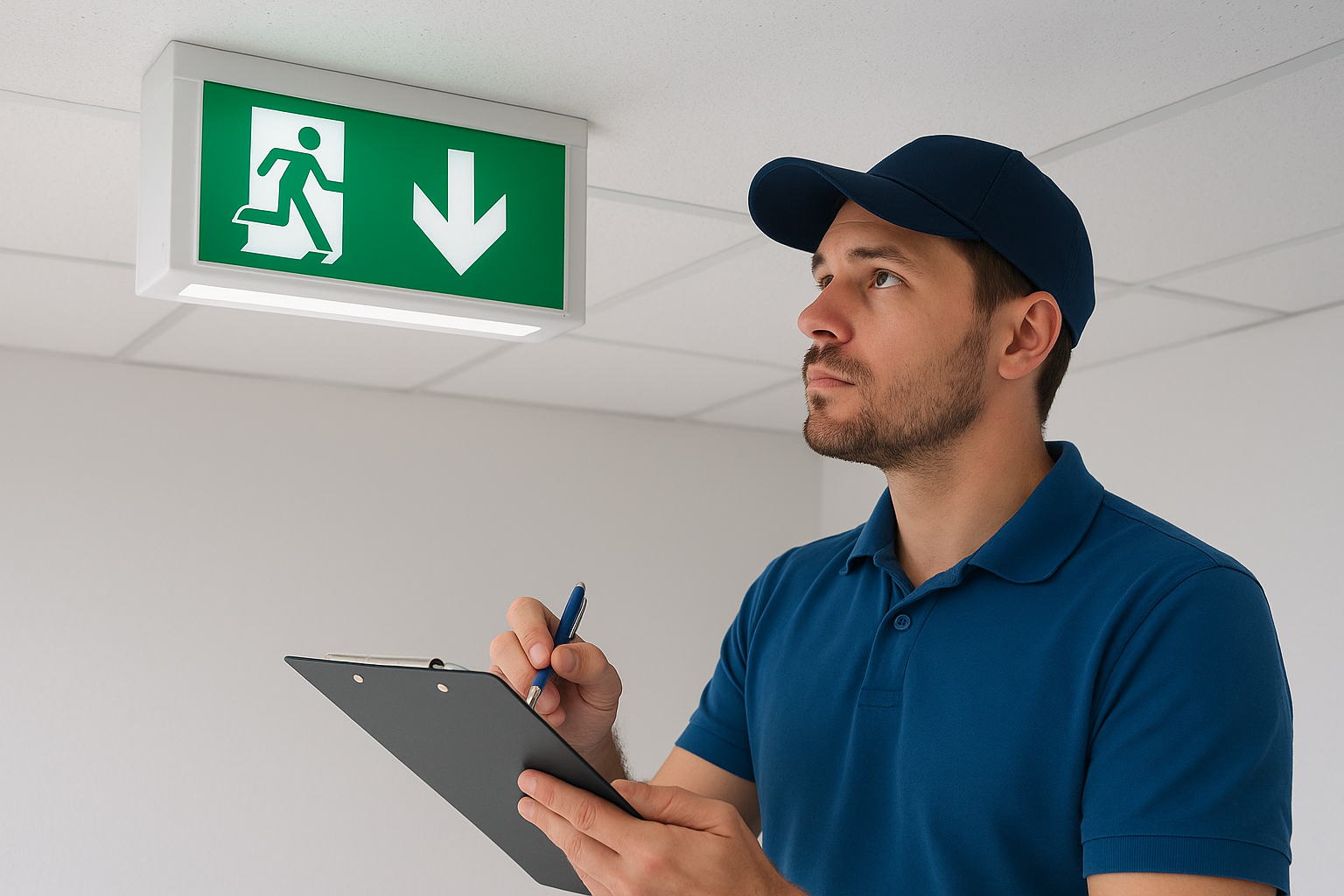
The certificate matters because it is the written proof that your emergency lighting still works when the mains fails. Without it, you have luminaires on the ceiling and no evidence for your insurer, fire risk assessor or enforcing authority.
What the certificate proves
In England, the Regulatory Reform (Fire Safety) Order 2005 makes the responsible person for a non-domestic building, or the shared parts of a block of flats, keep escape routes lit and maintained. BS 5266-1 is the code of practice most people follow to show they have done that. The periodic certificate records that the system was inspected and tested on a stated date and either passed or has listed defects.
A periodic certificate turns a test you carried out into evidence you can show.
What changed with BS 5266-1:2025
The 2025 edition took effect on 31 October 2025 and withdrew the 2016 edition. Four changes affect periodic certification directly:
-
Photometric verification of the system is now recommended initially and at intervals not exceeding five years.
-
Results of commissioning inspections and tests must go into the handover documents, and any variations from the standard (the word replaces "deviation") must be documented.
-
The definition of competent person now says the person must be suitably trained and qualified by knowledge and practical experience, with the necessary instructions.
-
Power supply recommendations now require the system to deliver its required output in watts and VA, with the power factor of the load considered and the records updated after changes. This reflects the move from fluorescent to LED luminaires.
Which NICEIC emergency lighting certificate you need
You need the periodic inspection and testing certificate when your emergency lighting is already installed and certified, and you are checking it still complies. A different model applies in other situations, and using the wrong one is a common error.
The four BS 5266-1 models
NICEIC produces certificates based on the models in the annexes of BS 5266-1. Here is how they differ:
|
Model |
Use it when |
|---|---|
|
Annex H, completion certificate |
A new system has just been installed |
|
Annex I, small new installations |
A new installation has up to 25 self-contained luminaires |
|
Annex K, verification of an existing installation |
An existing system has no completion certificate or records and needs verifying |
|
Annex M, periodic inspection and test |
An existing, certified system needs its ongoing compliance confirmed |
Match the certificate to the system's history: new, undocumented or already certified.
Digital Clik or handwritten pad
NICEIC offers the periodic certificate as a digital certificate (its Clik range) and as a handwritten pad. The handwritten model is known by the code EPM6, and wholesalers have listed it. The digital version is listed as updated to BS 5266-1:2025. Whichever you use, check the edition of the standard printed on the form, because an older pad may still reference the 2016 edition.
How to get the NICEIC certificate, digital or handwritten
You get the digital certificate from NICEIC's online shop, but only if you already hold NICEIC Cert Software or buy an additional licence. The handwritten pad is sold through the shop and electrical wholesalers. Neither route suits most property owners, because the form must be completed by the person who does the testing.
Buying the digital certificate
NICEIC's shop lists the digital periodic certificate at £24.00, or £28.80 including VAT, with a pack size of 25. The listing says it is available only with an existing purchase of the Cert software or an extra licence. That makes it a tool for certified contractors, not a form a landlord can buy and complete alone.
Using a handwritten pad or another form
A handwritten pad suits contractors who prefer paper, and stock varies between suppliers. You can also work from the BSI model itself. The 2025 standard says users may make unlimited copies of the Annex M model for their own use. It also says the models are not mandatory to meet the recommendations in the standard.
You do not need a NICEIC-branded form to comply. You need a competent person's accurate, dated record.
The practical route is to book an engineer who completes the certificate as part of the test. Our emergency light testing includes an emergency lighting test certificate, and you can see what we offer on the get a quote page.
How to inspect and test before you sign the certificate
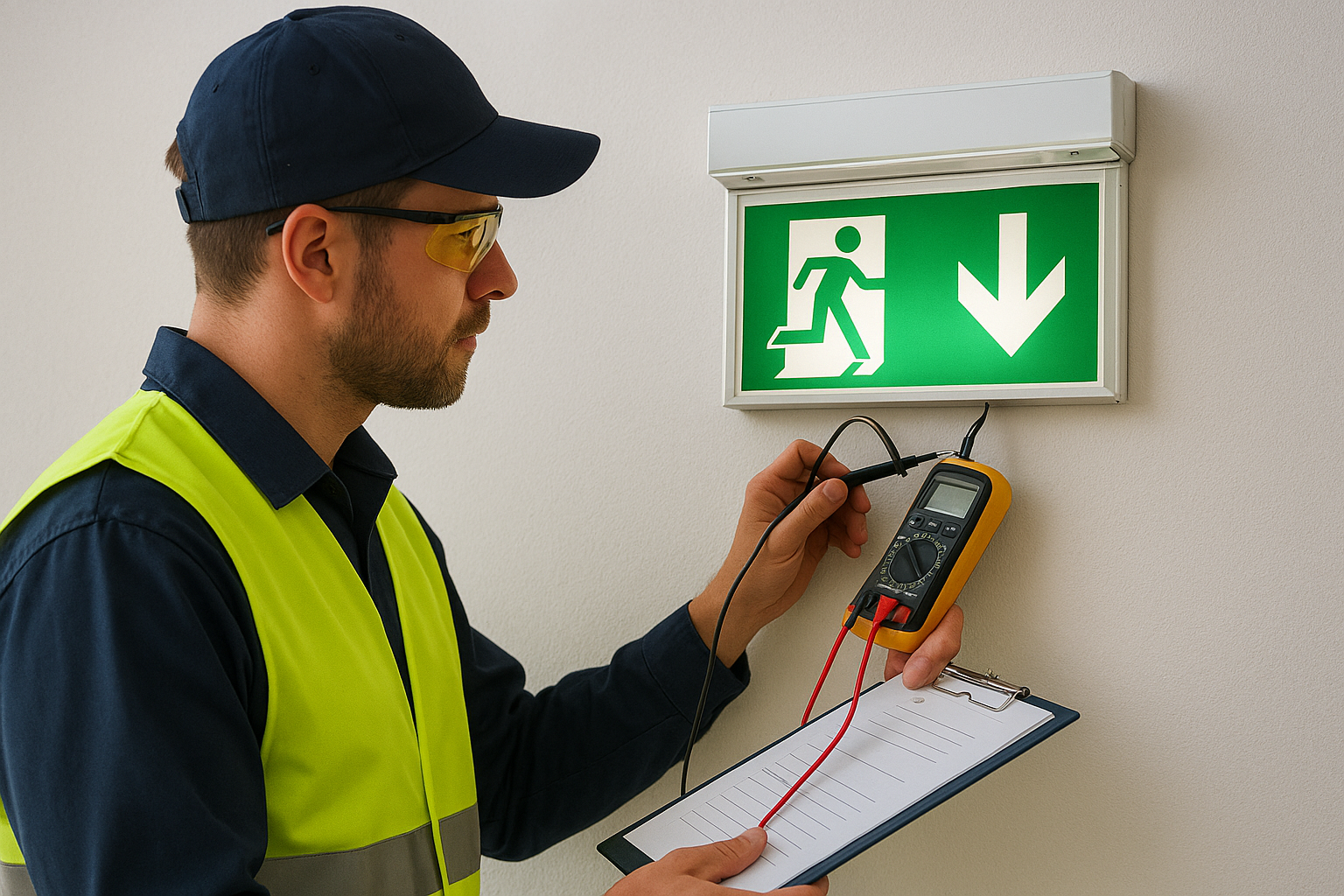
The certificate is only as good as the testing behind it. A competent person should inspect every luminaire, run the short monthly function test and the full-duration annual test, and record every result before the certificate is signed.
The testing routine step by step
-
Gather the records. Collect the logbook, plans, previous certificates and any variations recorded.
-
Inspect visually. Check each luminaire and exit sign for damage, obstruction, correct position and a working charge indicator.
-
Run the monthly flick test. Briefly simulate a supply failure and confirm every lamp lights.
-
Run the annual full-duration test. Discharge the batteries for the rated duration, usually 3 hours, and confirm every luminaire is still lit at the end.
-
Restore and recheck. Reconnect the supply and confirm the charge indicators return to normal.
-
Record and certify. Enter the results in the logbook, list defects and sign the certificate.
-
Verify photometrically. Arrange this at least every five years under the 2025 edition.
Never certify from a flick test alone, because only the full-duration test proves the batteries last.
What testing costs: a worked example
Our emergency light testing prices for London and the South East are below.
|
Test |
Weekday 8am to 5pm |
Weekday 5pm to 10pm |
|---|---|---|
|
Monthly flick test |
£80 |
£95 |
|
Annual 3 hour test |
£199 |
£249 |
Take a small office that books twelve monthly visits and one annual test as separate visits. In working hours that is 12 × £80 + £199 = £1,159 a year. If the business needs evening access, it is 12 × £95 + £249 = £1,389.
What to check before you accept a signed certificate
Before you accept the certificate, check that it is complete, current and honest about defects. A signature on a half-filled form proves nothing, and you carry the responsibility as the person who relies on it.
A checklist for the certificate
-
The premises and the extent of the system are described, so it is clear what was tested.
-
The date of inspection and testing is recorded, with the next inspection date.
-
The standard and edition are named, ideally BS 5266-1:2025.
-
Defects and variations are listed, with a recommended action for each.
-
The signer is named and is a competent person, not just a registered business.
-
The logbook has been updated to match, including the date of the last photometric verification.
Who should sign it
Ask the engineer about their qualifications and experience with emergency lighting. Our inspectors and engineers are fully qualified with at least 10 years of experience, and that is the standard you should expect from anyone you hire. Also ask how defects are quoted and fixed. A good provider lists defects clearly and gives you a way to put them right.
A good certificate is complete, dated, signed by someone competent and honest about faults.
Getting your certificate signed off
The NICEIC emergency lighting periodic inspection and testing certificate confirms that an existing system has been inspected and tested against BS 5266-1 and is fit for continued use. You can buy the form only through a certified route, but the form is not the point. The testing, the logbook and a competent signer are.
If your system is installed and certified, test it monthly and annually, keep the logbook current and schedule a photometric check every five years. If your system is in London or the South East and you want it tested and certified, request a quote for emergency light testing in London from Electrical Testing London.

